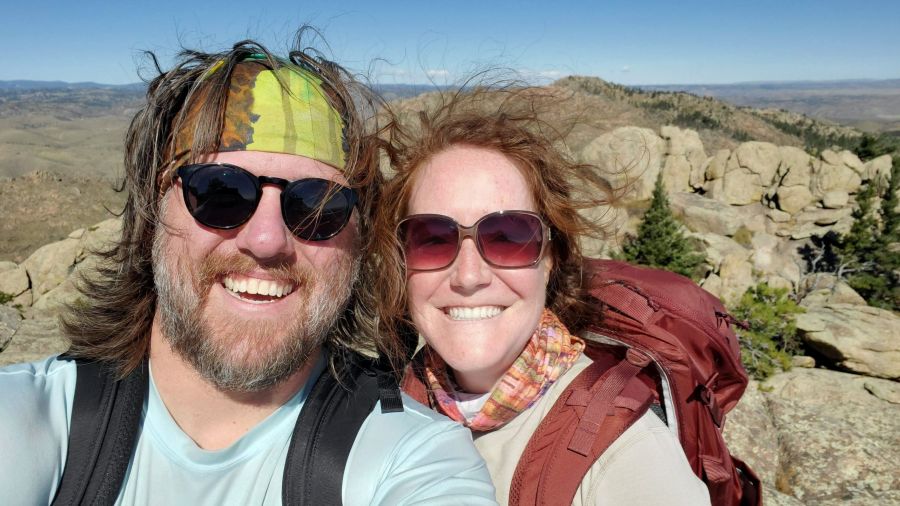
While Brian and I discuss our finances almost every day, it’s not a topic I routinely discuss with anyone else. I attribute this in part to my Midwest upbringing where personal finances are a resoundingly private affair. When we moved to Seattle, I was surprised to find my friends were much more open about their salaries, expenses, investment decisions, and more.
This post is long so I’ll summarize it here. For those interested, I’ve outlined the financial journey we undertook – at first haphazardly and then with intention – that allowed us to retire at 40 and have the financial freedom to travel (along with links to resources we used to get there).
A Penny Saved
I’ve always been a good saver and relatively frugal. I didn’t make much at my first job out of college and made sure to keep my living expenses within my means, even if it meant forgoing some of the luxuries others around me were indulging in – primarily on credit. I found minimalism didn’t negatively impact my happiness.
I’m fortunate to have a partner who shares my financially conservative nature. Through a combination of scholarships, part time jobs, and (on my part) some 529 support from my parents, we both graduated college debt free. In 2006, Brian bought a duplex so he could live in half and subsidize his living expenses with the rent from the other half, while I moved into a low-cost apartment near my workplace.
Shortly thereafter we both outright owned our vehicles. In 2008, we started a joint account to save for a down payment on our first home years before we were even living together.
While neither of us were flush with cash during the years following college, we were primarily free of debt, living within our means, and putting aside what we could in savings.
Uninformed Decisions and Aimless Coasting
In 2011 we used the money we had been saving for the down payment on a reasonably priced single-family home and rented out both sides of Brian’s duplex to help offset our two mortgages. We focused on saving money for our 2013 wedding and honeymoon so we would incur no further debt celebrating those milestones.
We worked hard and excelled at our careers. We didn’t give in to lifestyle inflation and instead met with a financial advisor to find out what we should do with our extra income. After building an emergency fund (e.g. six months of expenses) and maxing out our 401k and Roth IRA contributions (e.g. hitting our annual contribution limits), we still had money to support our interests. Brian bought boats, motorcycles, and other toys; I bought furniture and furnishings for our home; and, we traveled.
When we asked our financial advisor what else we should be doing, he would ask us to think about other big things we wanted to purchase (e.g., land, newer vehicles, a vacation home, a bucket list vacation, etc.) and direct our savings toward those goals. We would leave those sessions uninspired and unsure that the time and effort we were putting into our careers was really getting us to an understood end goal.
We didn’t want to acquire more things simply because we were finally reaching a point where we had greater disposable income. I would have happily spent more money on travel, but neither of us had much time off to pursue that interest. We decided to pay more on the principal of our mortgages, increase our charitable giving, and give our financial advisor what was left to invest. But we were coasting a bit aimlessly.
At the same time, the duplex was proving to be more trouble than it was worth (emotionally and financially), our single-family home had turned out to be much too large for the two of us and our cat, and we were both at a cross roads in our careers. Brian had an opportunity to switch from an engineering role to a sales role within his company, but it would require relocation. I was asked to apply for the director of communication role where I was working, but it would mean settling into our existing routine.
It was time to really think about our long-term goals and what was next.
Taking a Leap and Defining a Goal
In 2015, we sold our single-family home and moved to Seattle for Brian’s job. Despite this being a solid career move for both of us – each of us broke six figures shortly after the move and things improved from there – we were still shocked by the cost of living adjustment from Ohio to Washington. We bought the cheapest townhouse we could find within a reasonable distance from our jobs and the airport, I commuted to work via bus which was almost fully subsidized by my employer, and we took advantage of Brian’s excessive work travel to accumulate hotel, airline, and rental car points we could use to offset our personal travel expenses.
Around the same time, Brian discovered the FIRE movement (Financial Independence / Retire Early). The financial independence component really spoke to us and our existing habits of minimizing debt and lifestyle inflation, living well within our means, and maxing out all our retirement account contributions.
But the most important thing it did was give us a way to direct the money we had left over – investing in a taxable brokerage account comprised of a broad-base index fund (VTSAX / VTI).
I had always thought of the stock market as volatile and risky, and it certainly can be – especially when you’re investing in individual companies or looking for short-term wins. The index fund approach appealed to us because we’re investing in the entire U.S. stock market – all ~4,000 companies – which means our performance tracks to the market overall. And despite inevitable short-term dips and longer bear markets, the overall stock market reassuringly trends up.
As soon as we made the shift, things started to happen:
- By 2017, we parted ways with our financial advisor who had given us good initial advice but was by then charging us fees and failing to do what we asked.
- By 2018, our net worth surpassed seven figures, and we were saving and investing 50 percent of our disposable income in our taxable brokerage account. We manage it ourselves using Vanguard, which helps to minimize fees. Around that same time, we hit the limits individually and as a couple for contributing to our Roth IRAs. Brian researched how we could use backdoor conversions to continue contributing to those accounts.
- By 2019, we cut our losses on Brian’s duplex and sold it, investing the money in our taxable brokerage account.
- By 2020, we had really buckled down. We were fortunate to both work remotely throughout the pandemic. Our townhouse was worth more than we thought possible so we sold it, invested the money, and moved to a neighborhood south of Seattle where we rented a smaller townhouse in a nicer community.
It was amazing how quickly we were seeing our net worth increase, and the momentum made us commit even more.
Achieving Our FIRE Goal
In 2022, we lowered our expenses further through geoarbitrage, moving to Cheyenne, Wyoming, while continuing to work remotely for our existing employers.
This allowed us to save and invest even more, and in summer 2023 we exceeded our FIRE goal – the amount of money we needed across all of our accounts to sustain us without having to work. Financial independence.
Traditionally this number is calculated using the 4 percent rule. According to the math and long-range studies, this guideline suggests you need to have 25 times your annual budget in order to withdraw 4 percent per year (inflation adjusted) for about 30 years, regardless of market performance.
Given our risk aversion and the likelihood we will live beyond the next 30 years, we came up with a high-end estimated annual budget based on past spending and informed by future anticipated expenses, and we elected on a 3.5 percent withdrawal rate (saving about 28.5 times our estimated annual budget) to further improve our odds of success.
Given that our annual budget is about 60 percent discretionary spending, we have a great deal of flexibility in adjusting our spending and withdrawal as we closely monitor the math and market each year moving forward, which has been psychologically reassuring.
While financial independence was the initial appeal of the FIRE movement, achieving our FIRE goal also gave us the confidence to retire early, which we did in fall 2023 at ages 40 and 39.
Points of Clarification / Frequently Asked Questions
- We have not cashed out our retirement accounts and do not plan to do so. We are withdrawing from our taxable brokerage account while reinvesting the dividends in our 401ks and Roth IRAs. Hopefully our retirement accounts will continue to grow until we can access them without penalty when we turn 59 1/2.
- We are taking the same approach with our Healthcare Savings Account (HSA), which we anticipate needing as we age and our health likely declines.
- We are not considering social security benefits as part of our strategy. If they are available to us once we are eligible to receive them, they will be a perk rather than something we’re counting on to make our plan work.
- We are purchasing health insurance off the exchange until we’re eligible for Medicare and have calculated increasing annual health care expenses as part of our budget planning. We’re finding many places offer cash discounts for services despite our insurance enrollment.
- We are are not living “on the system” (e.g. enrolled in Medicaid, food stamps, subsidized housing, etc.). I wish I didn’t need to clarify that, but it is a question I was once asked. We are living exclusively on our personal savings and investment accounts.
- We are not trust fund babies. We have both worked since we were in high school, managed our spending, and saved and invested a lot of money in order to get to where we are today.
Credit Where It’s Due
While I’m proud of what we’ve accomplished, I don’t want to suggest that we only got here through blood, sweat, and tears. We’ve been able to establish and hit our goals for a variety of reasons – many of which are within our personal control but a number of which are circumstantial.
Privileges (unearned advantages)
- Being born in the U.S. to middle class white families who had the means and knowledge to teach us the importance of saving and spending less than you make
- Having financial support from our families when we were heading off to college (tuition support from my parents, housing support for Brian from his family, vehicle support for both of us)
- Having family members encourage us to open and fund Roth IRA accounts once we were working
- Being able-bodied and having good mental and emotional health
- Not having to physically care for or financially support our family members
External Factors (favorable circumstances / luck)
- Retaining our jobs during the economic slump in 2008 and during the COVID pandemic
- Benefiting from the epic bull market (2022-present)
- Enjoying subsidized travel for many years thanks to Brian’s jobs
- Selling our houses when the housing market was up
- Buying two of our houses when interest rates were low, and minimizing our expenses through refinancing
Personal Choices and Hard Work
- Working hard to advance in our careers and making informed career moves
- Taking full advantage of 401k/403b retirement benefits from our employers and maxing out our annual contributions while we were working
- Researching and reading to build our financial acumen
- Maintaining disciplined financial practices and carrying no debt
- Minimizing lifestyle inflation and finding contentment with a less materialistic lifestyle
- Having strong interests and abilities in designing and executing plans; as well as the discipline to stick to and appropriately adjust those plans (e.g., setting goals and following through, not panic selling stock when the market is down, etc.)
- Choosing to live in states where there is no income tax and we’re able to maximize our finances
I am sure there are other factors as well. I don’t take any of them for granted.
Adapting our Plan in the Years Ahead
A year in, we’ve found our budget assumption is accurate, our financial position has improved, and we’ve finally had the time to focus on the things in life that bring us the most joy – spending time with friends and family, reading, playing music, volunteering, cooking/baking, motorcycling, tackling bucket list adventures and slow travel experiences, and moving to new areas of the country so we can continue learning about new places and people.
However, we’re early in our journey and open to where our interests, abilities, and financial performance take us from here.
For instance, we know it’s not likely we will always want to travel at this pace, and we don’t take our health and physical abilities for granted. We know we won’t always be able to take on physical adventures, so we are doing them now. It’s also possible that someday we will want to work again – either out of interest or to supplement our income. However, I can’t overstate the peace of mind that comes with knowing that we will not have to go back to extremely stressful careers.
The Downside
I’m so grateful for our close friends who have been rooting for us and who have encouraged us to own and share our journey and the financial independence we’ve achieved.
But our choices have also resulted in some unanticipated challenges we’re still learning to manage.
- Reliance on work as a talking point. There’s been much said about the societal expectation that we succeed at a meaningful career / hold our career as an integral component of our identity. While I would admit this was more true of me than Brian, it’s been eye-opening to both of us how much we – as a society – rely on work as a lead talking point when catching up with people we know or introducing ourselves to new people. Losing this talking point has quickly revealed who we can (and cannot) connect with on other topics.
- “You’re too young to be retired.” I’m already fatigued at being told we’re too young to be retired. Retirement is a financial goal, not an age. However, responding with that assertion tends to put people who are not retired on the defense. As of yet I don’t have a good solution for addressing this commentary. On a positive note, Brian routinely reminds me we will eventually age out of this concern.
- Generic skepticism. Telling people we’re retired has evoked a range of responses that go beyond the aforementioned age-related concerns to encompass incredulity, disbelief, and patronizing skepticism. Initially we tried to ease into things by saying we were on a career break. While that seemed more palatable to people and didn’t generate nearly as much pushback, it created confusion and led to inevitable questions about when we were going back to work. In general, I’ve been surprised at the lack of curiosity or interest in how we’ve achieved our position, and frustrated by the dismissive implication that this is a phase and eventually we will run out of money or grow bored and return to our careers.
- Standard retirement concerns and assumptions. While technically something we should have anticipated, we’ve been surprised by the expressed concerns about how we’re keeping busy during this new era of our lives. Frequently we’re asked, “aren’t your bored?” or “what do you do all day?” and a few times we’ve had to manage the assumptions that we have endless free time or need assistance filling our time. There’s an adage that you need to retire to something and not from something, and we spent a lot of time talking about that before we made our leap. We’ve yet to be bored, and we fill our days with activities we want to spend time pursuing – just like everyone else who is retired.
- Mechanics of having nontraditional income. One of my top worries about early retirement was whether we would have difficulty renting without traditional income reporting. Happily our credit score seems to have assuaged any concerns in this area. What we did not anticipate having to contend with was local banking issues resulting from an absence of direct deposit. For some time we have used online banks that offer high interest rates for the majority of our banking while maintaining a checking account with a low balance at a local bank for the occasional cash deposit/withdrawal. The fees for these account are typically waived if you have direct deposit or maintain a high minimum balance, and since we no longer have the former and don’t wish to forgo the higher interest yield of our online banks to fulfill the latter, we’ve had to do a lot of research to find a local banking solution for our needs.
I’m sure will will encounter additional issues moving forward, but to date we have not met with any insurmountable deterrents or any challenges that outweigh the benefits of our path.
Should Everyone Pursue FIRE?
I’ve hesitated in sharing what we’ve been doing even with our close friends and family because I don’t want to suggest that the path we’re on is the “right” one or that our choices are any sort of commentary on anyone else’s choices. Our path is simply the one we have pursued based on our goals and interests, and so far it has worked for us.
The beauty of FIRE is that there is no one way to pursue it and there is no one way to define success/whether you’ve achieved it. I see a lot of criticism about the movement by people who don’t think it’s possible. But it is.
The way you go about it is entirely up to you based on your circumstances and goals – and there are compelling stories of people from every imaginable walk of life, from the U.S. and abroad, applying the principles in a way that works for them to achieve their version of financial independence.
Maybe their definition of success is simply living debt free. Maybe it’s working because they want to and not because they have to; or, maybe it’s retiring early and not working at all. Maybe it’s none of those things or something in between.
Learning about FIRE and how it could help us achieve the time and financial freedom to travel changed the trajectory of our goals and life. I hope sharing our story might be inspiring to someone else who wants to see if the principles of eliminating debt, living within your means, and investing the rest is a good fit for your life goals.
Here are some resources we found helpful along the way:
- Book: The Simple Path to Wealth by JL Collins (in my opinion, the best place to start)
- Book: Pathfinders by JL Collins (check out the two included entries by my husband, Brian)
- Book: Die with Zero by Bill Perkins
- Blog: JL Collins
- Blog: Mad Fientist
- Tool: FIRE calc (a Monte Carlo simulation tool that allows you to change various parameters to see how they affect financial outcomes over time; we specifically use it to continually assess if our taxable brokerage account will last until we are able to access our retirement accounts without penalty)
- Tool: Empower Personal Dashboard (we use their free dashboard app to track net worth across multiple accounts; they are an annuity company that sells services and we do not buy any of their services)
 Heather's Compass
Pingback: 2024 Travel Recap – Heather's Compass