
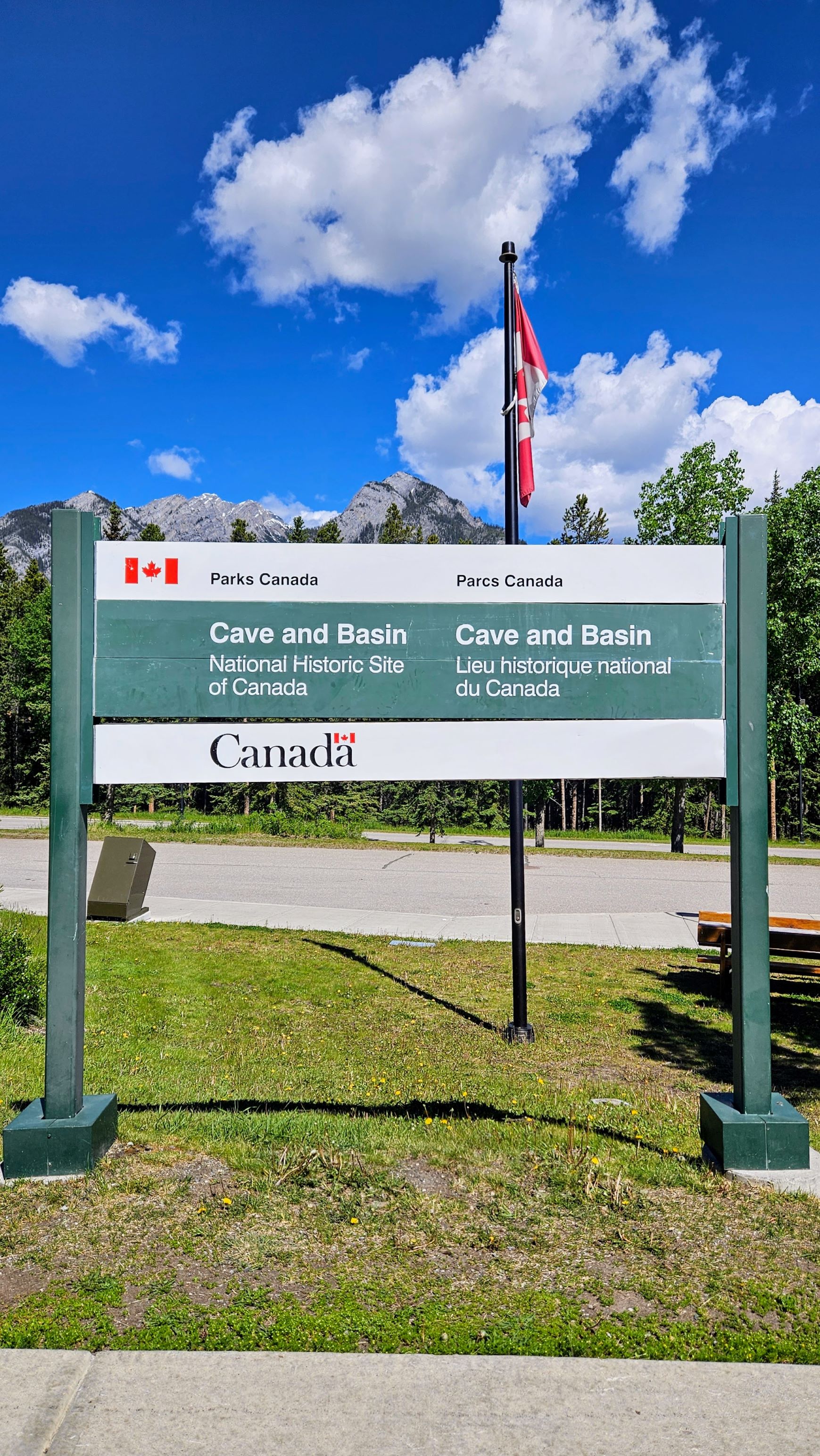
One of our final stops in Alberta, Canada, was Cave and Basin National Historic Site just outside of Banff.
It was a bit of a painful experience getting to the site as Banff was teeming with people and traffic, but once we arrived we found ample parking near the gift shop and walked to the main visitor center to begin our experience.
Cave and Basin has been a special place for Indigenous Peoples for over ten thousand years and continues to be so to this day. In 1883, three railway workers happened upon the thermal springs, sparking a series of events that led to the creation of the first national park in Canada.
We paid for entry and began our visit indoors, reading about the history of this place and its thermal waters. There was a rotunda full of information that many people breezed by on their way to the cave, but I’d recommend pausing and reading the background before heading inside so you can better appreciate what you’re experiencing.

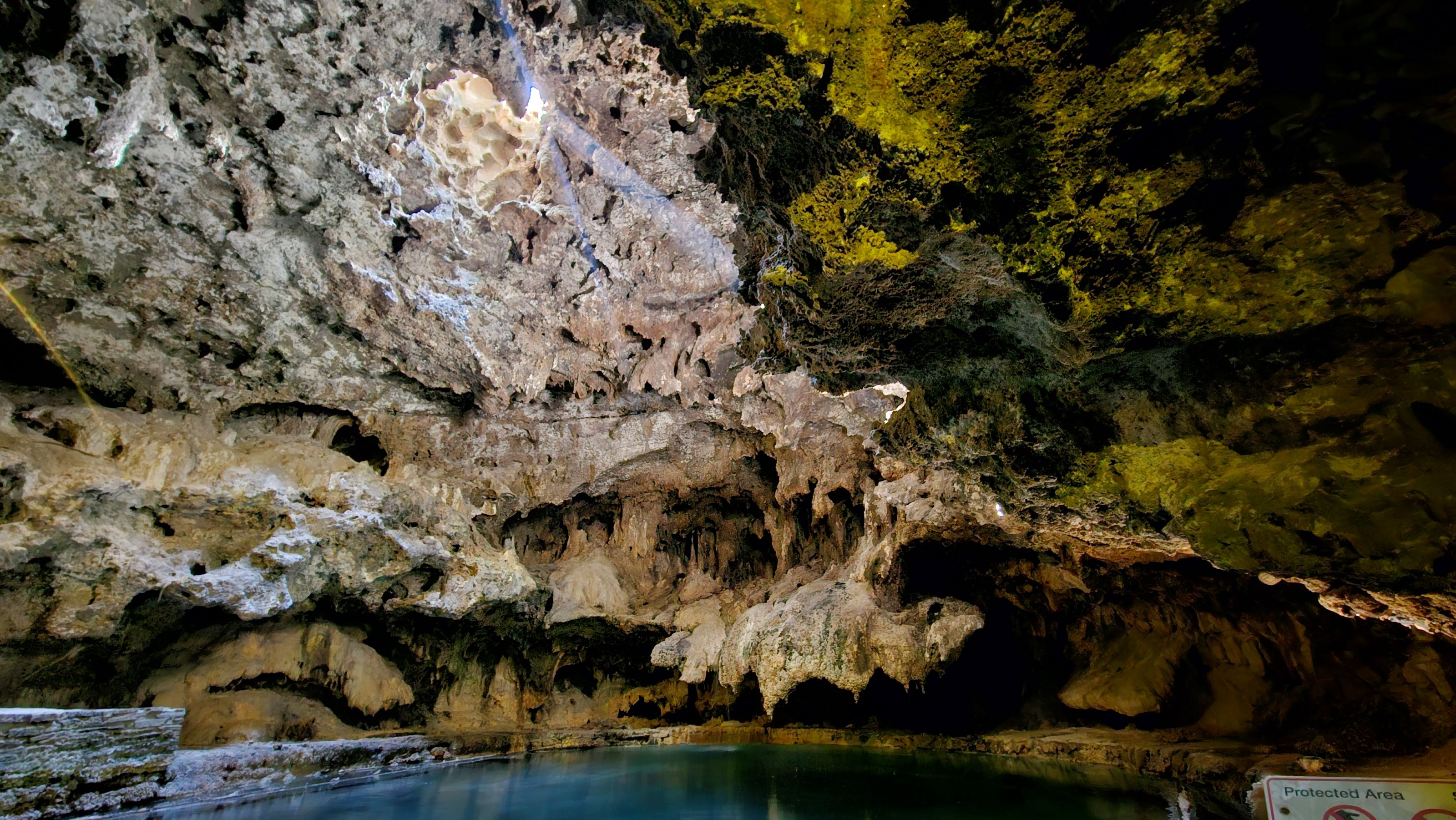
The cave is relatively small with a single opening at the top that lets in natural light. As the information in the rotunda outlined, there are no stalagmites or stalactites because they were removed by earlier users who thought it improved the accessibility and aesthetic.
Unfortunately our visit was marred by some pretty awful behavior by other guests. You enter the cave via a narrow hall that leads back to the open area where a single elevated platform overlooks the water. There are stanchions in place to make it abundantly clear you enter along the righthand side of the hall in a line that terminates at the platform – after your time on the platform, you exit via the lefthand side of the hall.
At first it seemed people were doing just that and we made our way forward until it was our turn on the platform. From there, chaos ensued as other people came walking along the ‘out’ pathway, bypassing the line and shoving up onto the small platform.
People waiting patiently in line started calling out the people who were cutting, and arguments started breaking out – which was my cue to leave. Brian was a bit behind me and was pulled into a dispute between a guy who had waited to get on the platform and a woman who had cut to the front. In addition to telling her she needed to get back in line, the guy started holding his hand up every time she tried to take a picture, blocking her view. She started yelling that he was ‘trying to threaten her’ and looked to Brian for help. He told her he agreed with the other guy that she needed to get back in line. She came storming out past me as I was trying to exit. What a mess.
I don’t know if this is the experience visitors should expect, but we learned that the reason there are no rangers back in the cave helping to maintain order is because of the off-gassing from the thermal waters – it’s actually unsafe for anyone to stay back there for more than 20-30 minutes at a time.
The poor behavior really disrupted my ability to enjoy the cave portion of our visit, but happily there was a great deal more to learn, see, and do at this national historic site that created an overall positive experience.
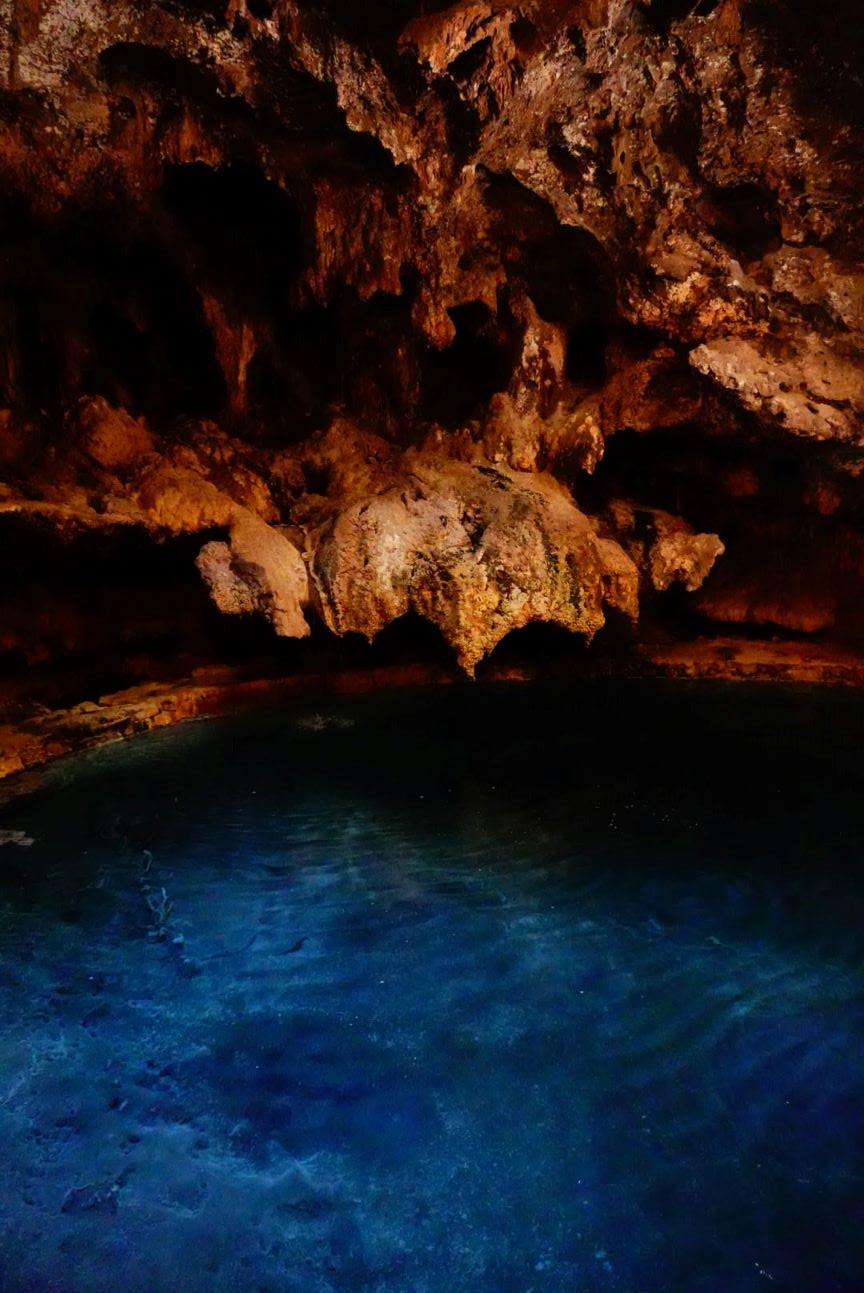
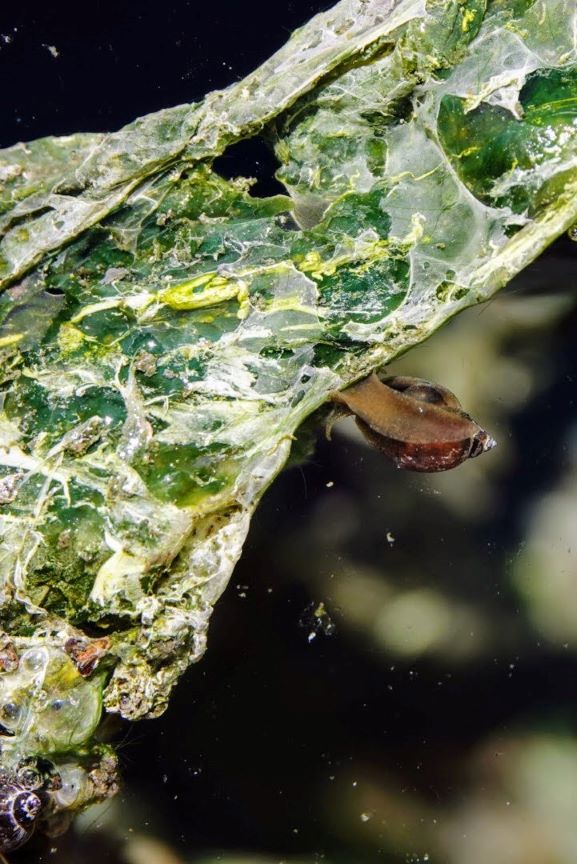
After exiting the cave, we spent a much more enjoyable time at the outside pool where a helpful ranger explained more about the animals that call these thermal pools home.
In particular we were interested to learn about the endangered snails – Physella johnsoni – that are only found in the Upper Hot, Kidney, Middle, Cave, Basin and Vermilion Lake Springs in this area. All of the thermal pools except the Banff Upper Hot Spring have been closed off to humans in order to preserve this limited habitat.
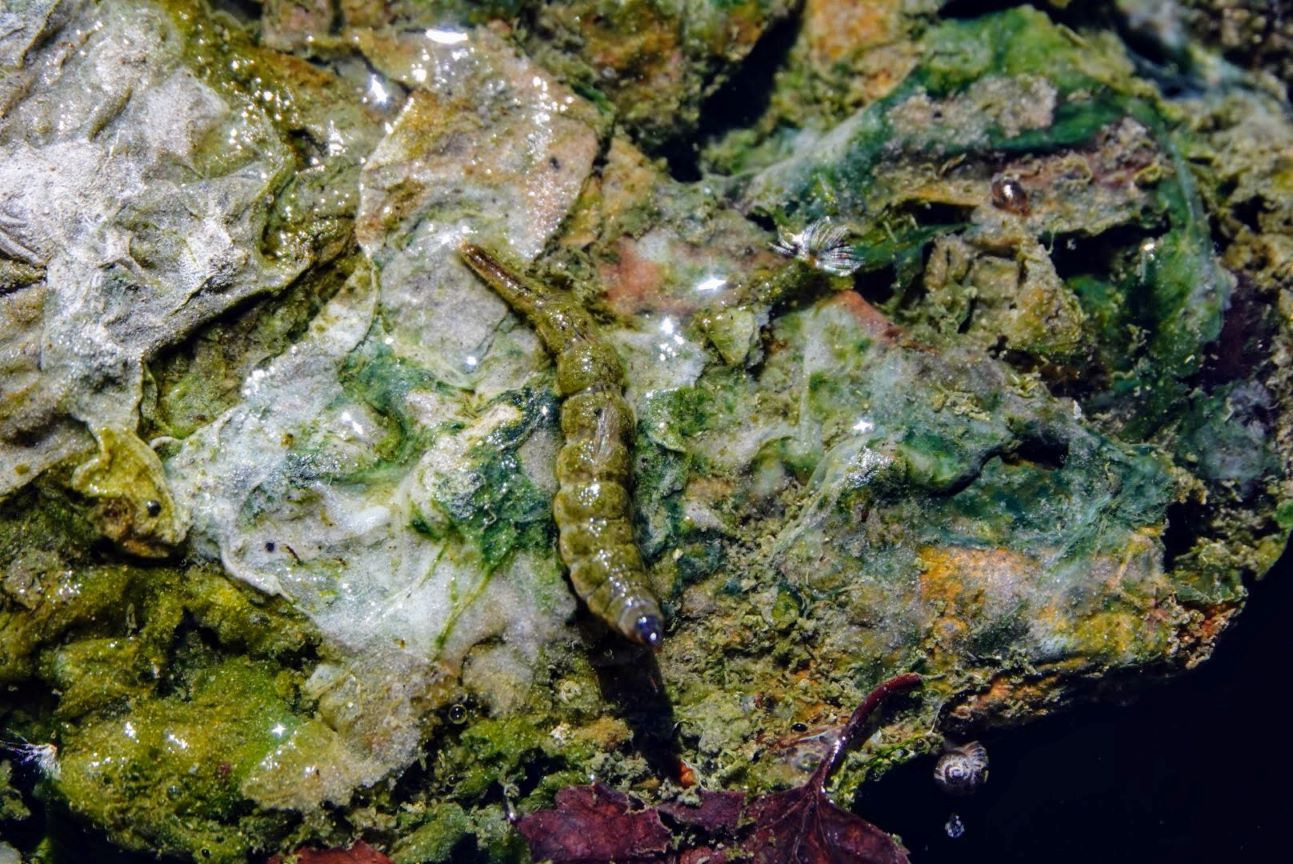
The snails are very tiny, and we couldn’t spot them until the ranger pointed one out to us. We also saw some of the tiny fish that have been introduced to these thermal waters as well as damselfly larvae that were in among the algae.


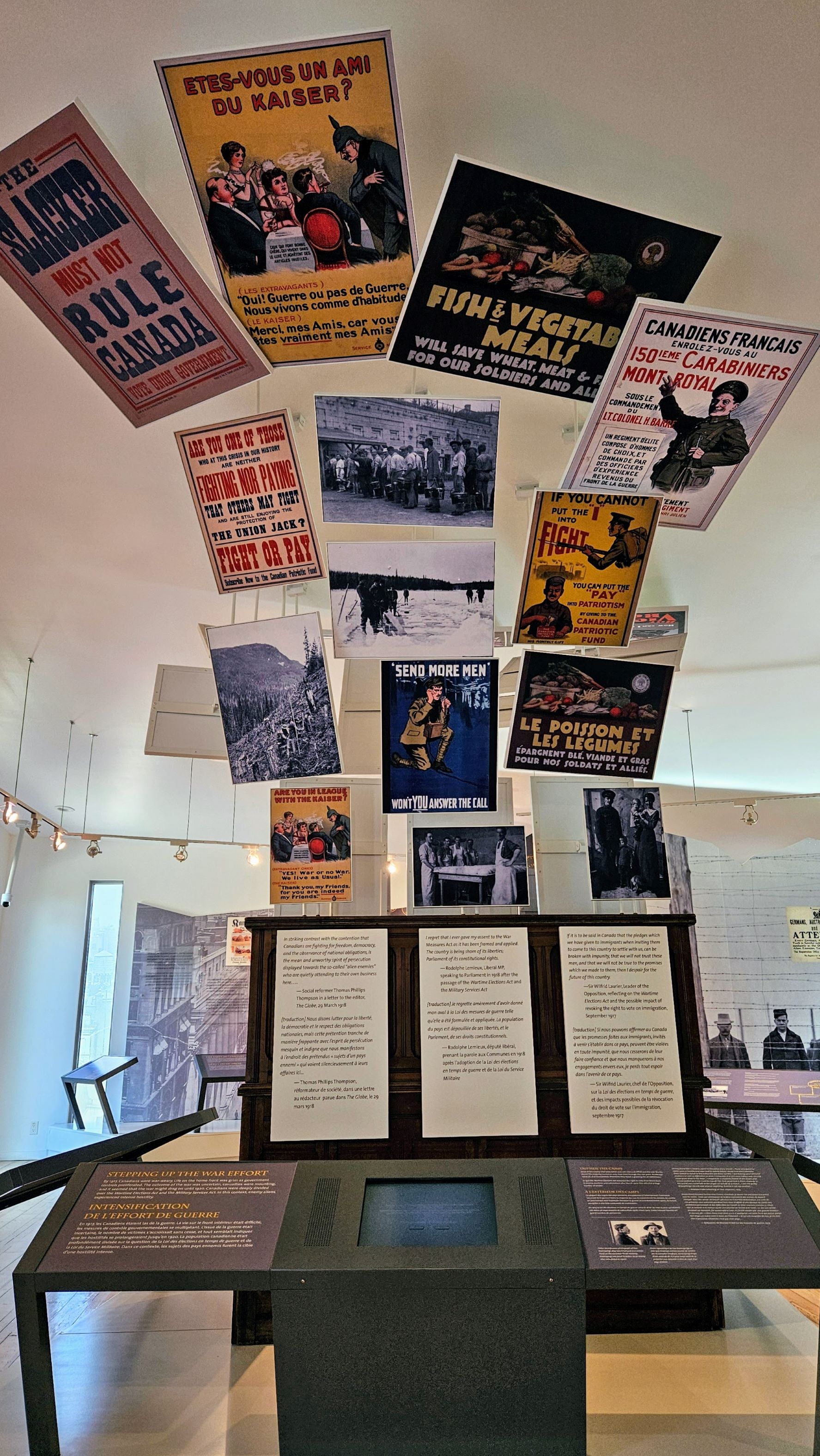
In addition to learning about the natural history of Cave and Basin, we also stopped in the WWI Internment Exhibit.
When the First World War began in 1914, there was widespread suspicion in Canada that immigrants from enemy countries – Germany, Austria-Hungary, and later Turkey and Bulgaria – might be disloyal. Labelling them “enemy aliens,” the federal government passed regulations which allowed it to monitor and even intern some of these immigrants. Merchant marines and military reservists were also interned. During and immediately after the war, 8,579 enemy aliens were interned as prisoners of war across the country.
https://parks.canada.ca/lhn-nhs/ab/caveandbasin/culture/internement-internment
We’ve learned about the horrible treatment of Japanese-Americans in the United States during WWII, which included forcibly relocating more than 120,000 people to internment camps across the country. In particular we were moved by the exhibit on Bainbridge Island near Seattle that pays tribute to the local Japanese-American community – among the first to be interned.
I didn’t know something similar had happened in Canada during WWI. These exhibits are sobering and difficult to process, but they are so important. I learned a great deal.

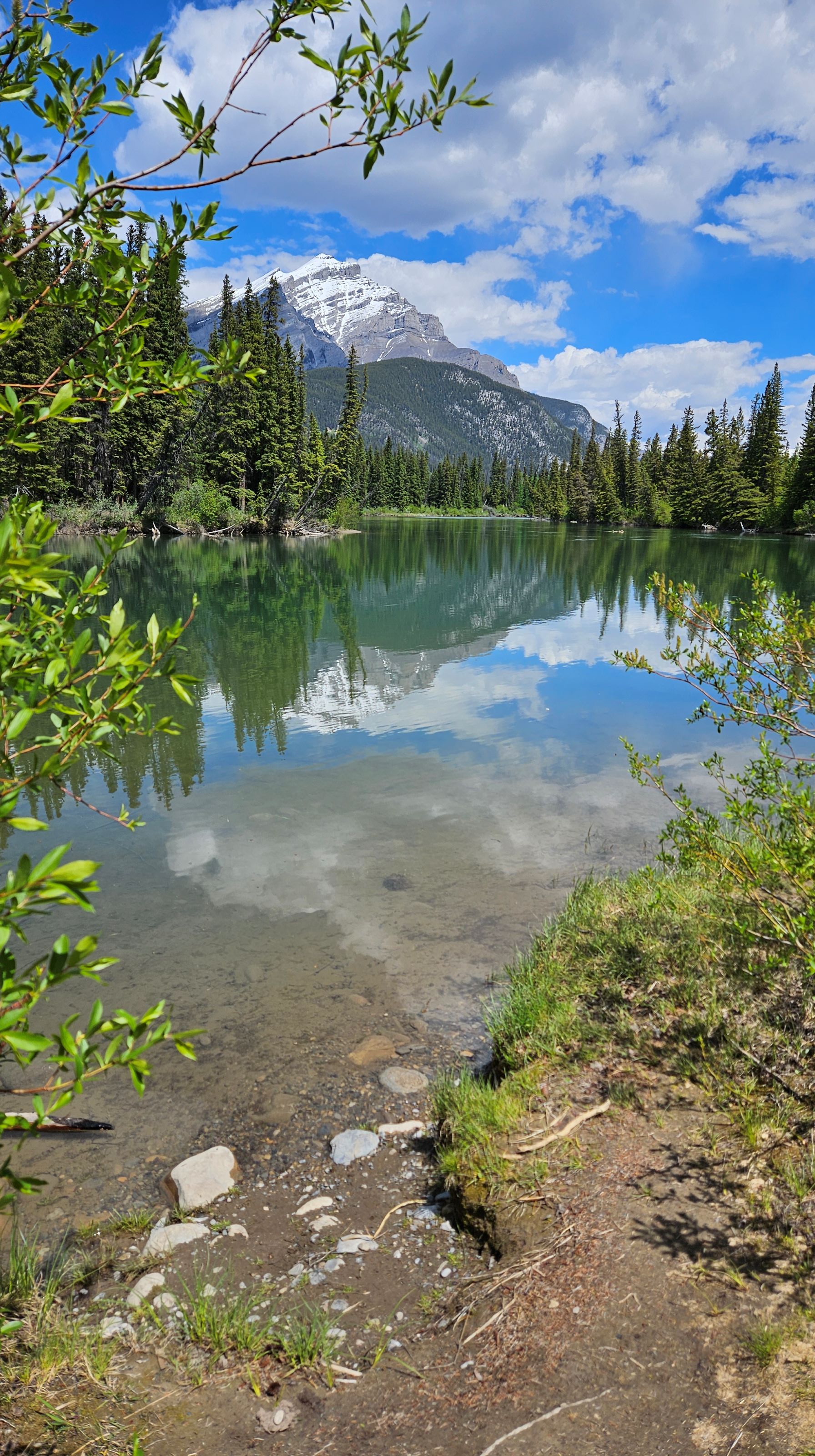
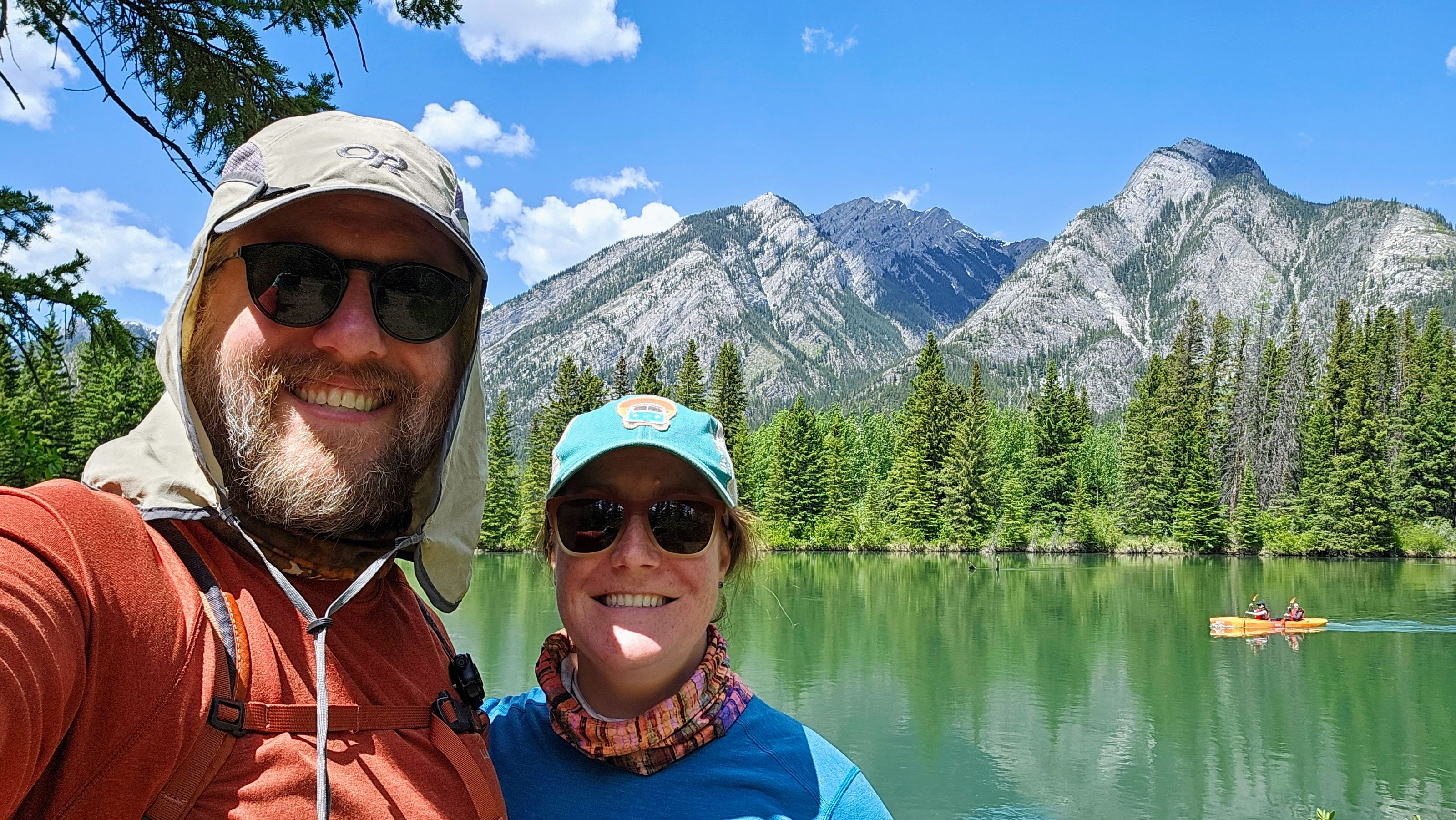
We decided to wrap up our visit by hiking a few of the trails around the visitor center. We started by walking the upper and lower boardwalks, which bring you close to the aboveground thermal waters, and then headed along the Sundance Trail until it connected to the Marsh Loop. The description warned that this is a popular horseback riding trail, and that proved correct. While we didn’t encounter any horses, we did have to navigate around the churned up mud from their hooves.
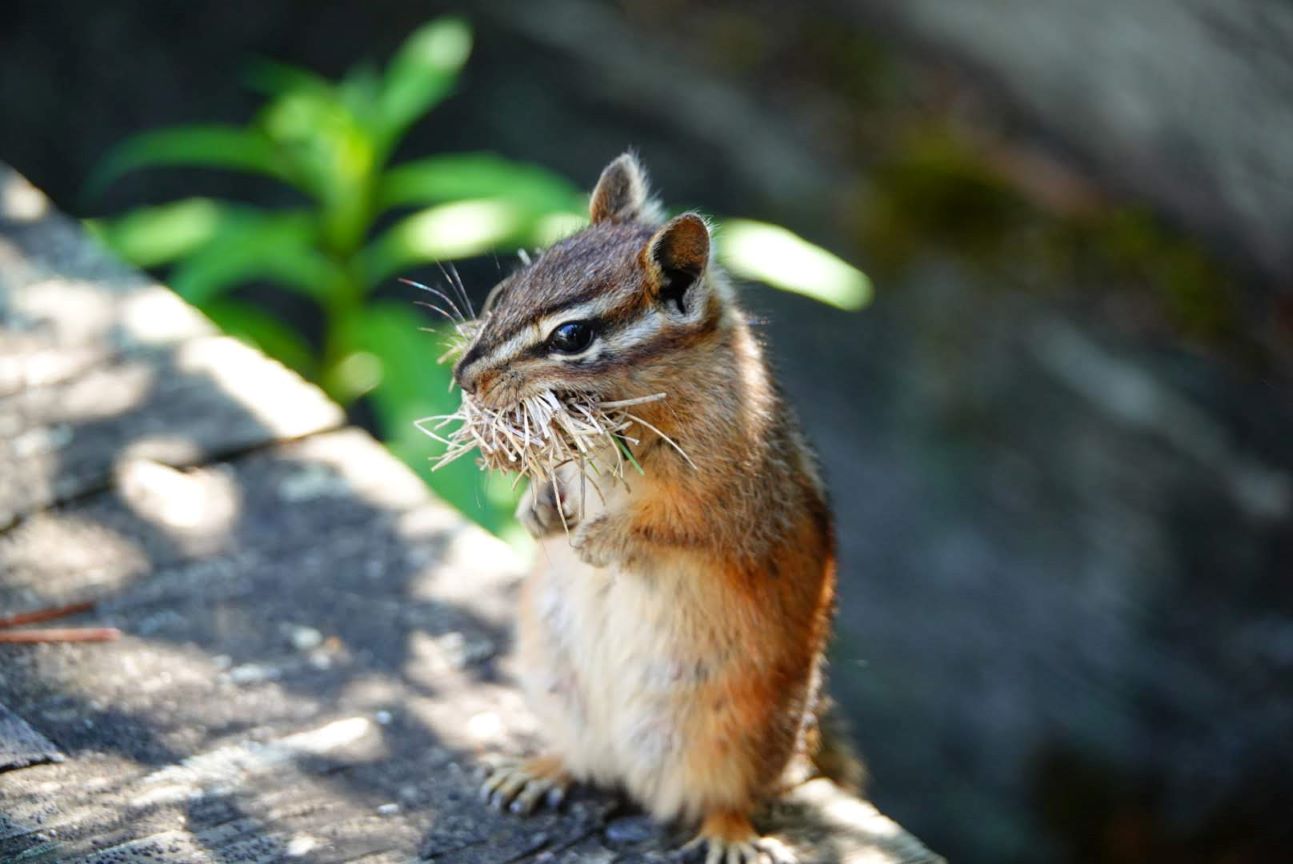
This trail was not well traveled by humans, and we enjoyed wandering through the woods and along the river – with the occasional clearing where we had great views of the nearby mountains – until we ended up back at the parking area. I was hoping we’d see some wildlife, and we did – in the form of a chipmunk!
After wrapping up our visit and setting off for our next destination, Radium Hot Springs, we had the wildlife opportunity I was hoping for – mountain goats!
There was a large herd with several babies alongside the road that was quickly making its way up the hill. I am always impressed by their ability to navigate tiny ledges and loose rock, and I was even more impressed that the little ones could do that, too. What a perfect ending to this crazy day!


 Heather's Compass