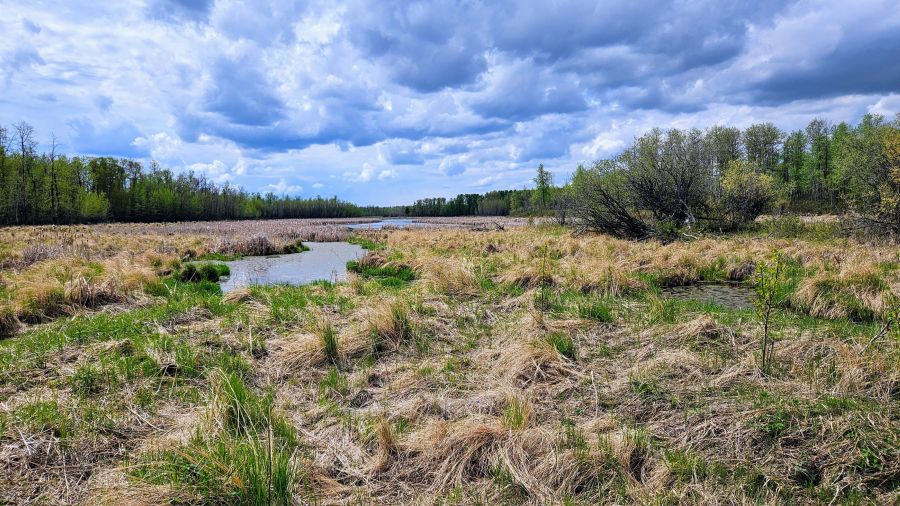
When I looked up things to do in and around Edmonton, Alberta, Elk Island National Park appeared on every list.
Located 35 minutes outside Edmonton, this national park provides an awesome outdoor respite from the city without requiring a huge effort to get there. We were driving from Saskatoon, Saskatchewan, toward Edmonton so we decided to spend a day at Elk Island before arriving in the city.
Founded in 1906 as an elk preserve to protect one of the last big elk herds in the region, (Elk Island National Park) was the first wildlife refuge in Canada. For more than a century, the park has drawn visitors to its natural setting thanks to easy access to Edmonton and an abundance of wildlife viewing opportunities.
We entered the park via the south entrance and started our visit at the Wahkotowin Visitor Information Center where we bought our day pass, asked some questions about the hiking trail options, and wandered through the small museum exhibits about the wildlife in this park.
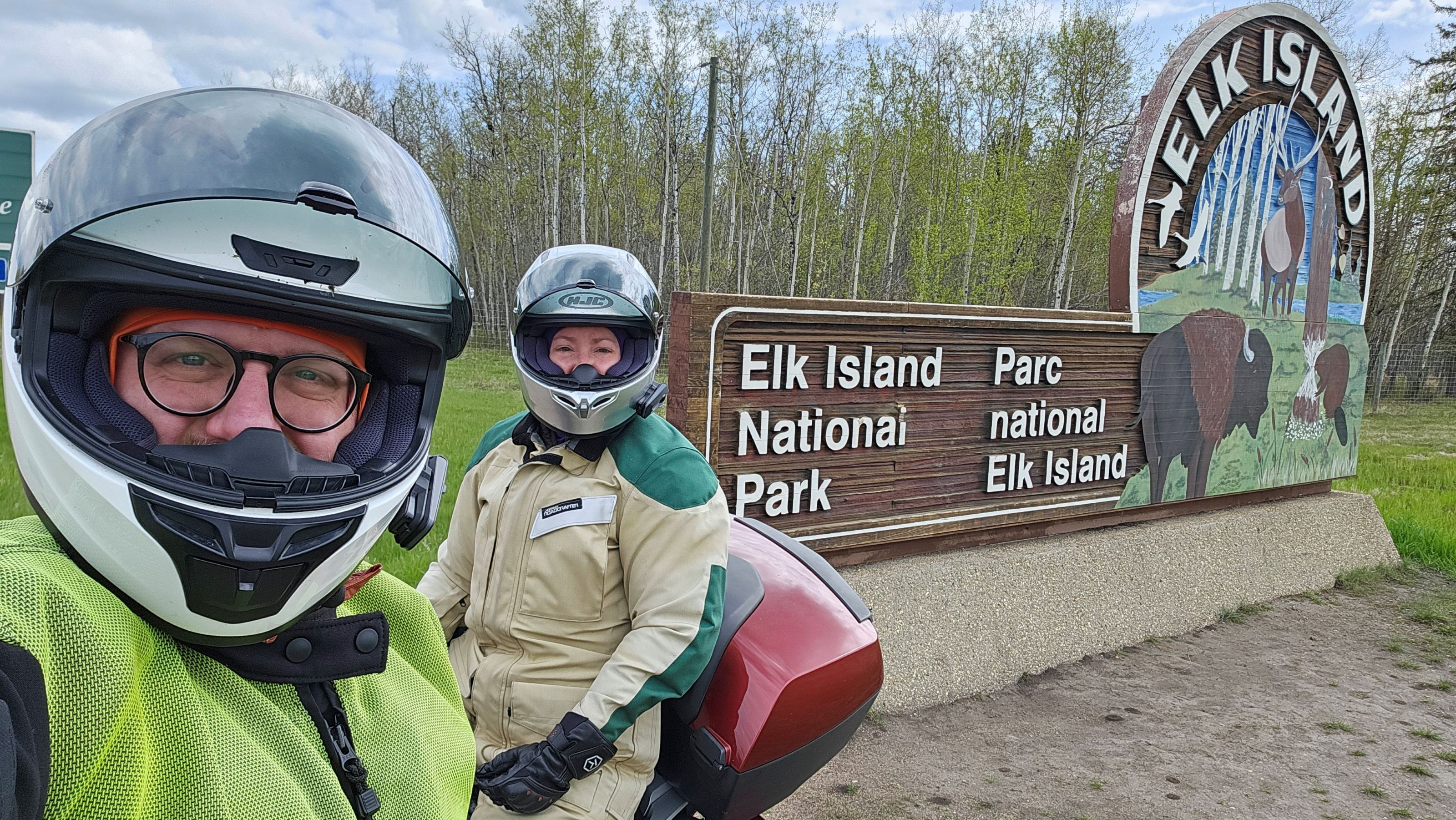
The weather forecast showed rain in the afternoon so we decided we would start with a longer hike and then consider riding into the park to see other things and tackle other hikes if the weather allowed.
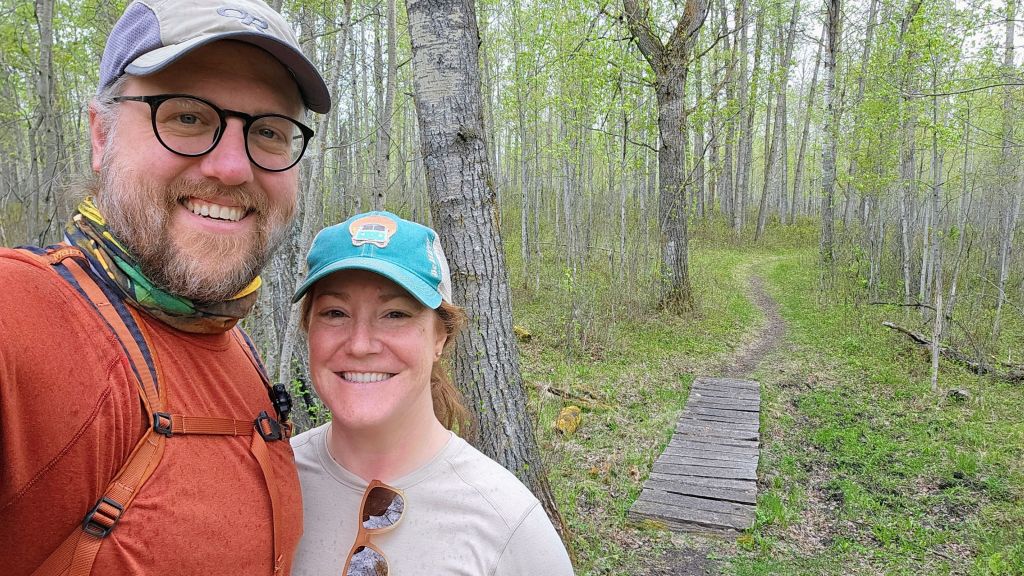
We chose a trail south of the visitor center and across the highway called the Wood Bison Trail. It’s a 15.6 km / 9.7 mile loop around Flyingshot Lake that winds along rolling hills, in and out of aspen forests, and over boardwalks through some wetlands.
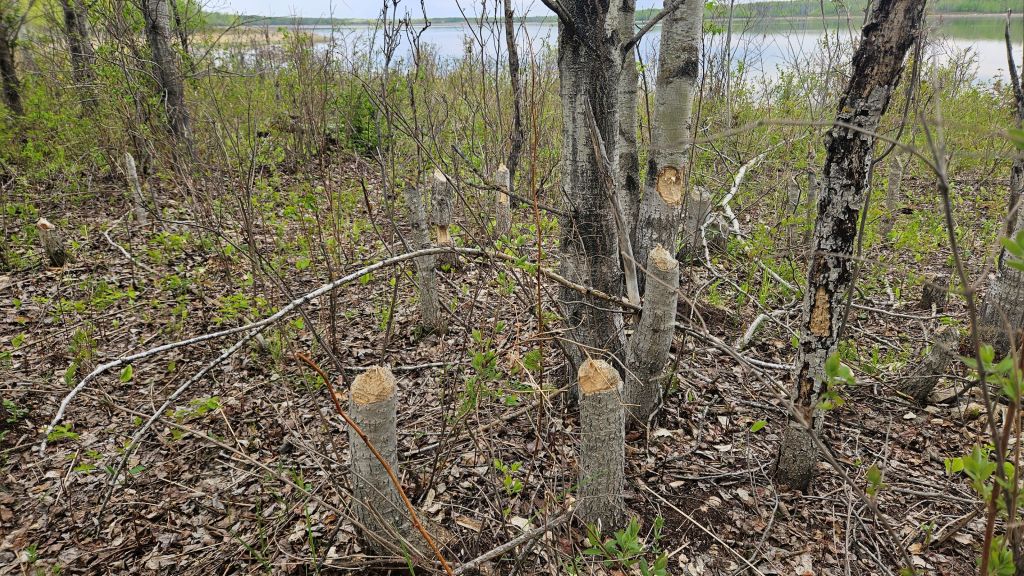
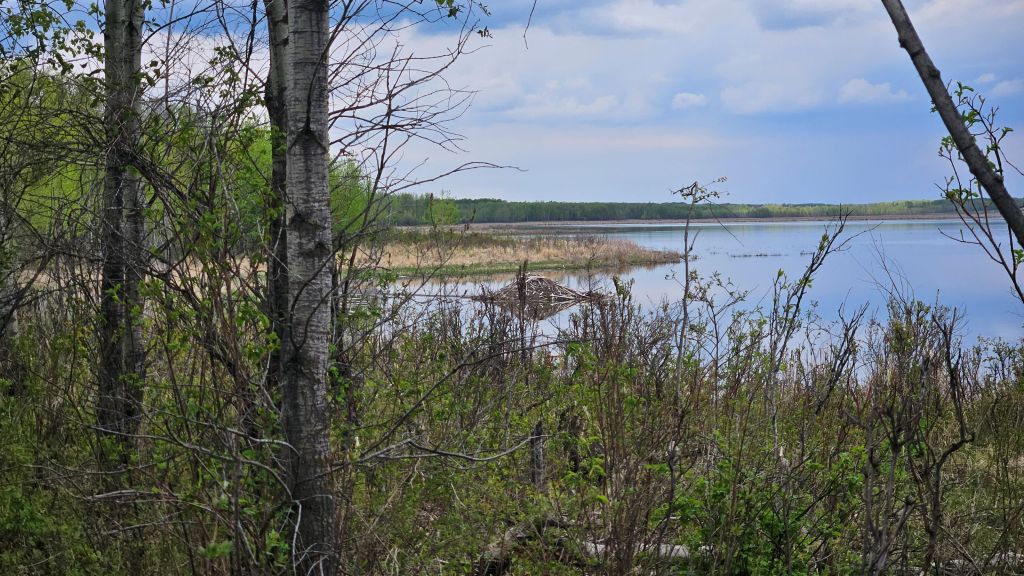
It turned out to be a good area for spotting wildlife as well – we startled a female elk who took off into the woods, paused as a coyote jogged across the trail a few yards in front of us, and saw beaver evidence all along the lake.

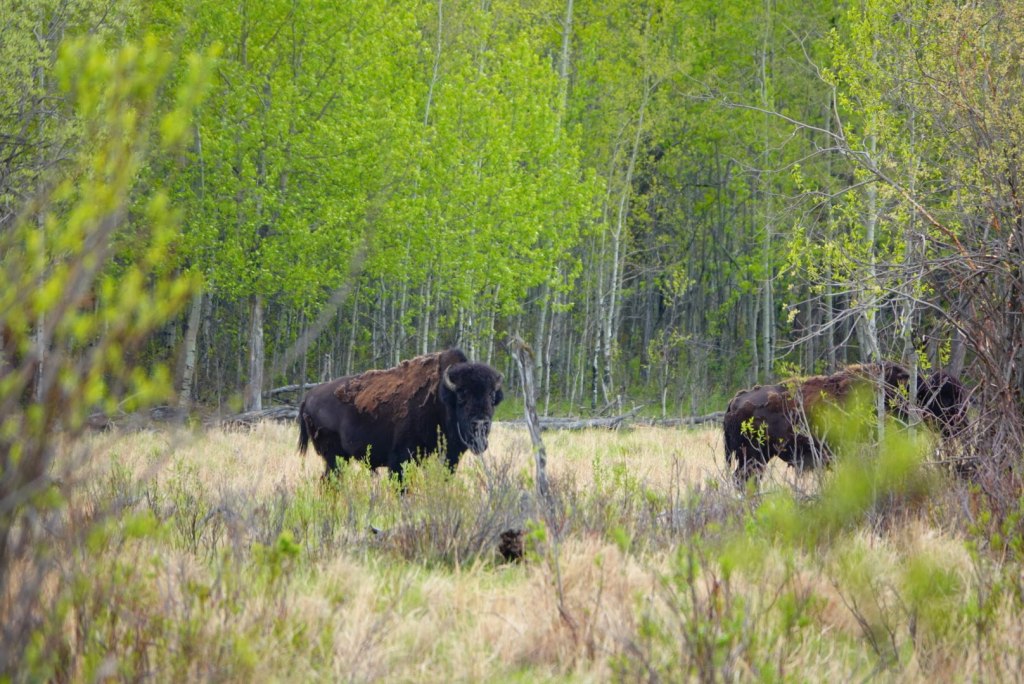
The most interesting and surprising wildlife discovery we made during our park visit was learning there are actually two different subspecies of bison in North America – Plains Bison, which we have in the USA, and Wood Bison, which are the largest land mammal in North America and found only in Canada.
Elk Island National Park is the only national park that maintains herds of both subspecies. I was thrilled when we spotted Wood Bison off the trail – they are definitively bigger than the Plains Bison we are accustomed to seeing, and they were very skittish and quick to move deeper into the forest as we passed by.

Just as we were concluding our hike it started to downpour. We hid in a small wooden alcove near the trailhead sign and watched as our motorcycle and gear grew ever more saturated. We finally made a run for it, brought as much gear as we could carry back to our hideout, and suited up for a wet ride into the park.
The rain let up as we rode north toward Astotin Lake, which is near the north entrance to the park. We parked by the lake, left our things out to dry, and walked over to the Astotin Theatre to watch some short films about different conservation efforts in the park, including an interesting piece about the beaver in this area.
At the turn of the 19th century, this area had a significant beaver population that was almost completely exterminated due to the regional fur trade. The population has made a comeback, but this has created complications for the park as well as nearby farmers as the beavers are constantly taking down small trees and damming up waterways. The film showed the early outcomes of an innovative approach to managing streams and other moving waterways that may allow both humans and beavers to live side-by-side. Trialed at Elk Island National Park, the researchers’ approach is now being used in other areas.
While I was looking forward to a day of hiking before heading back into the city, our visit to Elk Island National Park proved to be much more interesting and informative than I expected. I join with all of the other blogs I read in my research in recommending a visit to Elk Island National Park if you’re visiting Edmonton!
 Heather's Compass
Pingback: Top Things to Do in Edmonton, Alberta – Heather's Compass