
During our recent motorcycle trip from Wyoming to Ohio, we spent a morning at Indiana Dunes National Park. Redesignated as a national park in 2019, Indiana Dunes has been a hotspot for preservation efforts for more than 100 years. Indiana Dunes State Park, which now resides within the national park, was established in 1926, and Indiana Dunes National Lakeshore was created in 1966. These areas along with additional acreage comprise the national park you can visit today.
We started at the visitor center where a very helpful park ranger outlined our options for exploring key sites within the park given we only had a couple hours for our visit.
First we watched the park video, which not only assisted us in orienting to the different areas of the park (the east and west sections of the park are a 30-minute drive apart and separated by a steel mill) but provided us with lots of fun facts about the geological features, floral, and fauna native to this area.
Fun facts: Did you know that despite being only 15,000 acres, Indiana Dunes National Park is one of the most biodiverse areas in North America? Did you know that each May the Audubon Society hosts a birding festival in Indiana Dunes due to the exceptional variety of birds that migrate through this area?

After our time in the visitor center we rode over to the western section of the park to visit the Ogden Dunes and hike one of the most popular trails within the park, the Dune Succession Trail.
Just under one mile, this trail begins with a short sandy walk before ascending via the wooden steps pictured below to a viewpoint of the dunes and Lake Michigan.
Given its still early spring, the flora was just beginning to bloom and the majority of our views contained sand, grassland, and water.

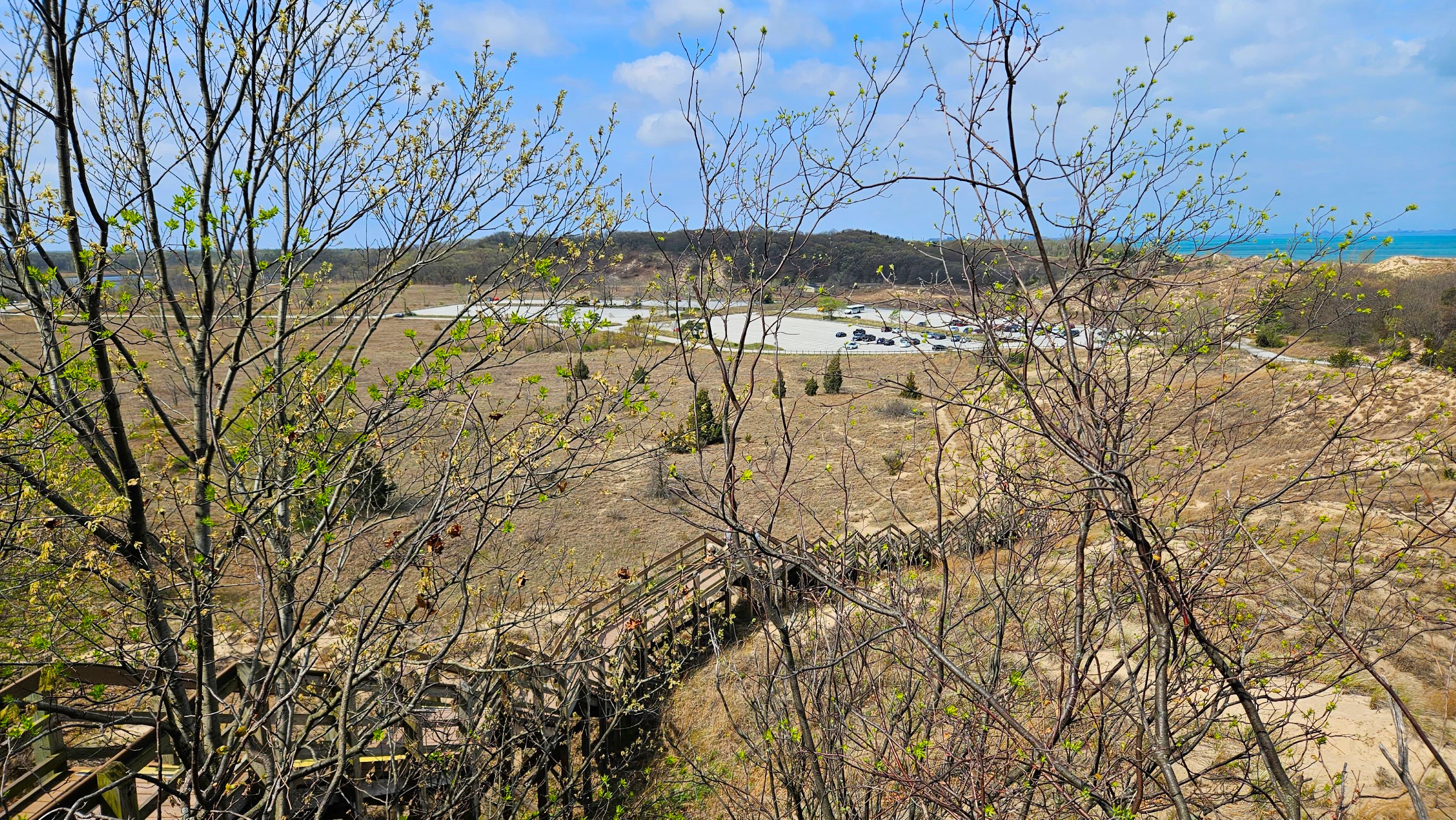
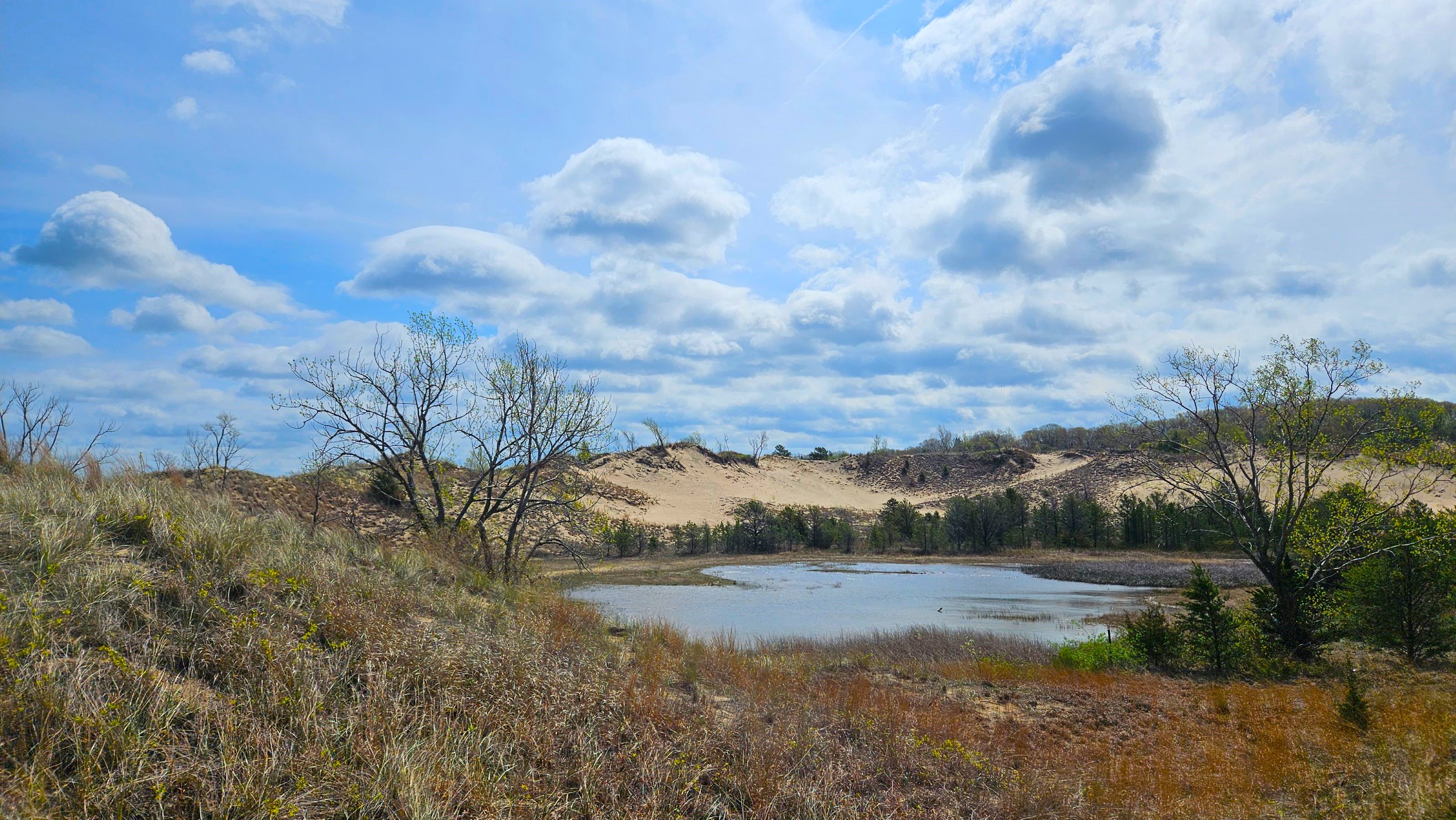
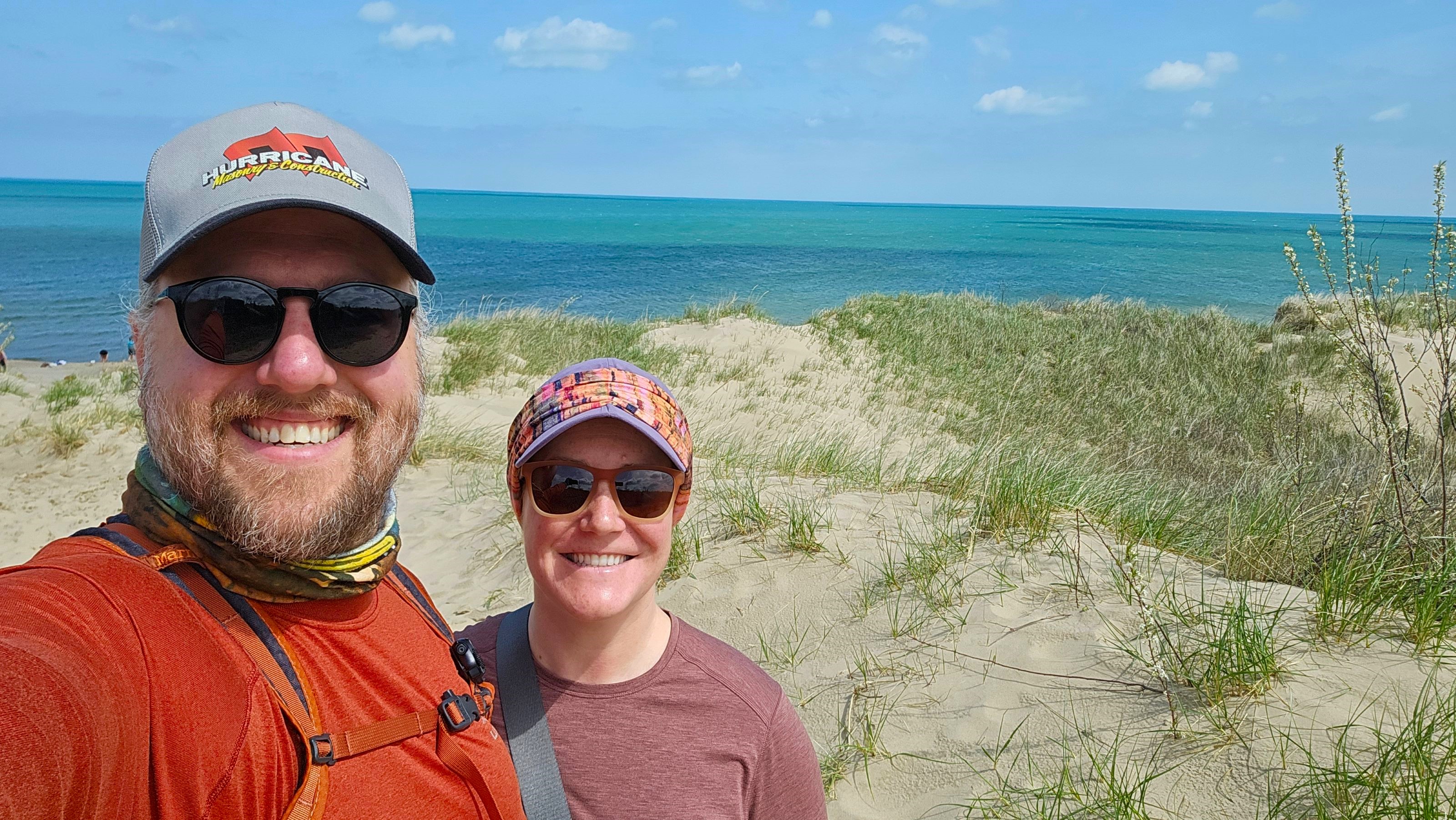
Continuing along wooden boardwalks, we looped around to the shoreline and West Beach before returning to the trailhead and main parking area.
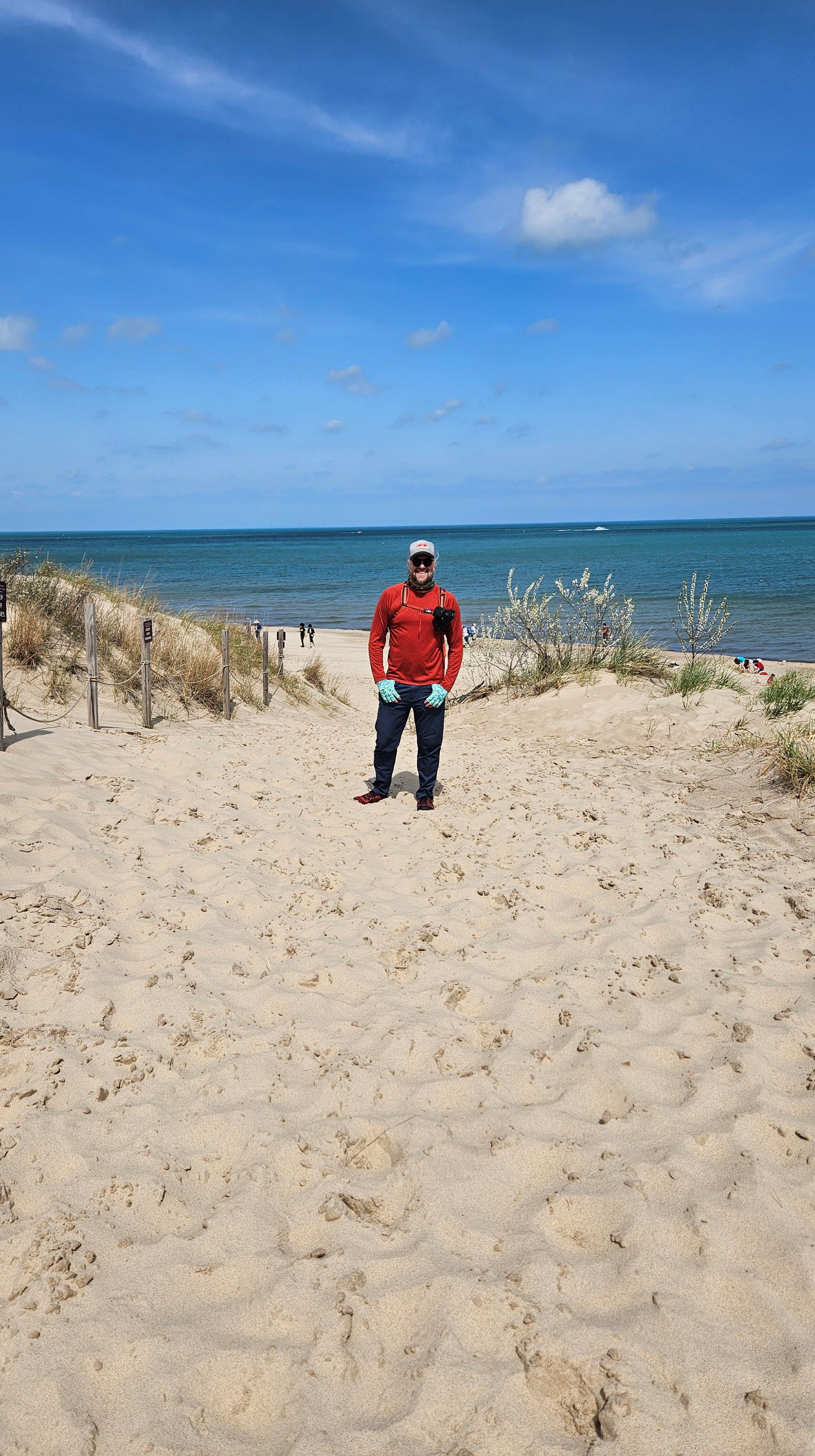
I can see why West Beach gets crowded in the summer. Lake Michigan is so clear and blue, and the bright white sand and sunshine made it feel like we were seaside. A nice bathhouse is a short walk away with showers, bathrooms, and changing rooms. Off to the northwest we could make out Chicago in the distance, which is only 28 miles across the water from the national park (48 miles via car).


With only an hour remaining in our visit, we geared up and rode over to the eastern section of the park for an abbreviated stop at Brian’s top pick for our visit, the Century of Progress Homes.
The 1933 World’s Fair in Chicago — called the Century of Progress — offered millions of people in the depths of the Great Depression a hopeful vision that highlighted futuristic changes on the horizon. Developer Robert Bartlett brought a dozen buildings from the fair including five from the Homes and Industrial Arts housing exhibit that make up the Century of Progress Historic District. The buildings were moved by barge and truck to Beverly Shores, a resort community he was developing on the Indiana shore of Lake Michigan… To save the structures, Indiana Landmarks leased them from the National Park Service, then subleased four to people who have restored them in exchange for long-term leases.
During the last weekend in September, the homes are opened to the public for an annual guided tour. We’d love to try and reserve a spot in the future – it was very cool walking along and seeing them from the outside, but we’d love to see the restored interiors at some point!

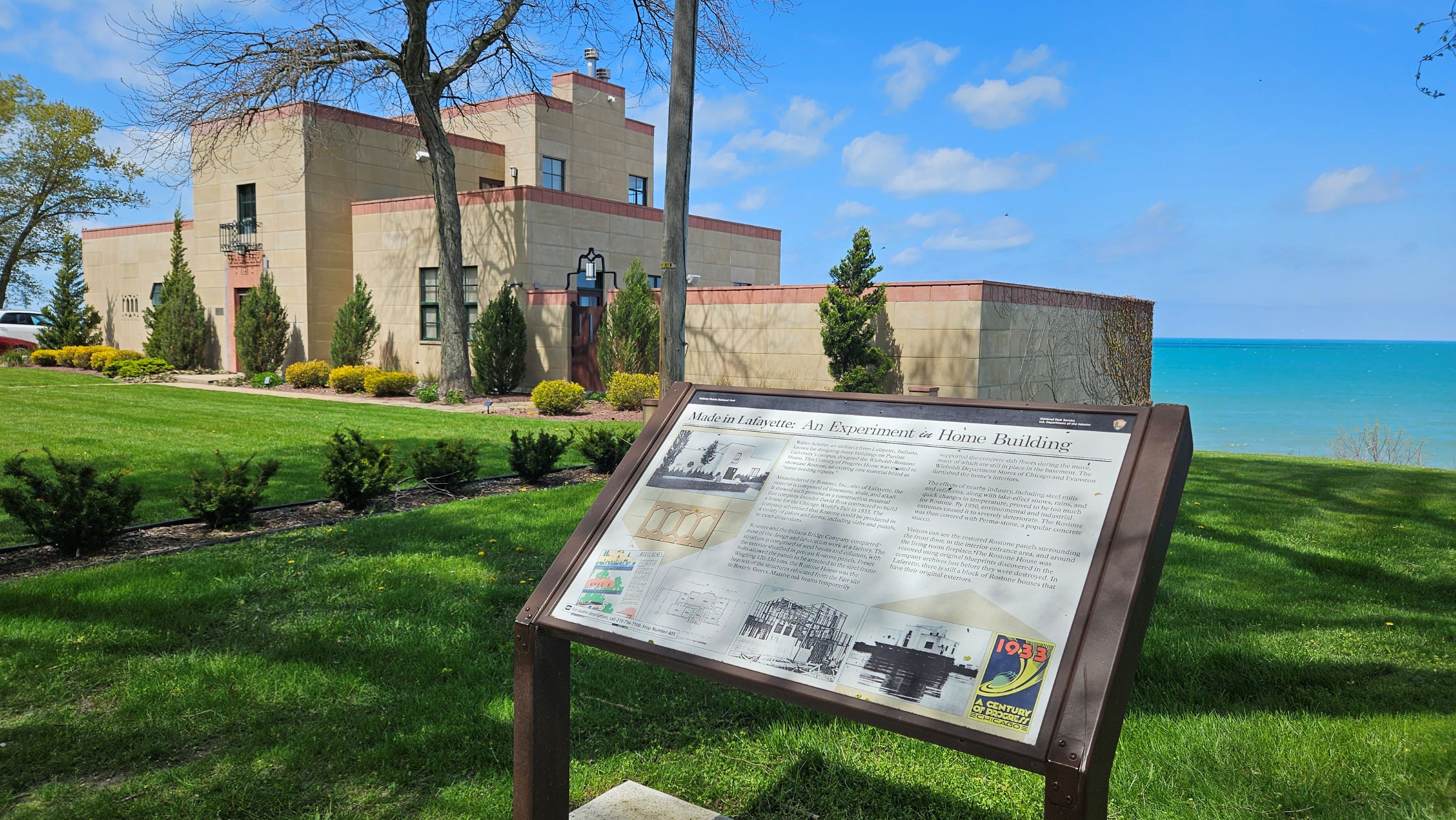

We took the park ranger’s advice and rode along Lake Front Drive, admiring the houses overlooking Lake Michigan before cutting back toward the Great Marsh and on to the final stop of our trip, Mount Baldy.
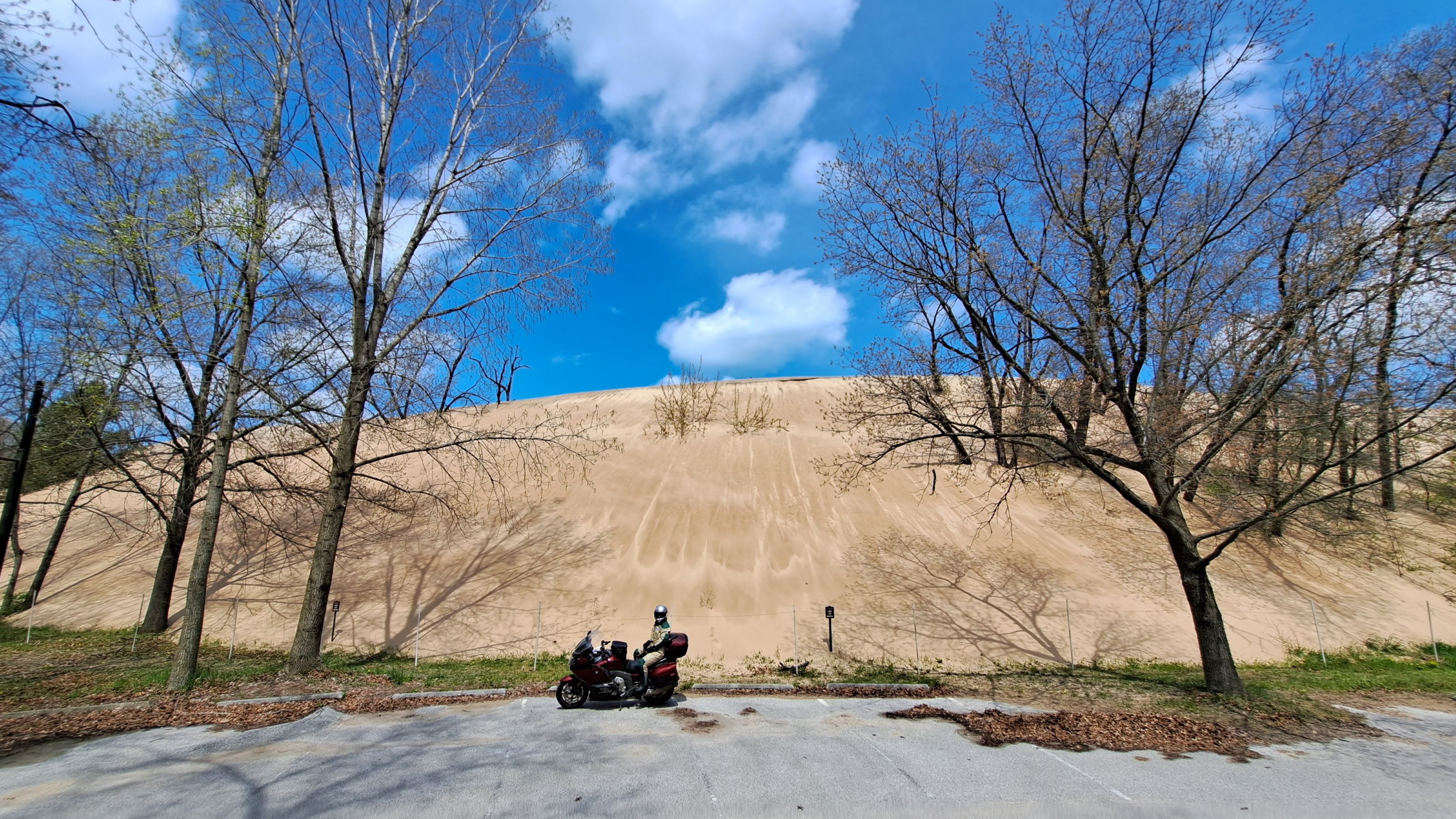
Considered the national park’s most dynamic dune, Mount Baldy is presently 126 feet tall and has been moving inland since at least 1938 at an incredible rate of more than 6 feet per year! Despite having learned some details from the park video, I was still surprised when we pulled in to see that the dune has started to cover portions of the parking lot, necessitating upcoming efforts to relocate the bathrooms, parking areas, and shoreline trailhead. As you can see in the picture below, it is also swallowing giant trees as it continues to move inland!
Due to its unique configuration and rate of change, the dune is unsafe and the only way to hike on it is via guided ranger tour. I’d love to come back and complete a tour as well as explore the marshes and shoreline around this incredible feature. I’ll be interested to see how much it has changed by the next time we visit.
Several hours wasn’t nearly enough time to explore Indiana Dunes National Park. There were tons of other trails, centers, farms and homesteads, dunes, marshes, bogs, and beaches that will have to wait until next time. Also on my list for next time: tackling The 3 Dune Challenge!
Despite having grown up not terribly far from Indiana Dunes, I had never heard of this area until it was redesignated a national park. I’m glad this area is being protected, and I look forward to revisiting when we have more time to explore everything it has to offer!
 Heather's Compass