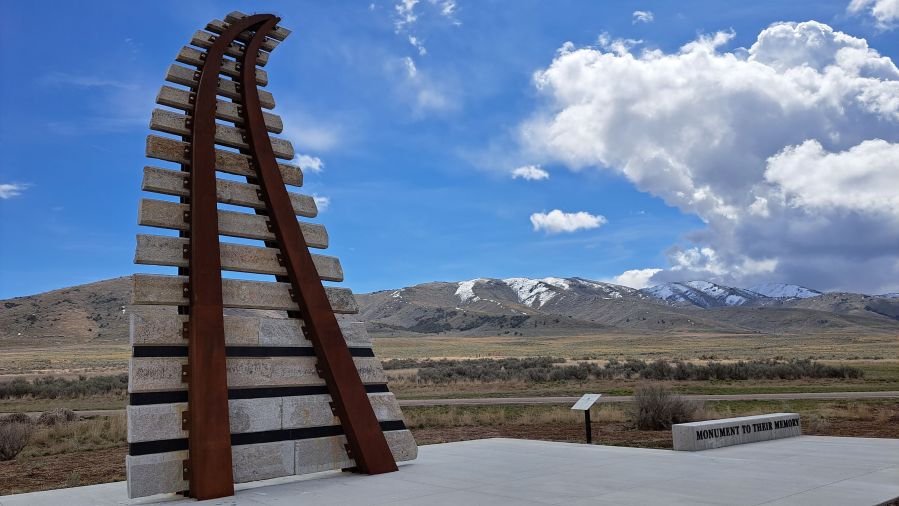
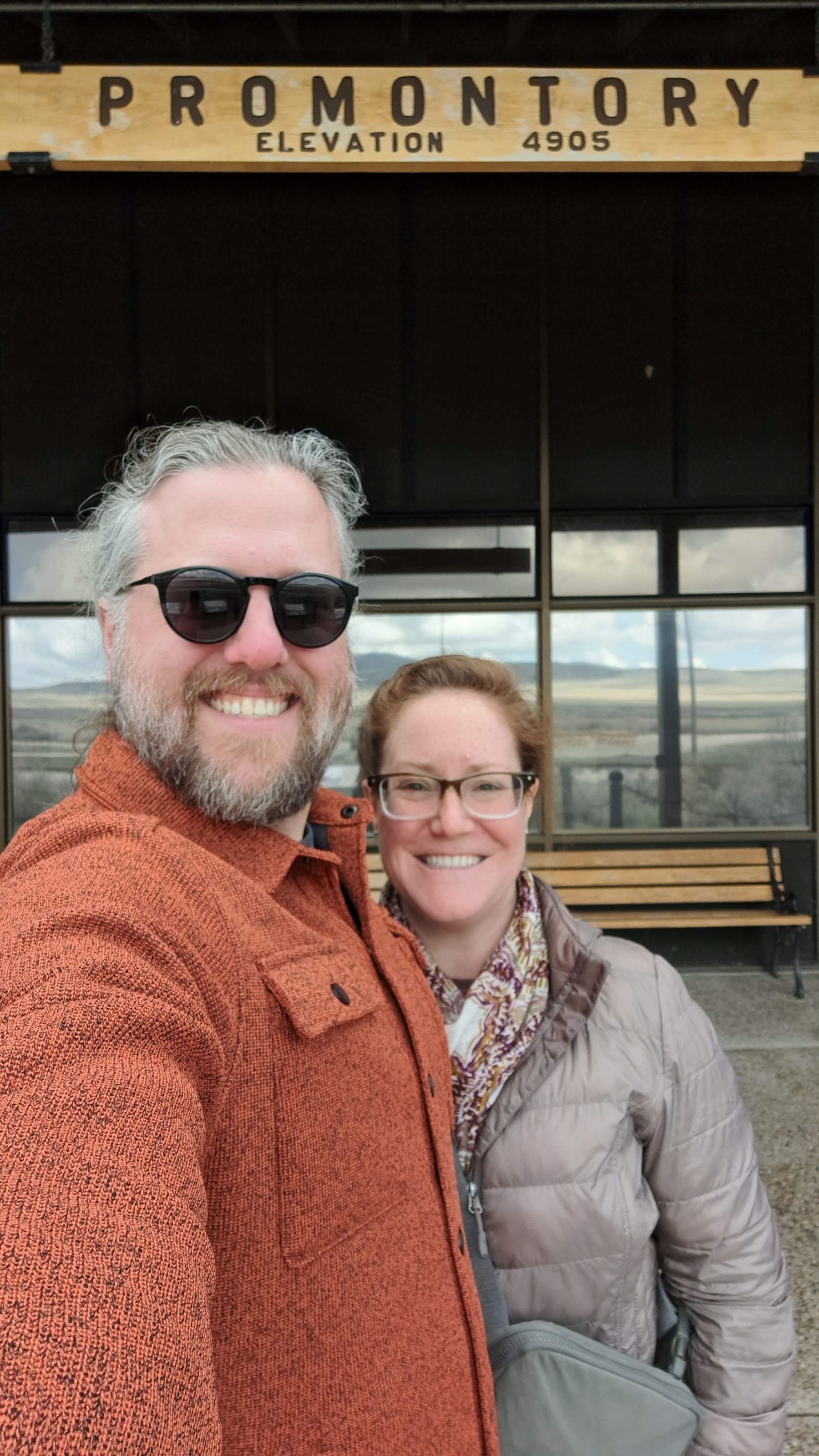
Each time we visit our friends in West Haven, Utah, we talk about heading up to Promontory Point to visit the Golden Spike National Historical Park. We finally made it happen during our recent trip and enjoyed refreshing our knowledge on the events leading up to the completion of America’s first transcontinental railroad.
We spent a couple hours at the site, exploring the visitor center, watching the park film, perusing the museum and gift shop, and walking along the tracks behind the main building. While many aspects of the site have been recreated – for instance, almost two miles of track have been re-laid where the rails were originally joined – the historical recreation was still interesting.
On May 10, 1869, two locomotives – Central Pacific’s Jupiter and Union Pacific’s No. 119 – pulled up to the one-rail gap left in the track. After a golden spike was symbolically tapped, a final iron spike was driven to connect the railroads. Central Pacific had laid 690 miles of track; Union Pacific, 1,086. They had crossed 1,776 miles of desert, rivers, and mountains to bind together the east and west.


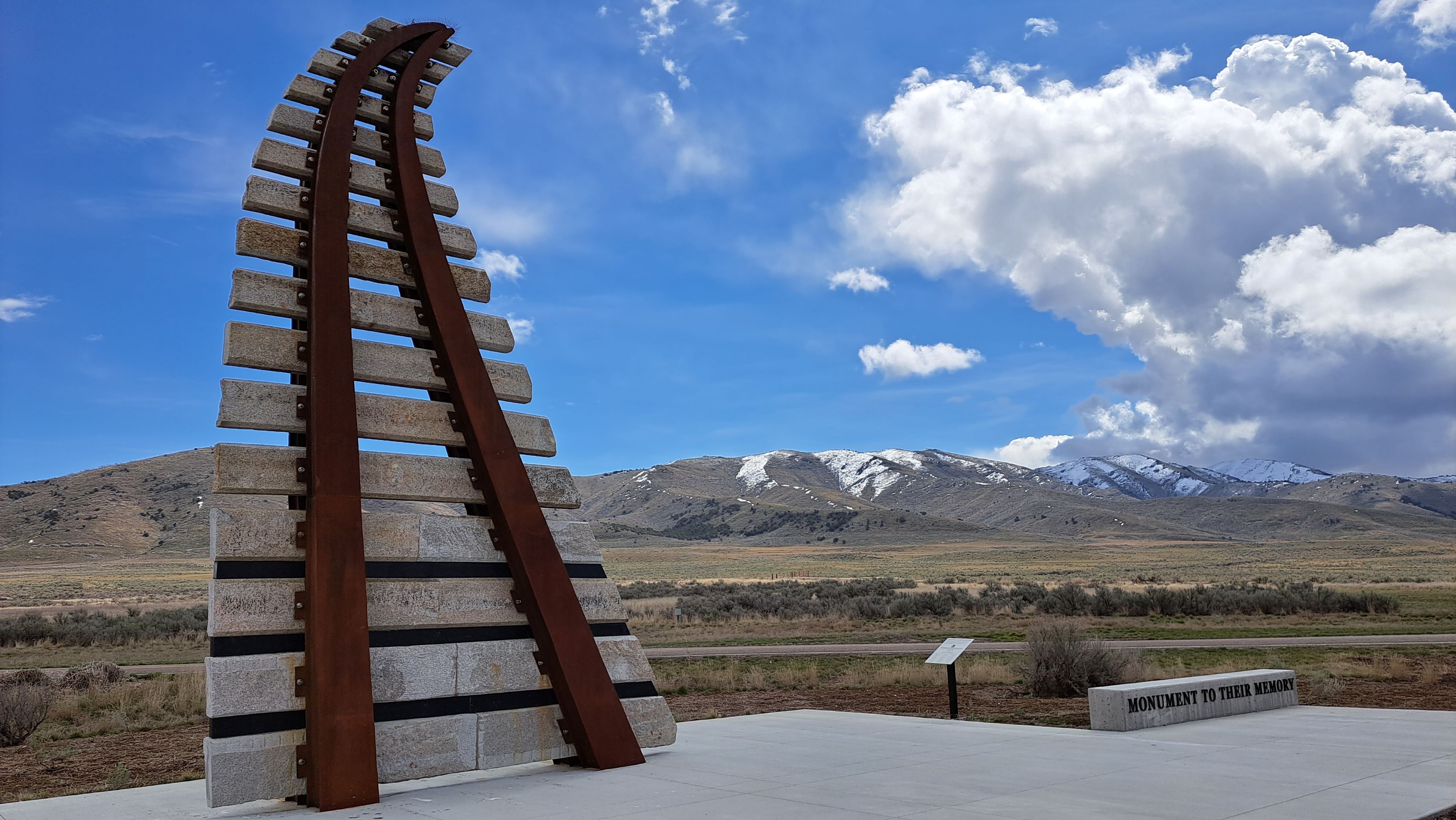
I appreciated the National Park Service’s effort to incorporate the stories of the people who laid the track – many of whom lost their lives in the process due to unsafe working conditions, volatile relationships in the “hell-on-wheels” camps, and more. Union Pacific employed immigrants, Civil War veterans, formerly enslaved people, and indigenous people while Central Pacific relied almost exclusively on Chinese immigrants.
There were also stories about how indigenous people lost their lives and land as the railroad companies laid track through their territories without permission, recompense, or regard for the permanent interruption to animal migratory routes – resulting in the death of both the animals and the people who relied on them for food and supplies.
In addition to these tragic realities, there were a number of bewildering facts about how poorly managed, wasteful, and ridiculous this project became. For instance, because the railroad companies received land subsidies from the federal government based on how much track they laid, the two companies had their crews pass one another instead of coming to a meeting point so they could continue collecting their subsidies. Once Congress found out, they finally declared Promontory Summit as a meeting point, but more than 200 miles of land had been graded for absolutely no purpose and at tax payers’ expense.
We also learned the truth about what occurred at the ceremony to drive the final spikes. Once the ceremonial gold and silver spikes were replaced with the iron spikes that would actually connect the final railroad tie, the head of each railroad company was invited to drive the spikes into place. The final spike was wired into the transcontinental telegraph line so people across the country could hear this milestone moment. Both railroad heads swung at the spike, and both of them completely missed! They had to find a regular railroad worker in the crowd to actually drive home the final spikes. Ridiculous!
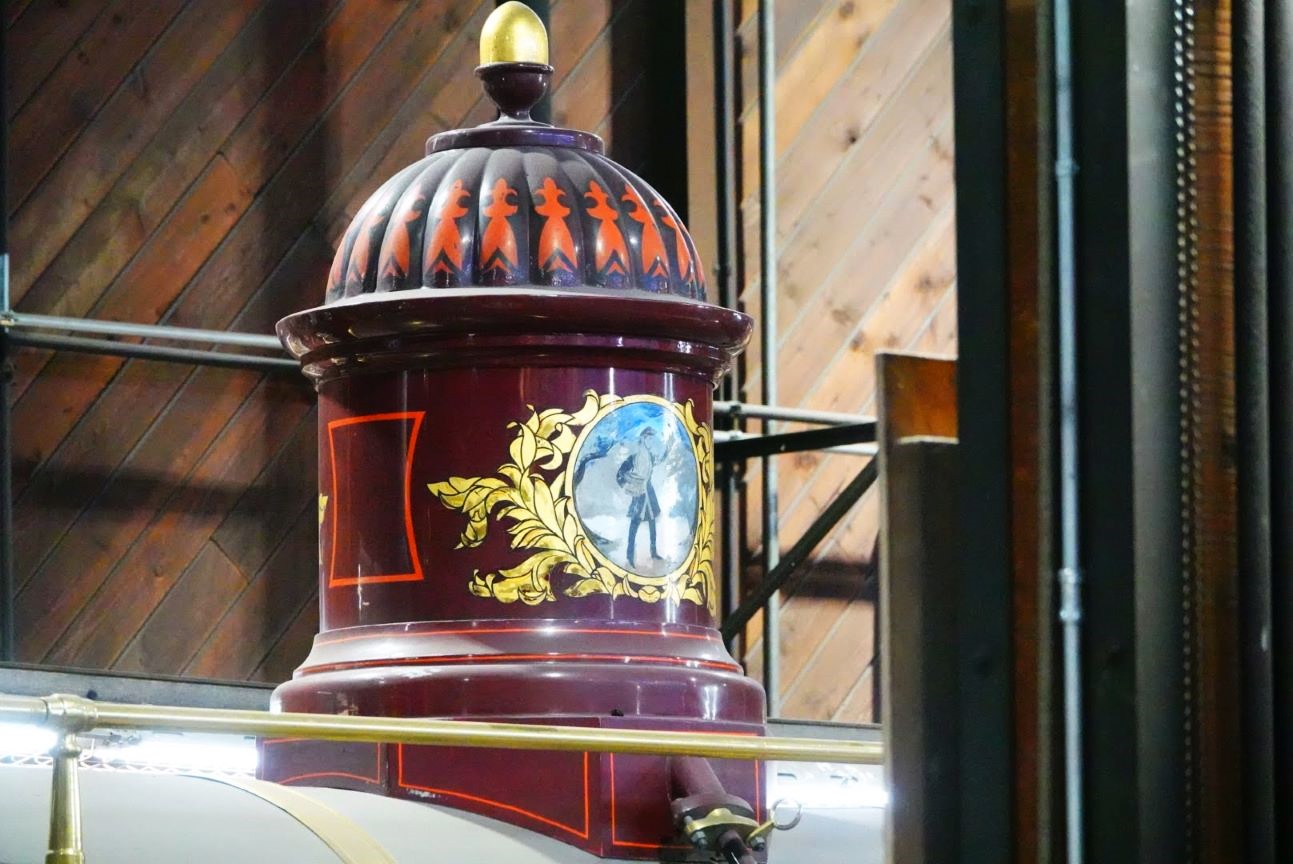
On a lighter note, we had timed our visit to align with one of the daily Machine Shop tours. We drove from the visitor center out to the Engine House and enjoyed meeting the team working on the two engines (both recreations – neither of the originals is still in existence) and hearing about how these engines came to be, how they are maintained, and the preparations needed ahead of the annual event to recognize the original May 10, 1869, ceremony.



The final stop of our visit was unrelated to the history of Promontory Point but accessed via the national historical park’s roadway – a land art installation known as the Spiral Jetty.
Robert Smithson’s Spiral Jetty, located at Rozel Point on the northeastern shore of Great Salt Lake in Utah, is one of the most remarkable examples of Land art. In 1970, assisted by a crew operating dump trucks, a tractor, and a front loader, Smithson displaced some 6,000 tons of black basalt rock and earth from the adjacent shore to form a coil 1,500 feet long and approximately 15 feet wide, winding counterclockwise into the lake. Created at a time when water levels were particularly low, Spiral Jetty was submerged in 1972. Droughts caused the lake to recede in 2002, and the sculpture has remained visible ever since.
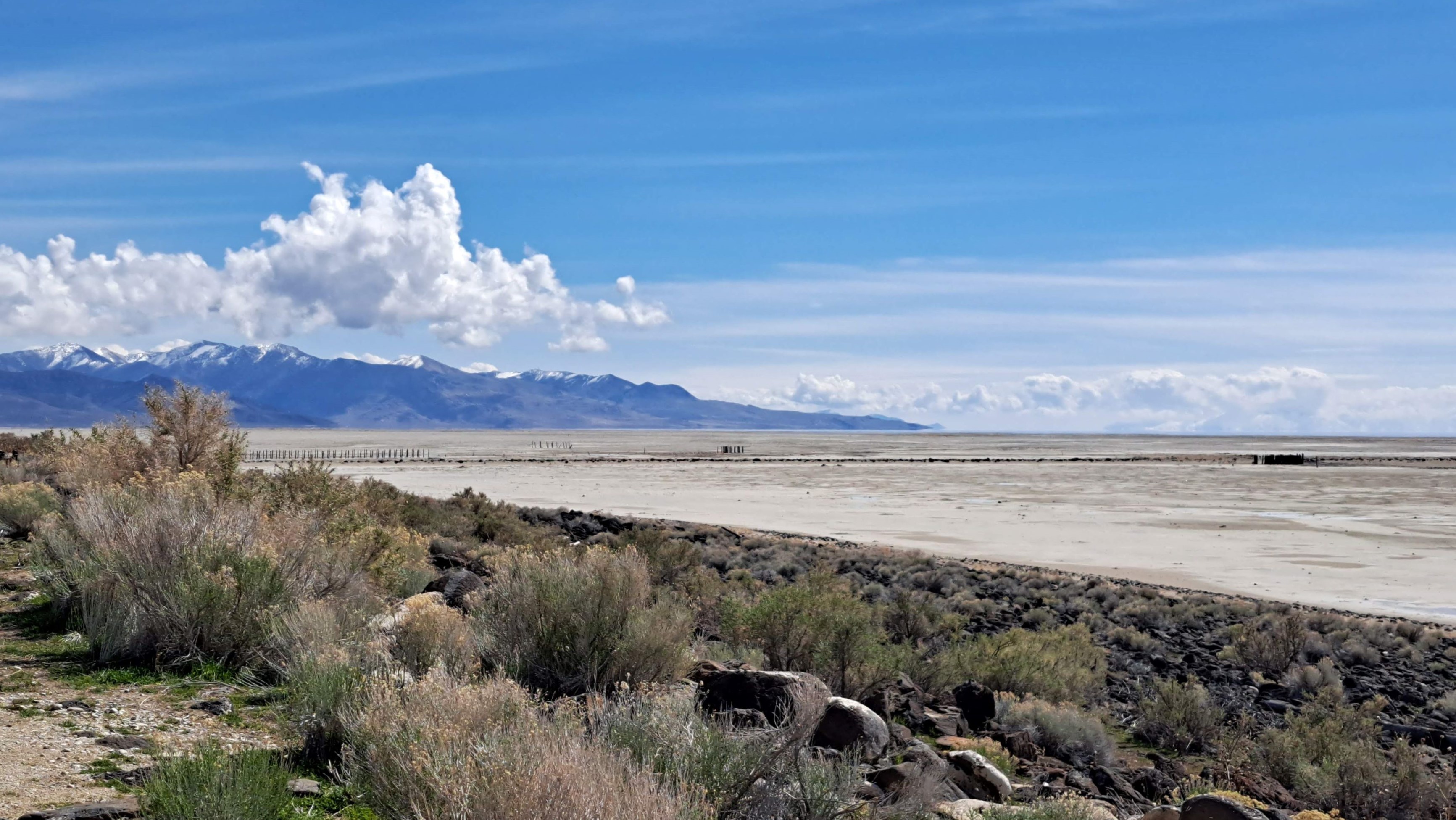
The drive out to the installation was not for the meek of heart. Not far beyond the visitor center the gravel road had washboarded and we bumped along for miles before eventually coming to the parking area overlooking the Spiral Jetty. Several other brave souls were also there and walking out among the installation and on to the edges of the Great Salt Lake. We walked a path away from the water to find the installation marker and enjoyed the 180 degree views of the mountains and water.
It was a nice day and we had time so I don’t regret our trip to see the Spiral Jetty. However, it wasn’t our favorite part of the day and if you don’t want to test your vehicle’s suspension, I would recommend giving it a pass.


I’m so glad we were finally able to make it out to Promontory Point. I learned a lot of new information about the history of the transcontinental railroad, appreciated seeing both original and recreated aspects of the Golden Spike ceremony, and enjoyed a lovely day in this beautiful area of the country. Definitely worth taking a half day to visit!
 Heather's Compass
Pingback: Things to Do: Cheyenne, Wyoming – Heather's Compass