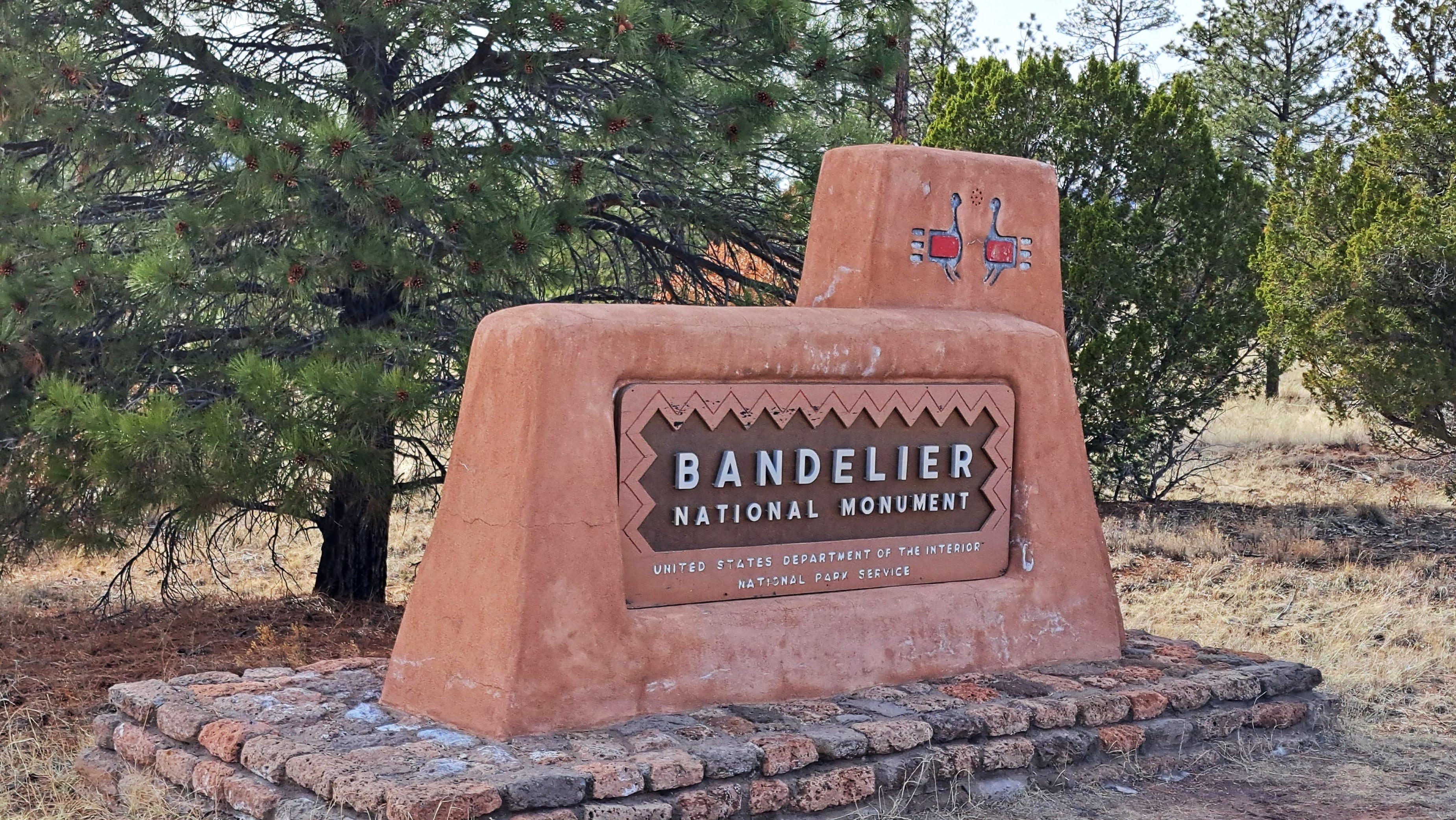
A highlight of our time in northern New Mexico was visiting Bandelier National Monument near White Rock. We ended up going twice during our time in the area so we could spend unrushed time in the visitor center, museum, and gift shop as well as hiking the trails just beyond the visitor center.
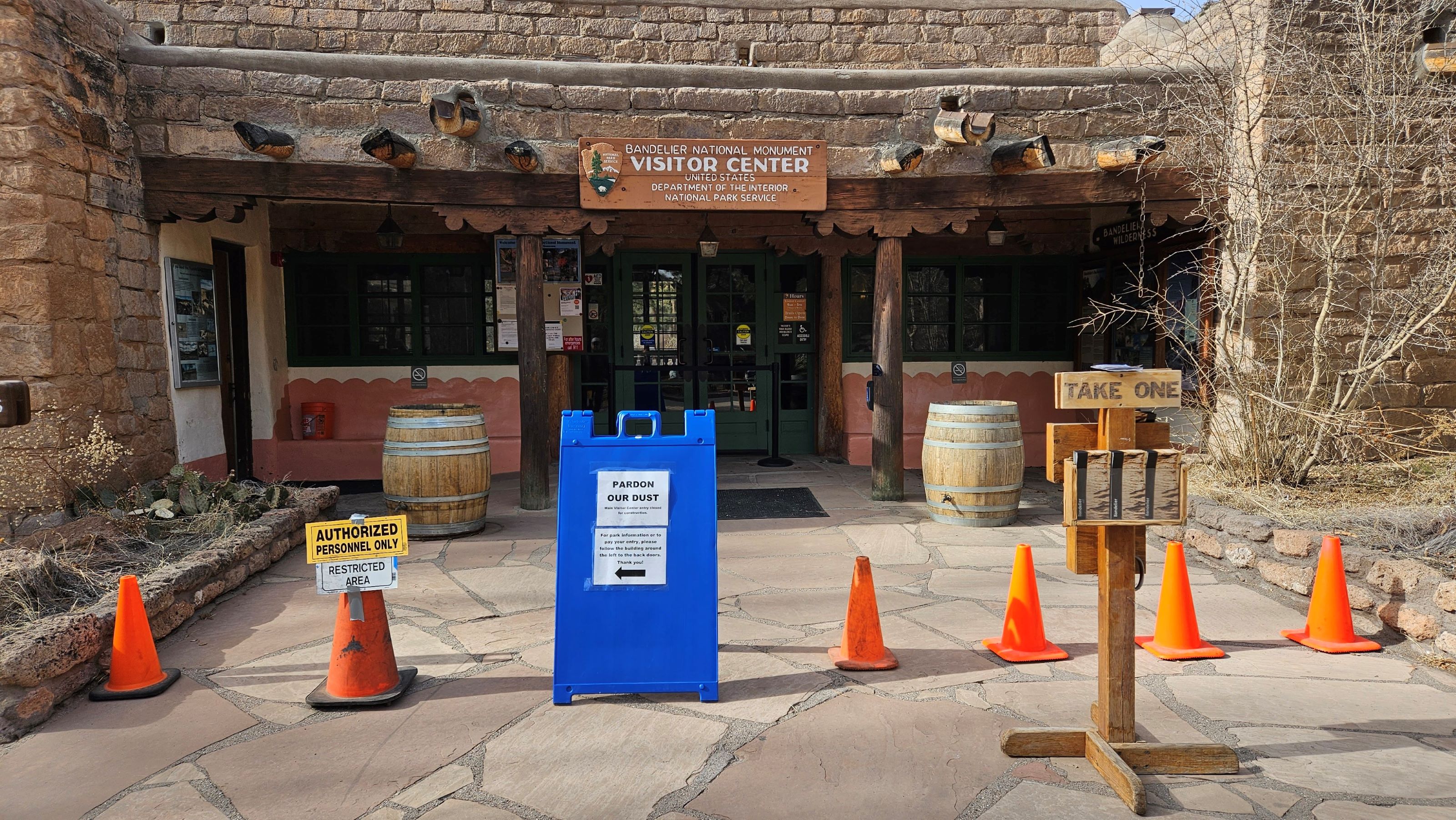
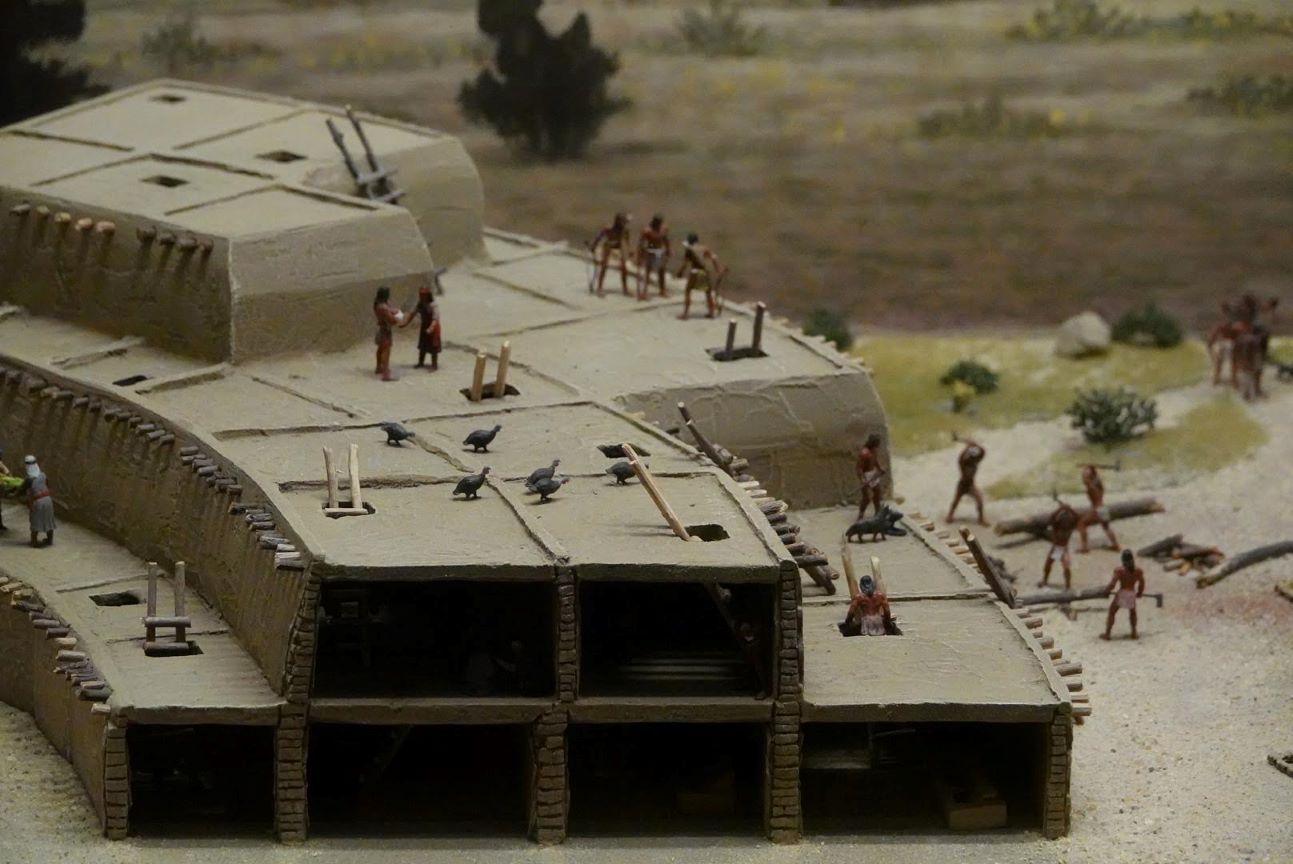
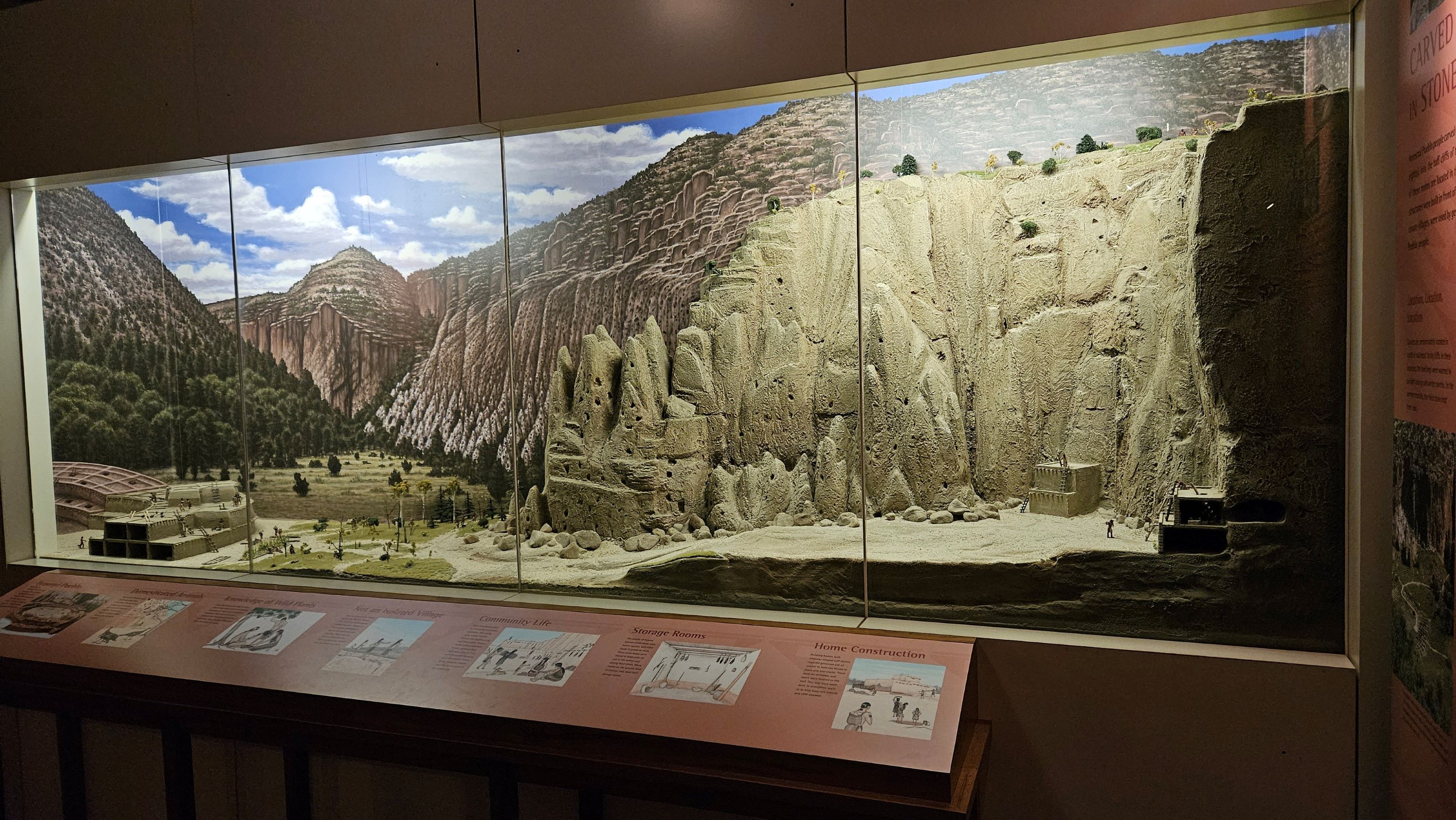
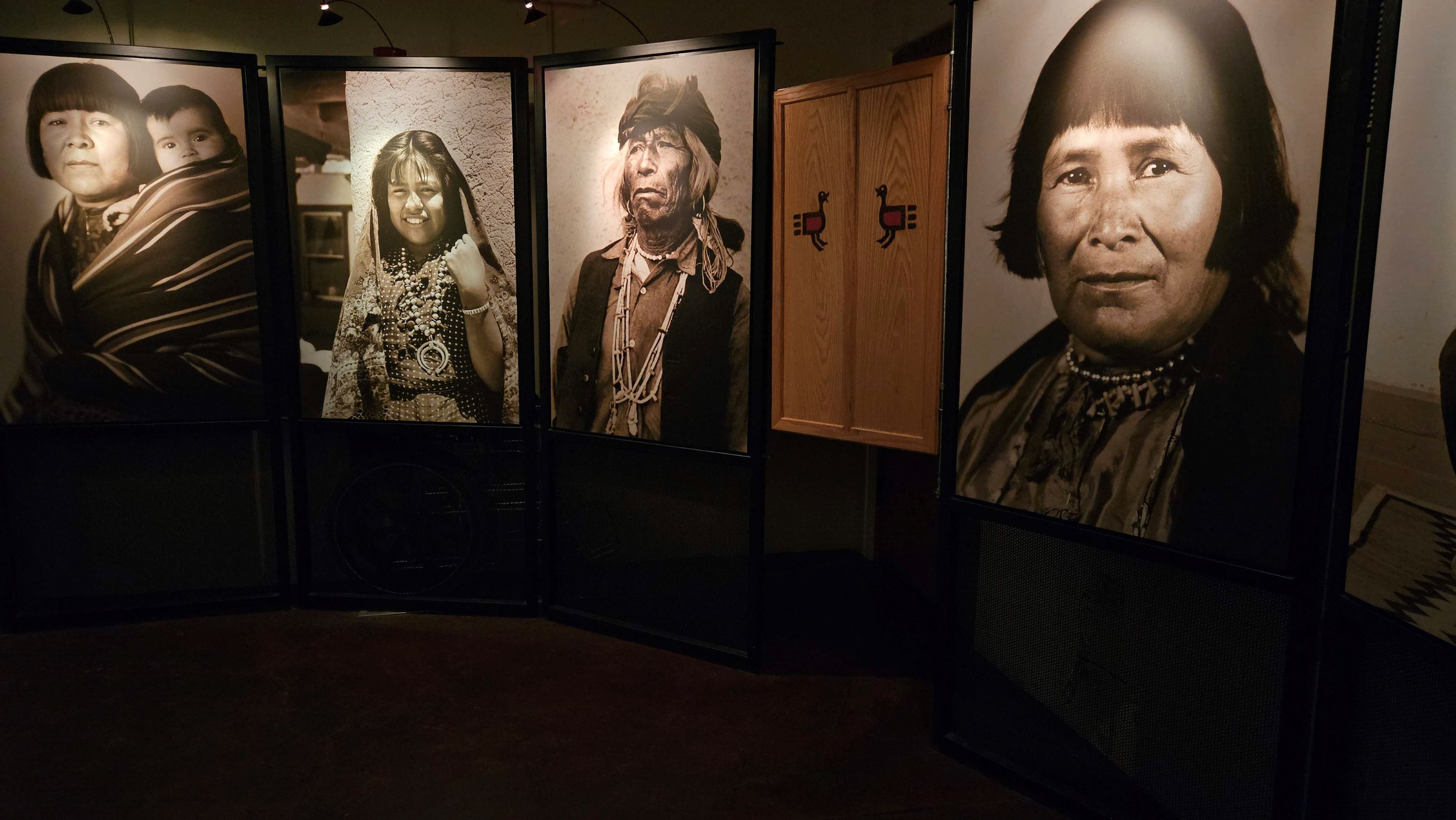
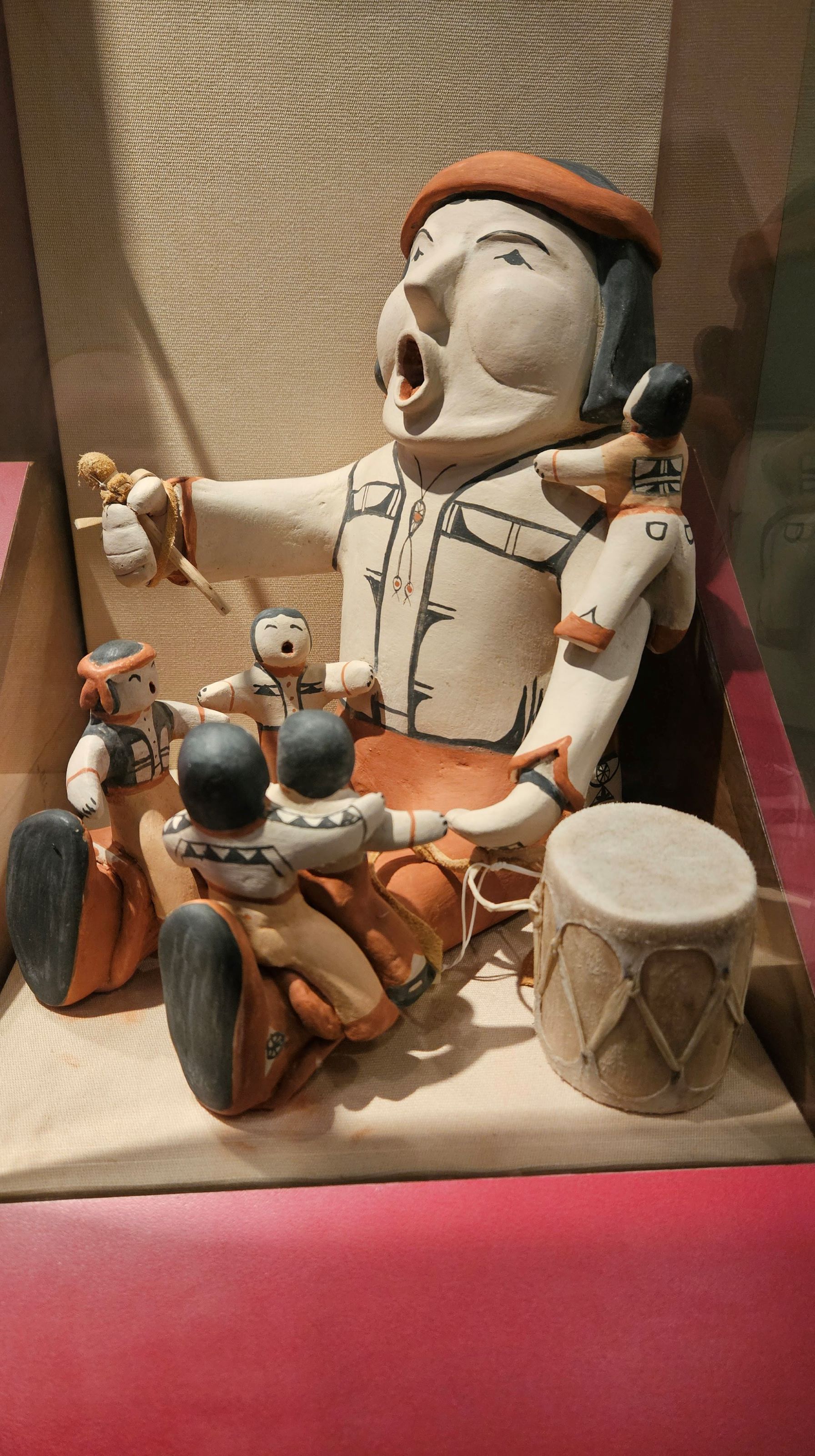
While part of the visitor center is currently undergoing renovations, we were able to watch a great video about the history of the people and cliffside dwellings of this area, and we were able to spend time in the museum, learning more about the daily lives of the Ancestral Pueblo people.
The Pueblo people have lived in the Southwest for many centuries. Archeologists think they are descended from groups of hunters and gatherers who came into the region over 10,000 years ago. The Pueblo people themselves say they have always been here. Ancestral Pueblo people lived in parts of what are now New Mexico, Arizona, Colorado, and Utah.
NPS brochure
I was particularly struck by a video in one area of the museum featuring descendants of the Ancestral Pueblo people who said they so often hear people ask, ‘what happened to the people who lived in these dwellings?’ Their answer: We are still here.
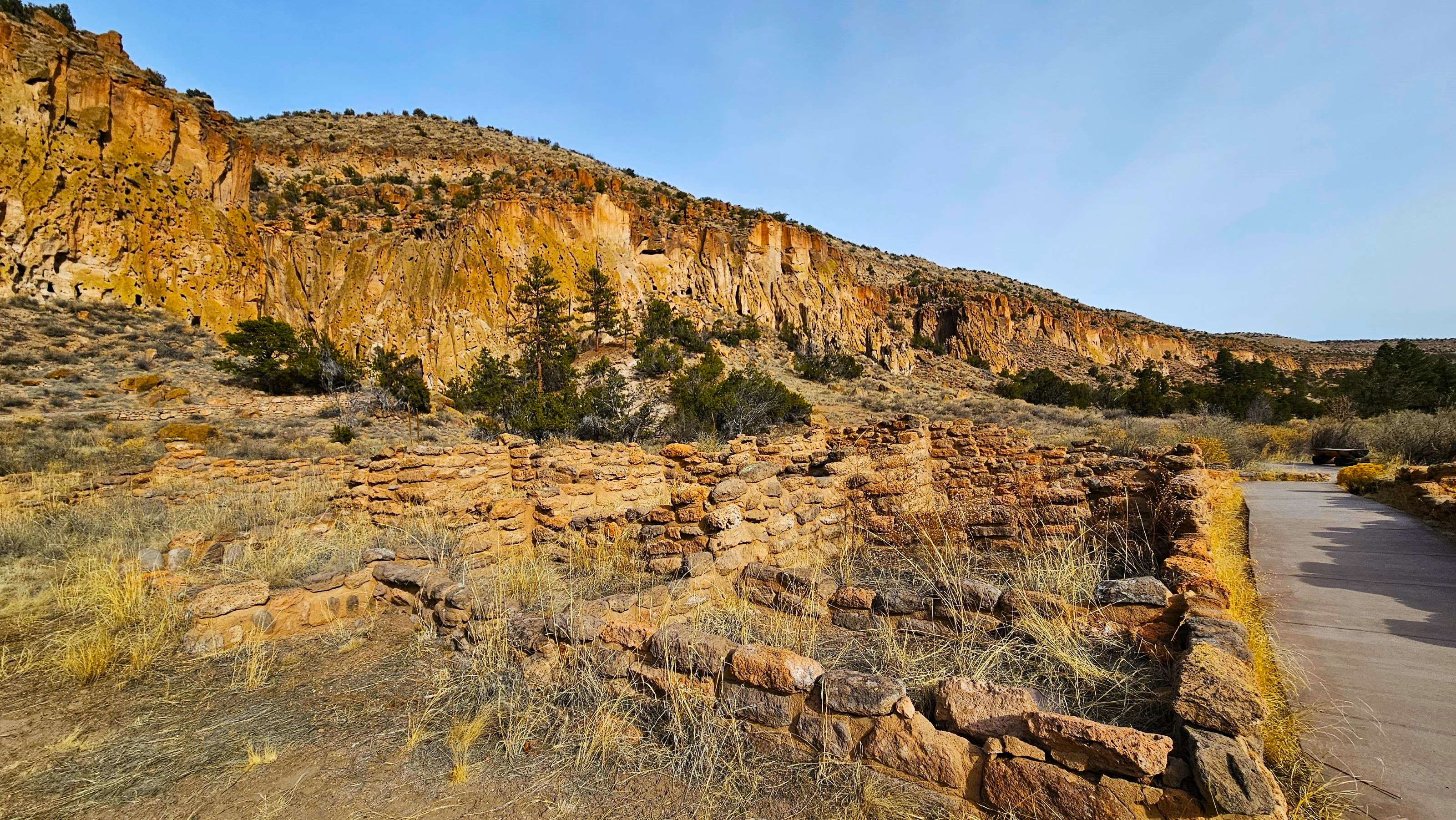
One of the most popular hiking trails in the national monument commences from right behind the visitor center. The Pueblo Loop Trail passes Big Kiva before arriving at the village of Tyuonyi and its human-excavated caves, including Talus House and Long House.
You can loop along the cliffside and climb up into the dwellings that have ladders, circling back along an accessible path that runs through the woods. Similar to the cliffside dwellings we experienced in Mesa Verde National Park – and home to the same people who migrated from Mesa Verde through this area and on to other locations in New Mexico – the cliffside dwellings hover above the areas they used for farming, livestock, and other daily needs.
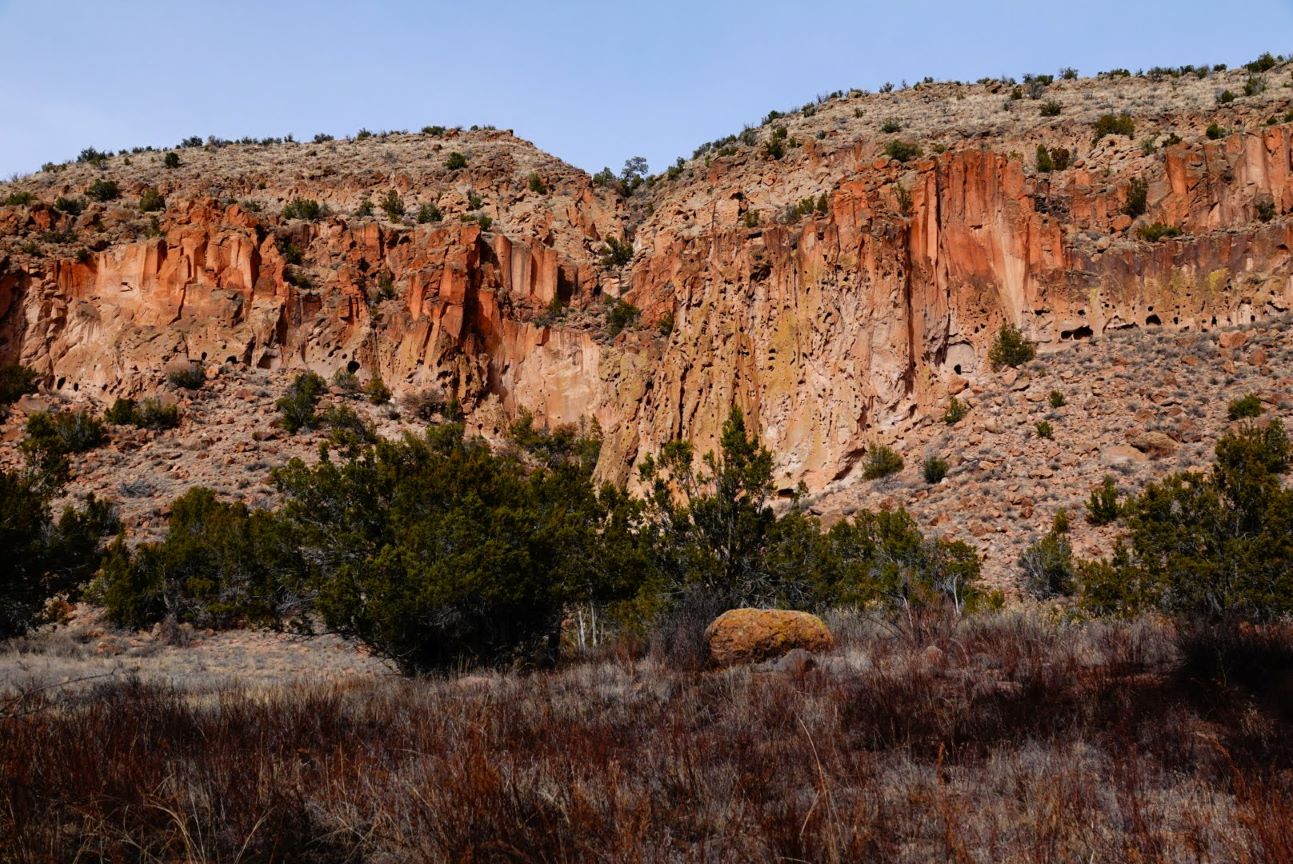
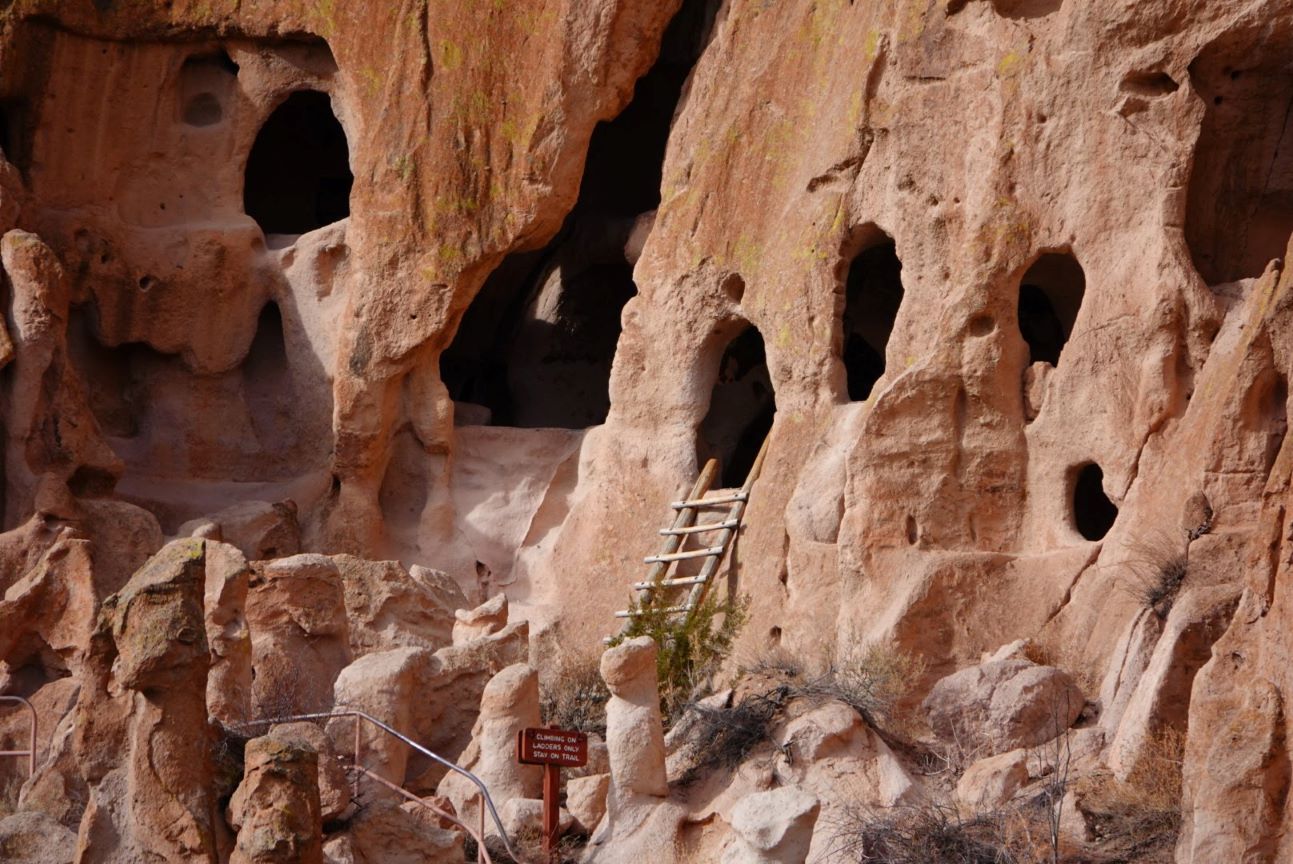

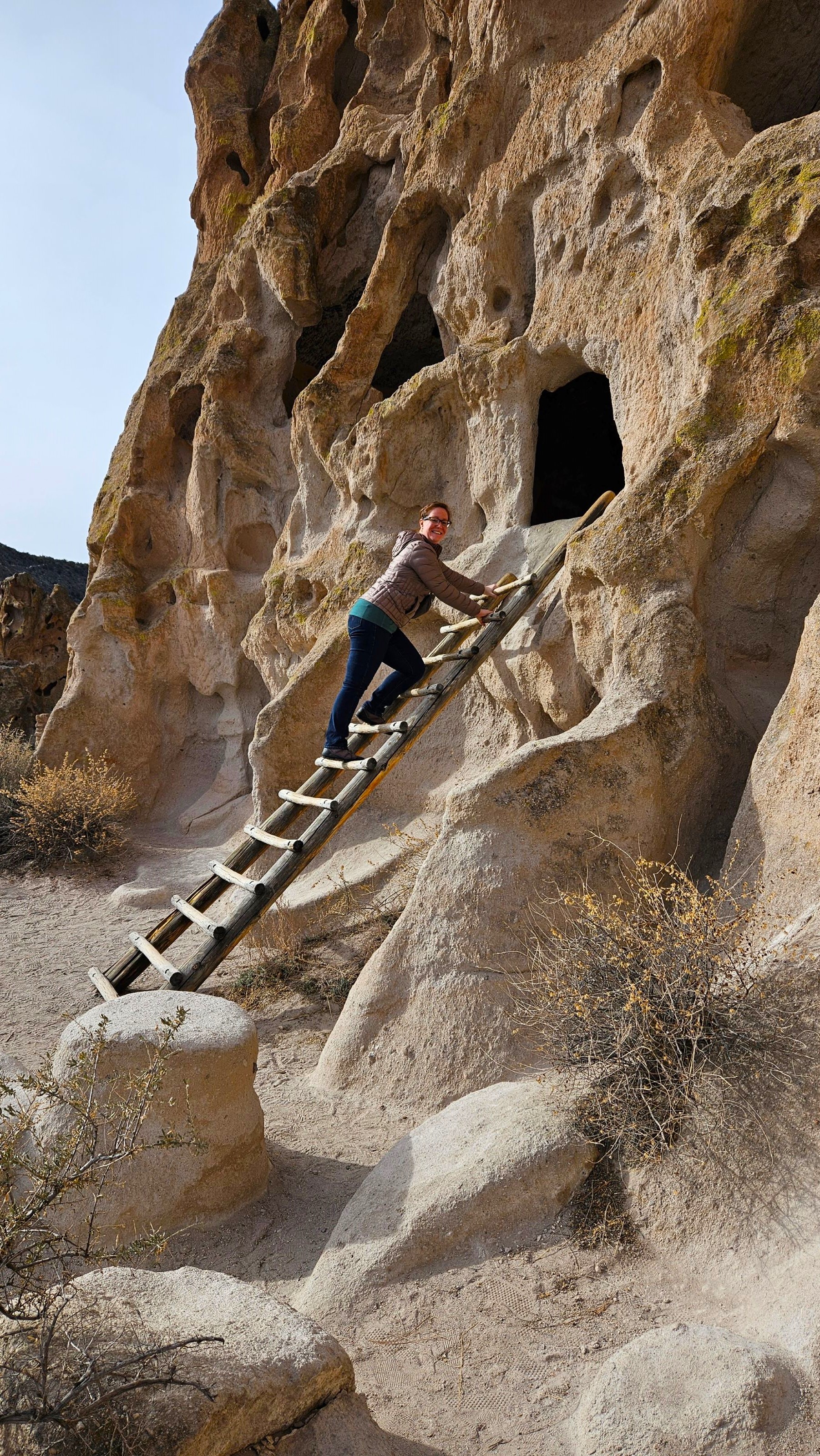
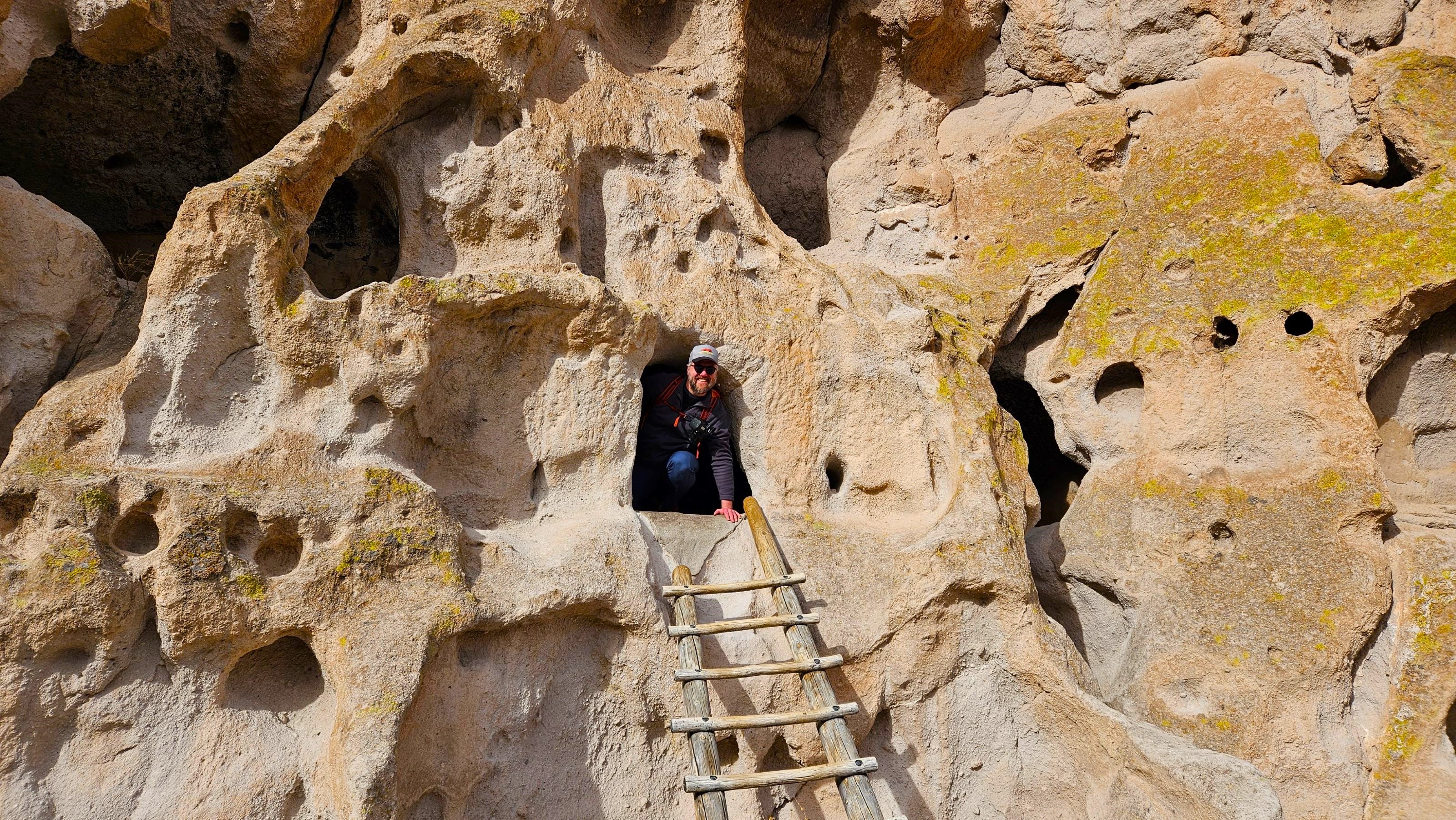
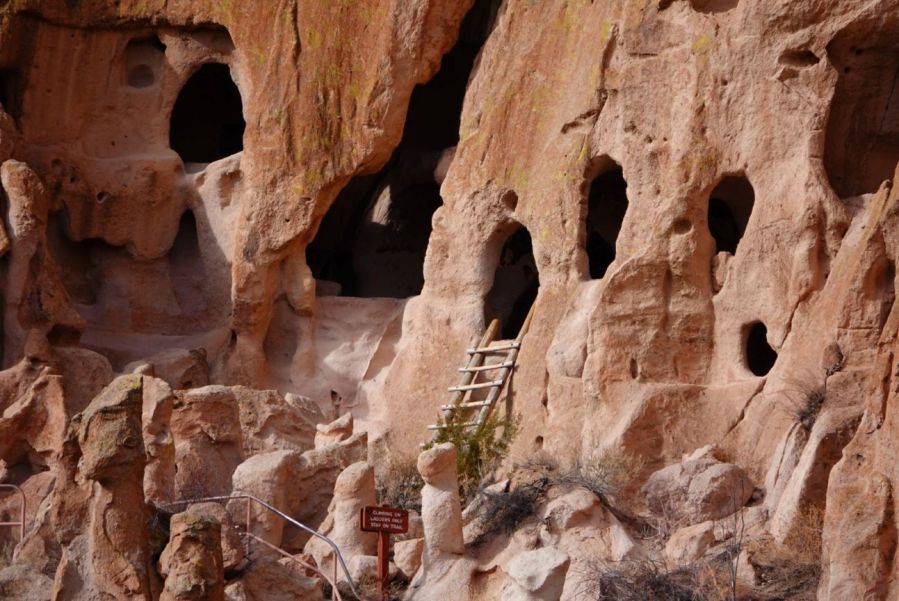
The first series of cliff-dwellings we approached had short ladders that enabled us to access some of the caves overlooking the Big Kiva area.
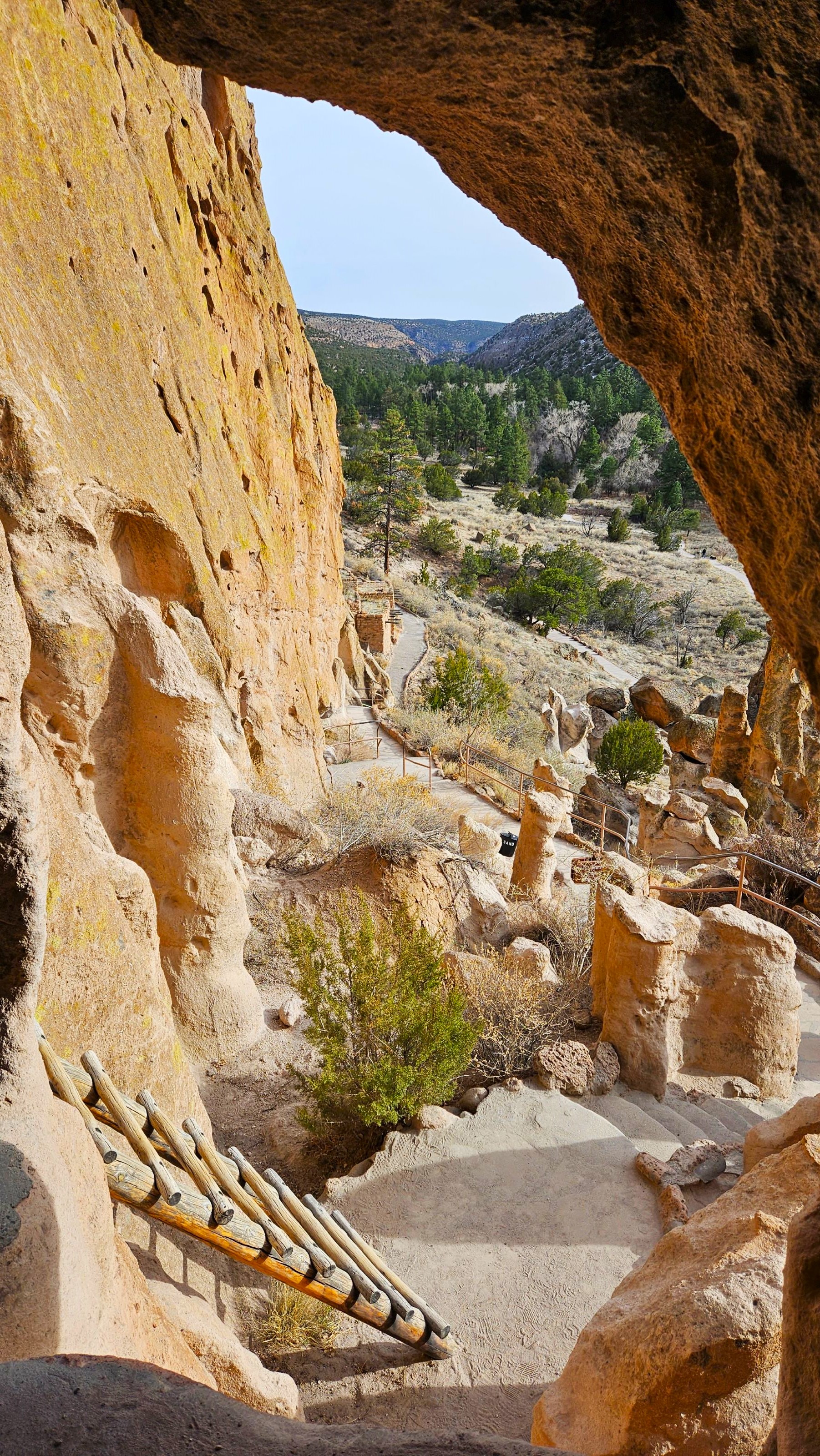
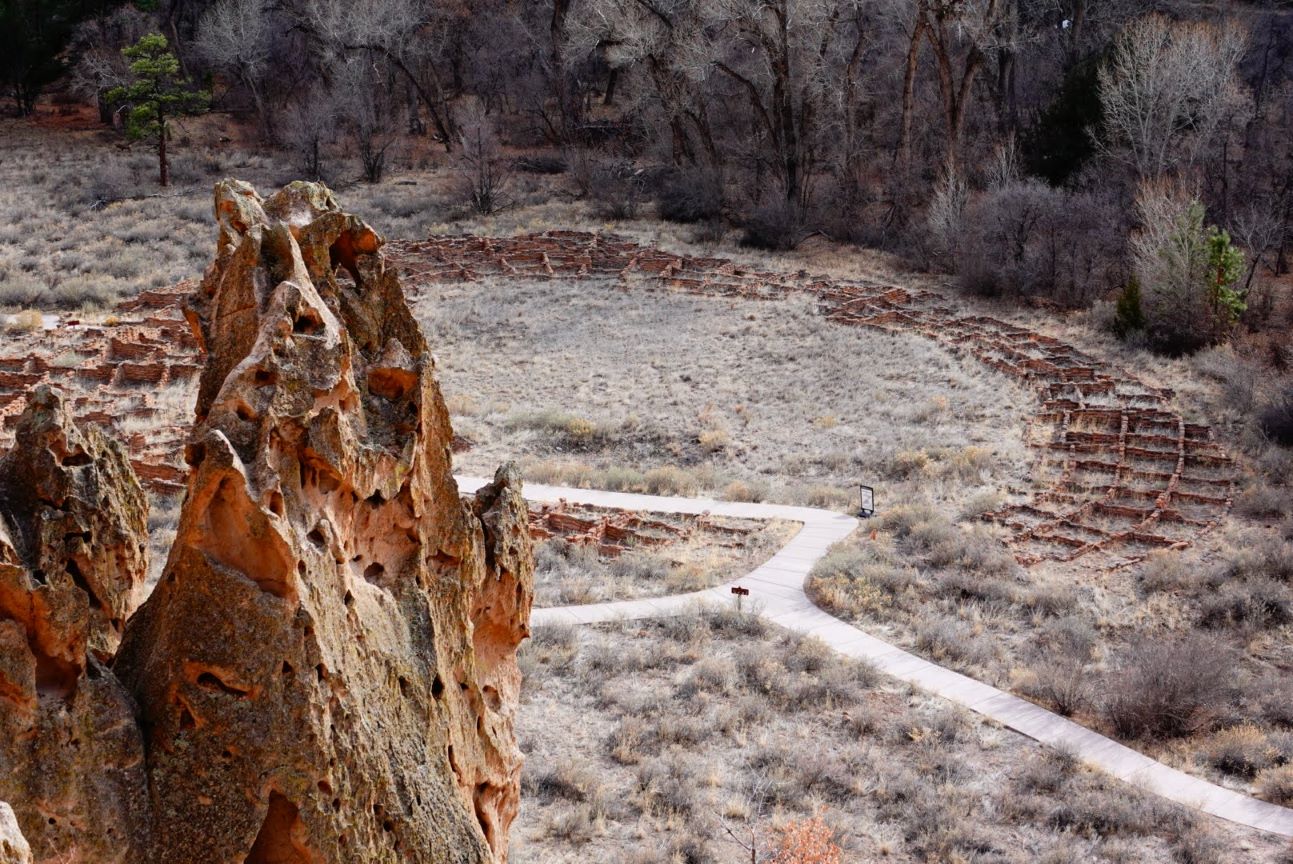
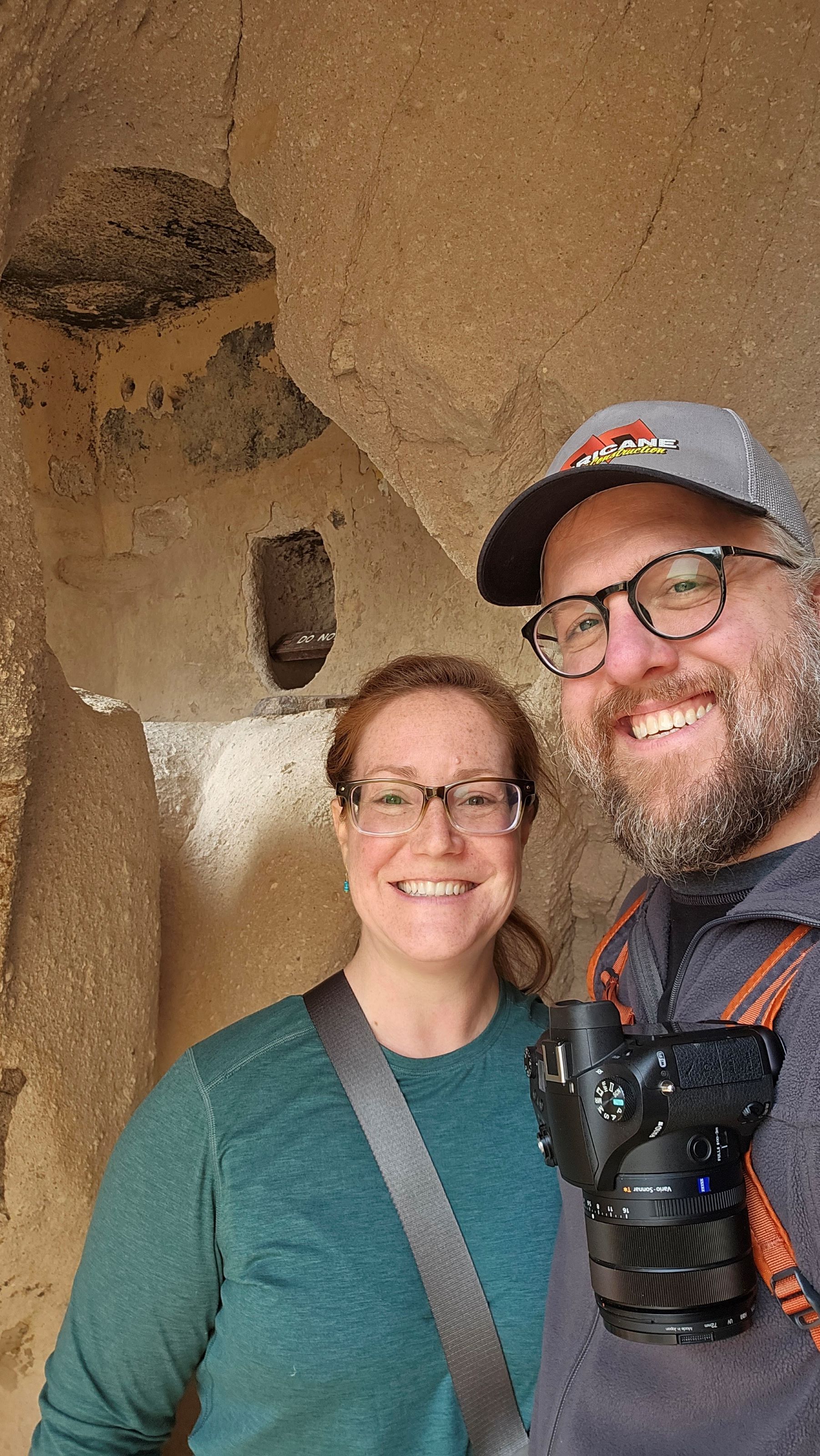
As we continued on, we were able to identify petroglyphs and other painted areas along the cliffs where there were fewer cliff-dwelling access points.
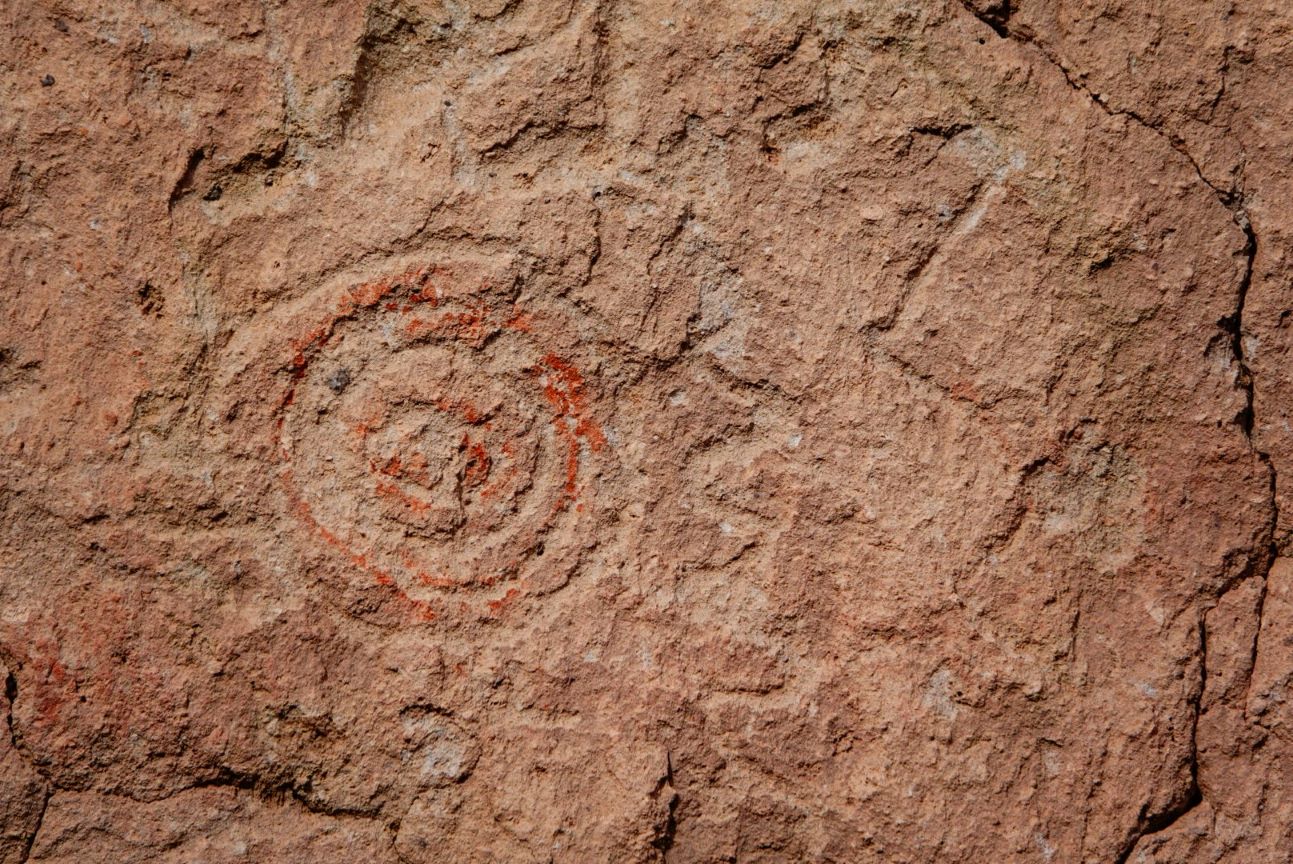
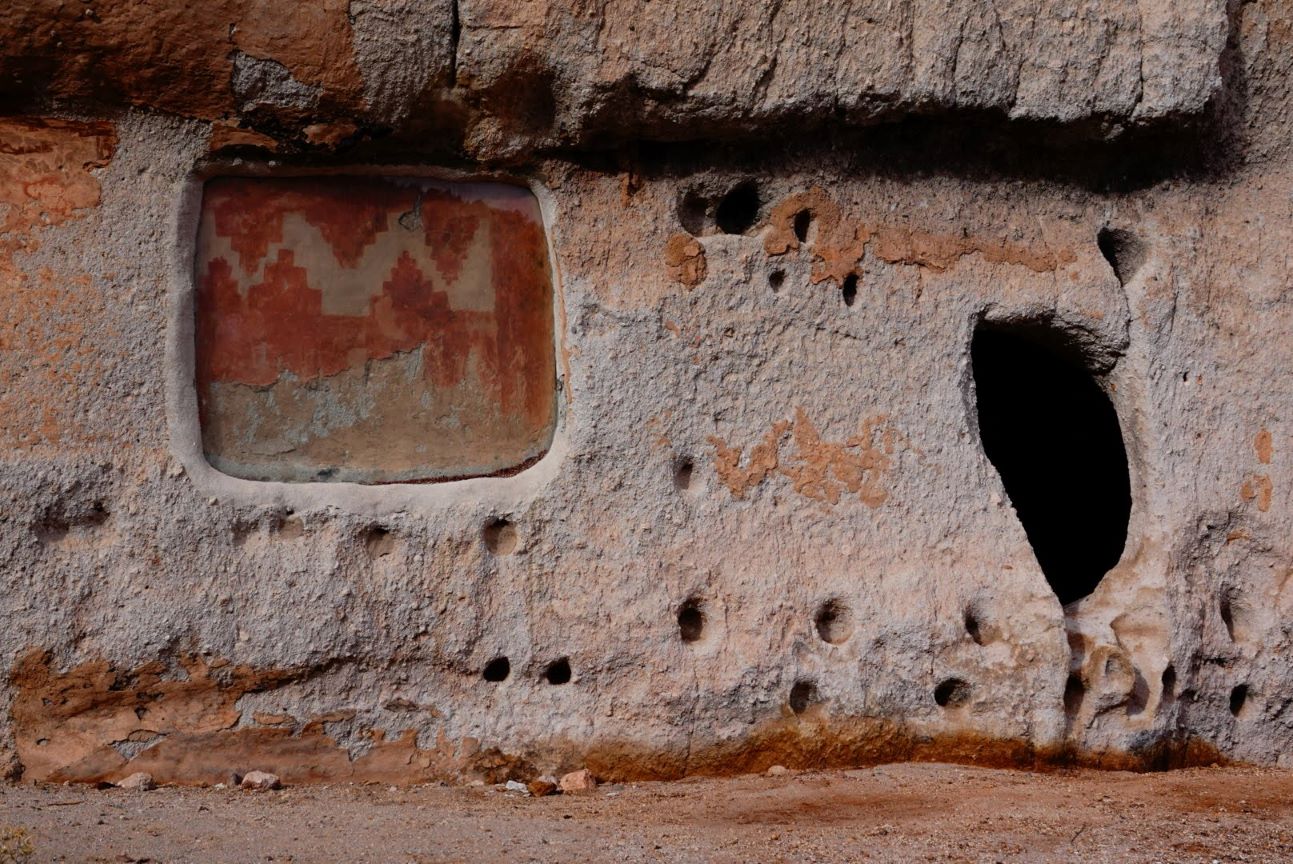
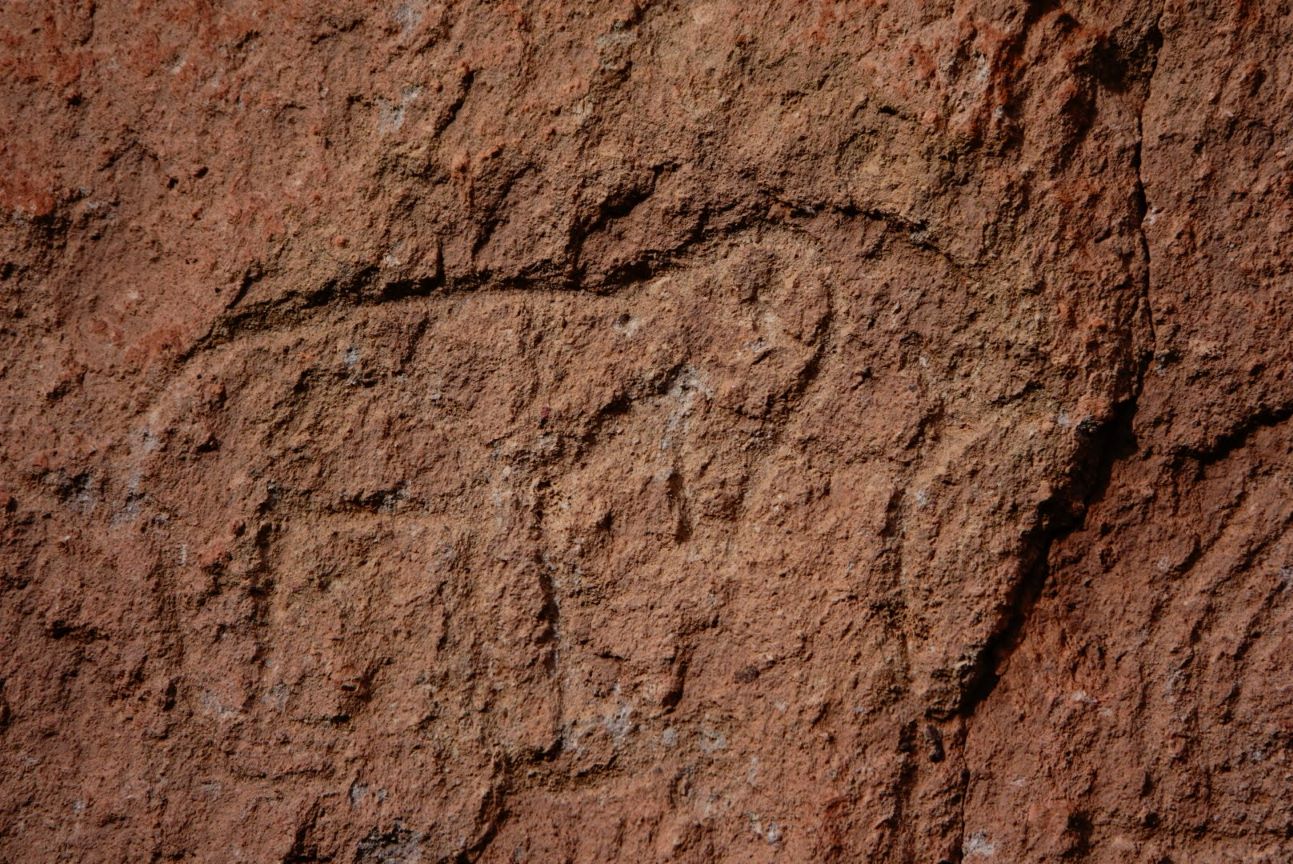
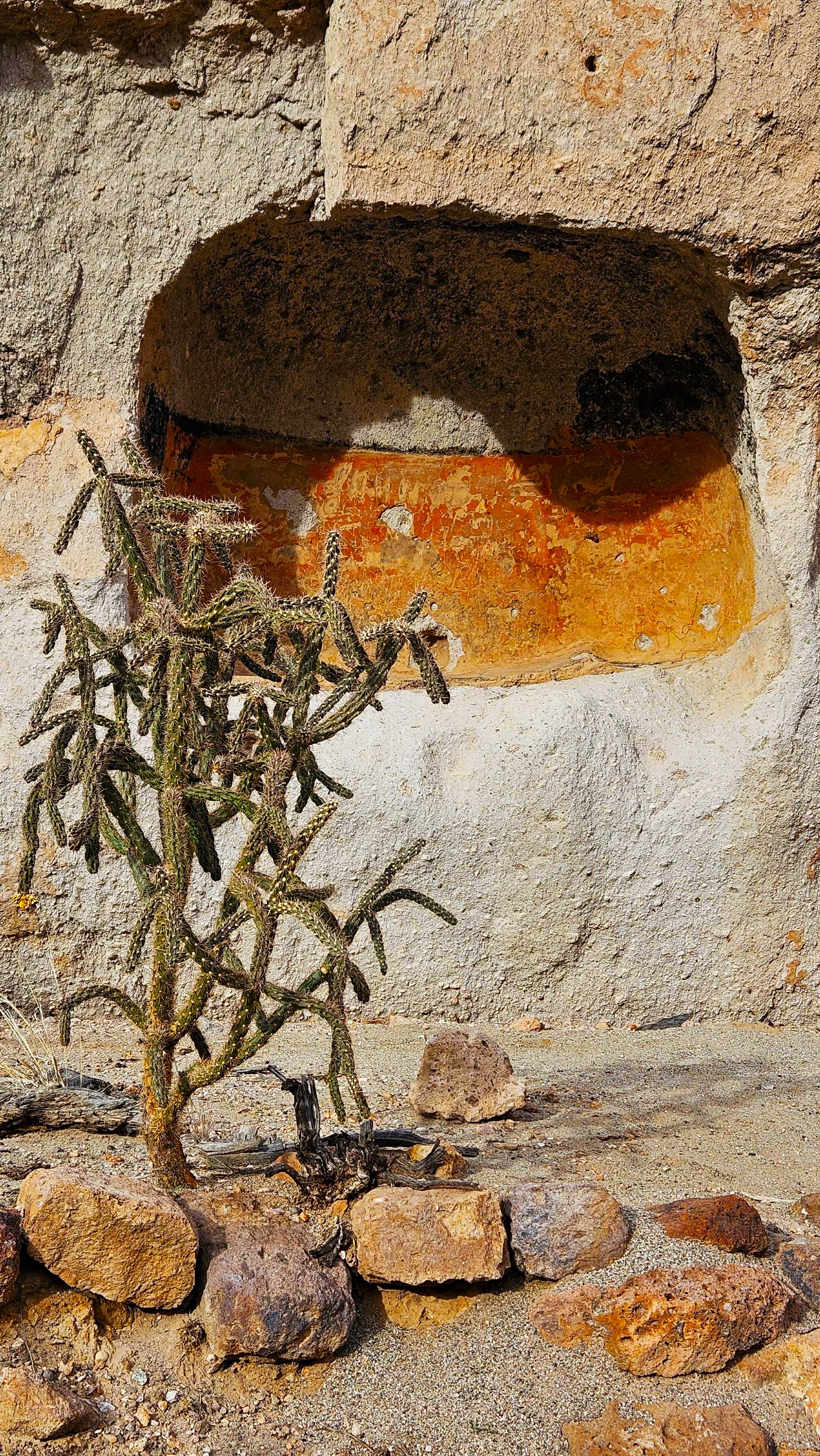
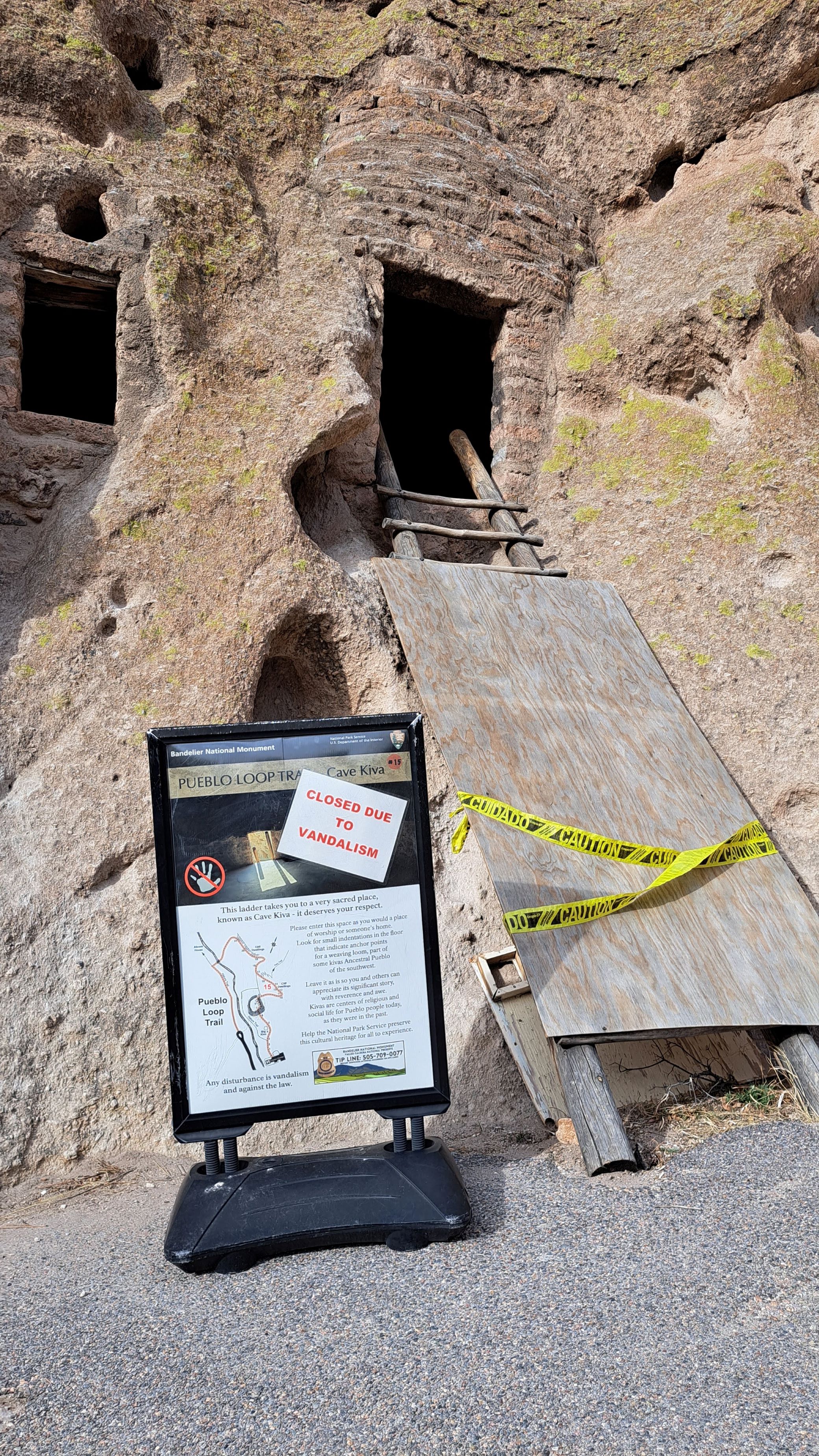
We were disappointed to come across one dwelling that’s currently closed due to vandalism.
Why anyone feels the need to deface these historical sites is beyond me. I wish there was a better process for reporting this sort of activity to the park employees and holding these people accountable. Not only are they destroying history, they are marring a sacred site of the Pueblo people, and ruining the experience for those of us who are visiting and can no longer access these locations.
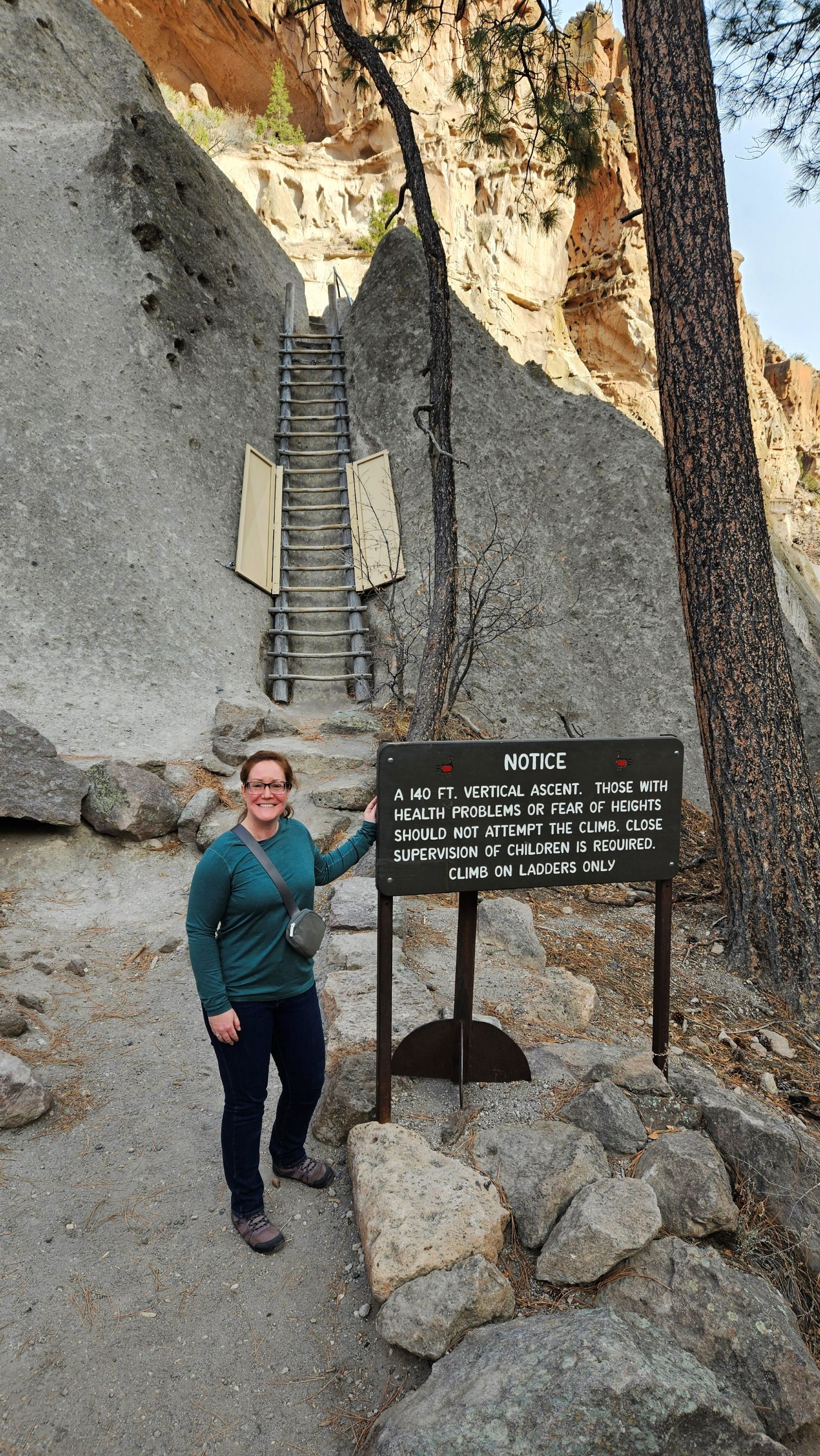
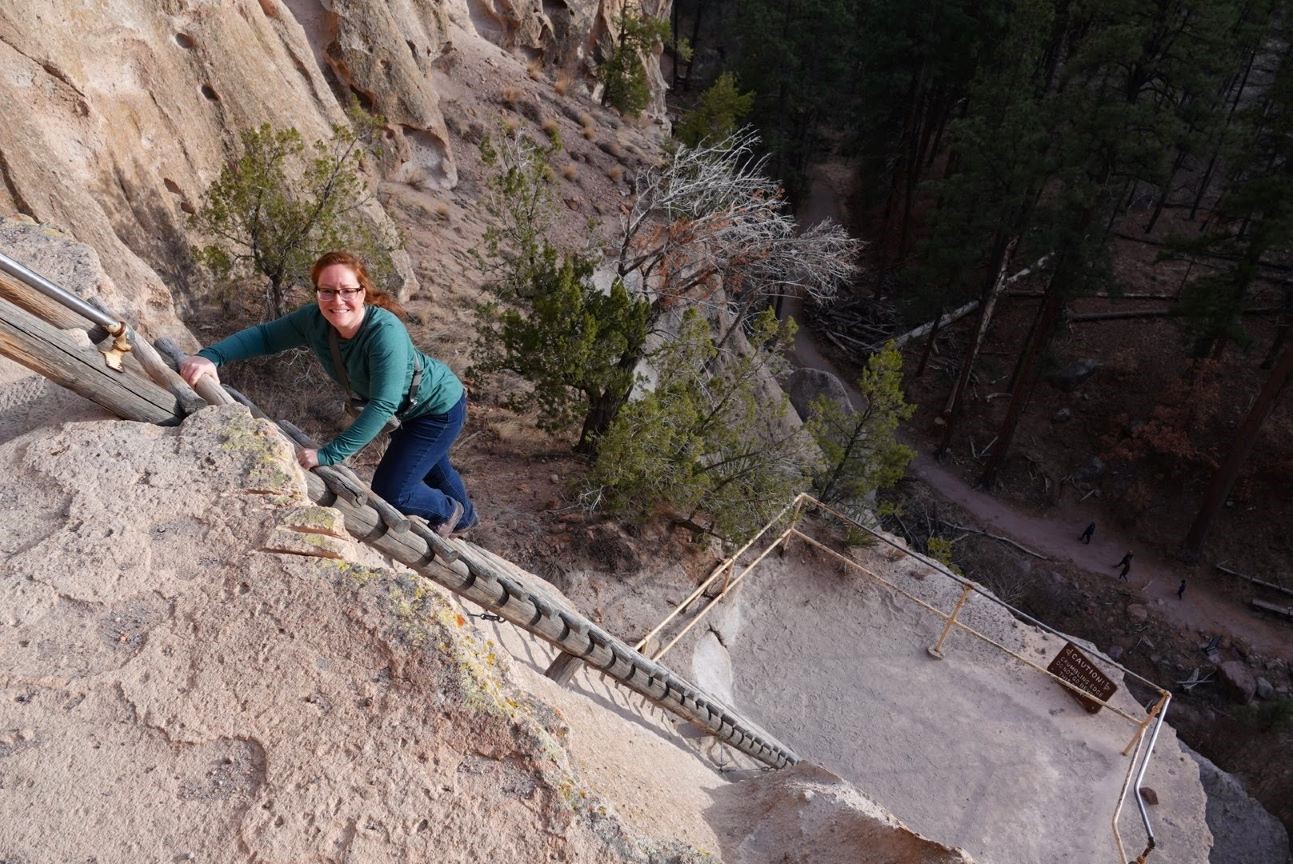
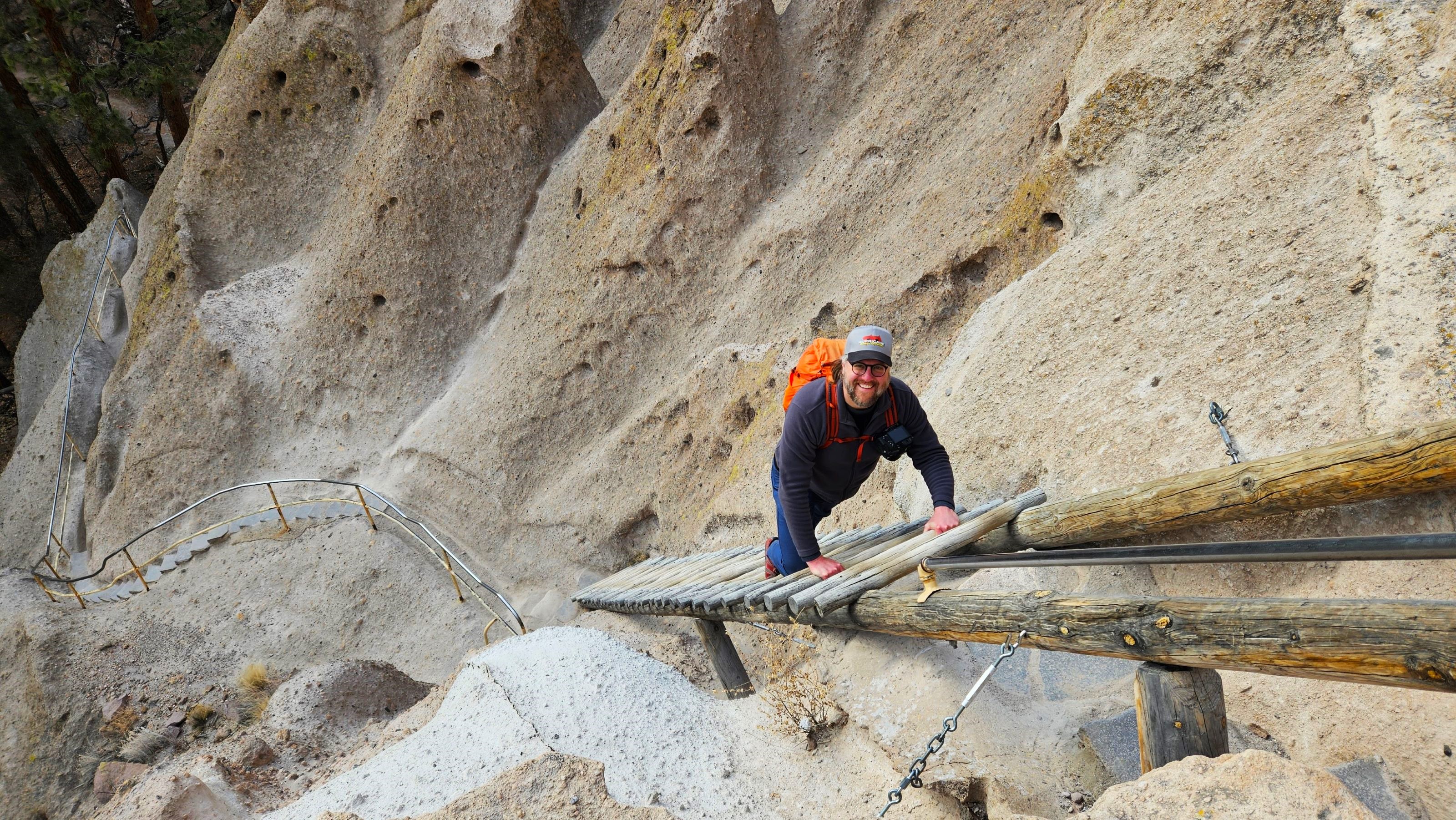
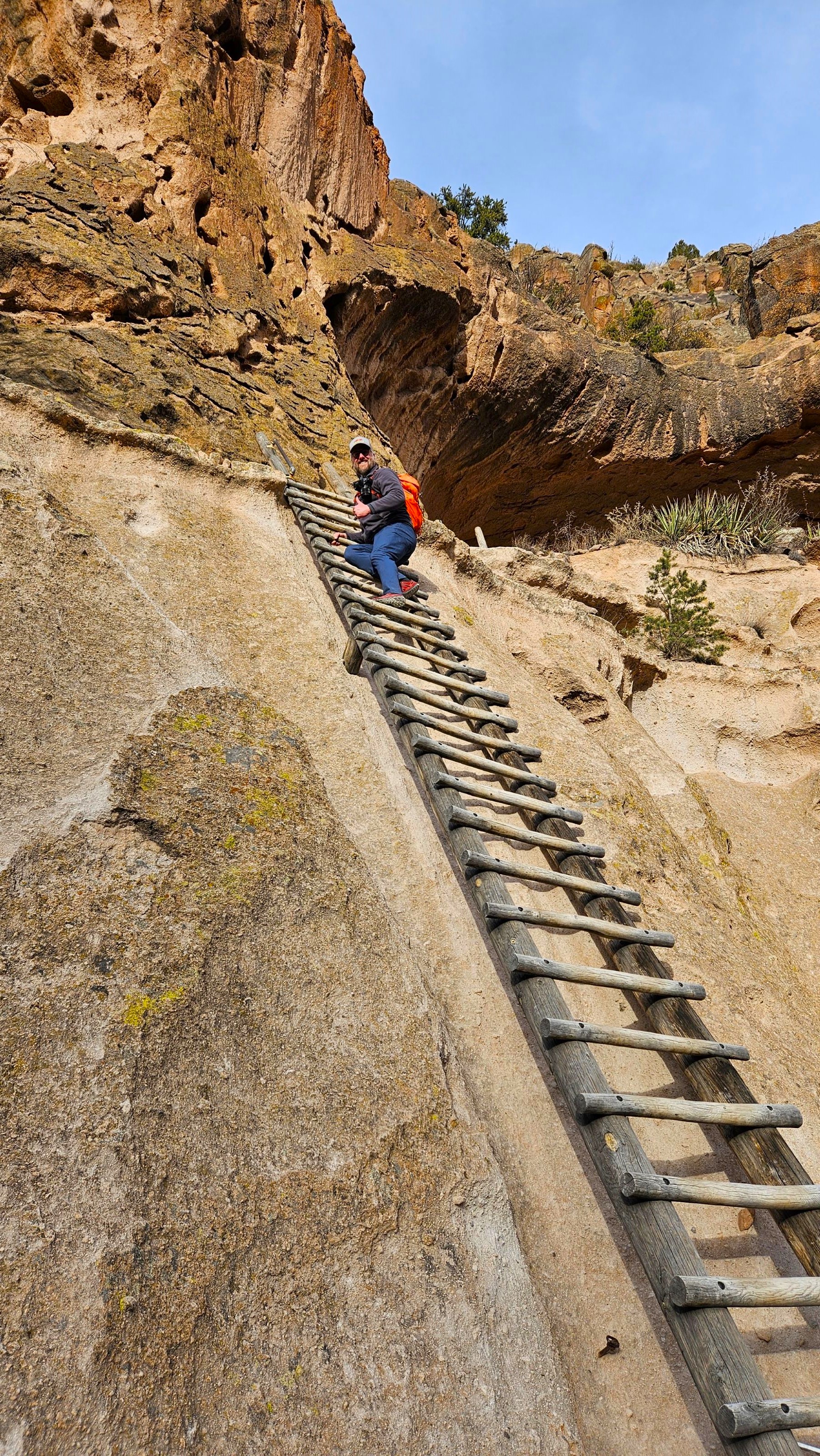
Despite the disappointment of the vandalism, we were able to conclude our hike on a positive and memorable note by veering off the loop trail to follow the out-and-back trail to Alcove House. This site is accessed via a 140-foot climb on four different ladders.
There were sections of the climb that were a bit unnerving, but we safely made it to the alcove and back, taking a few minutes at the top to look out over the surrounding area. It was late afternoon, and we were butting up against the national monument’s closing time so we made quick work of our hike back to the parking lot.
Overall our hike was 5.6 miles with a somewhat indeterminant amount of elevation gain given our climbs up and down multiple ladders. It was a really interesting site that combined history with nature and present day influence by the Pueblo people, and I’d definitely recommend adding it to any northern New Mexico itinerary.
 Heather's Compass
Pingback: Explore the Past: 10 Fascinating Ruins in New Mexico You Should Visit – Chasing Hidden Worlds
Pingback: Things to Do: Cheyenne, Wyoming – Heather's Compass
Pingback: Explore the Past: 10 Fascinating Ruins in New Mexico You Should Visit – Top Travel Escapes
Pingback: Highlights of Santa Fe, New Mexico – Heather's Compass
Pingback: Visiting Valles Caldera National Preserve and White Rock Overlook – Heather's Compass