
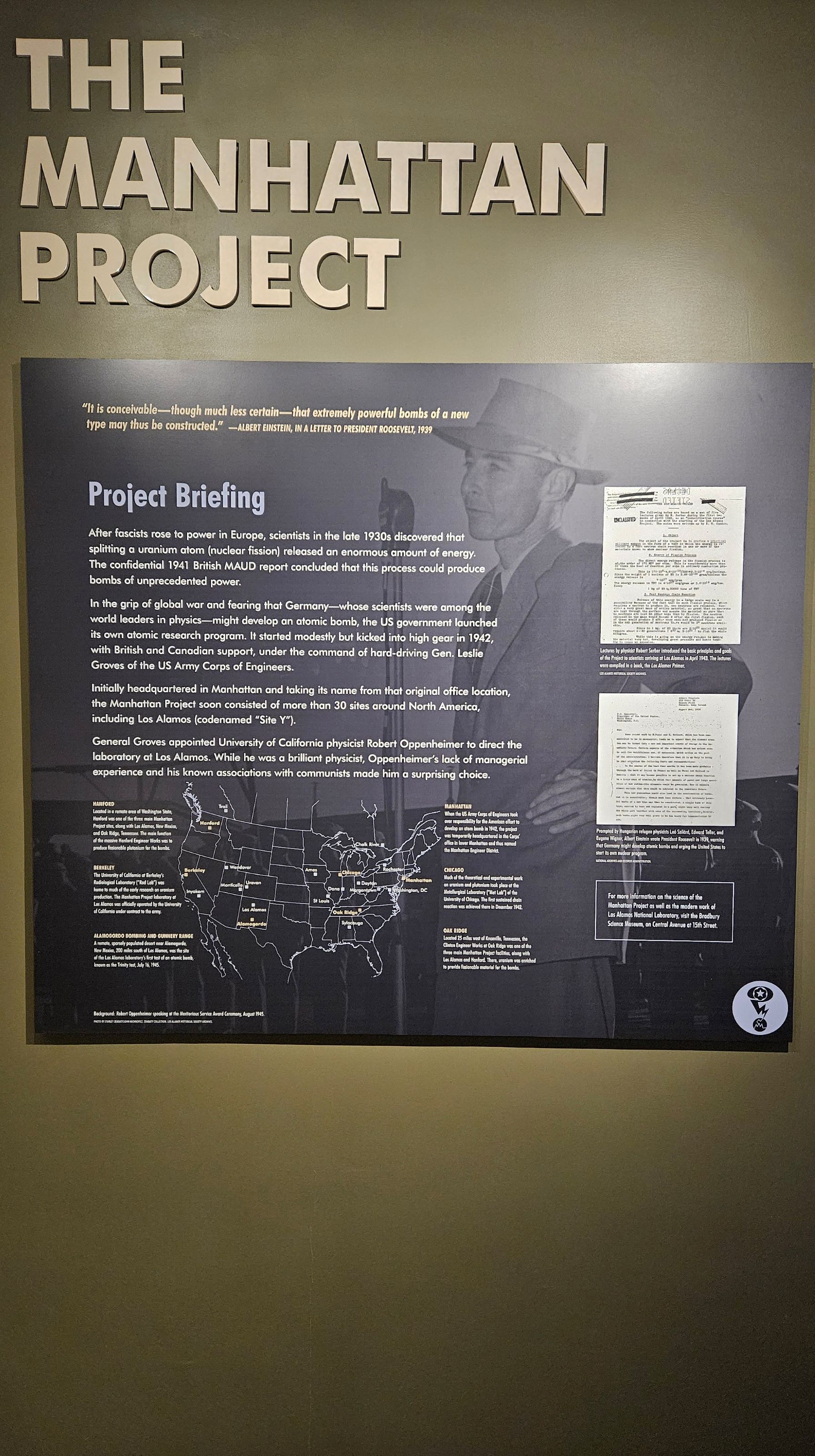
Oppenheimer is back in the news following the recent Academy Awards Ceremony. I’m a big fan of the movie and really glad we saw it in the theater where the incredible sound and visuals could convey their impact on the big screen. I believe a great deal would have been lost trying to watch it on one of our small tablets at home.
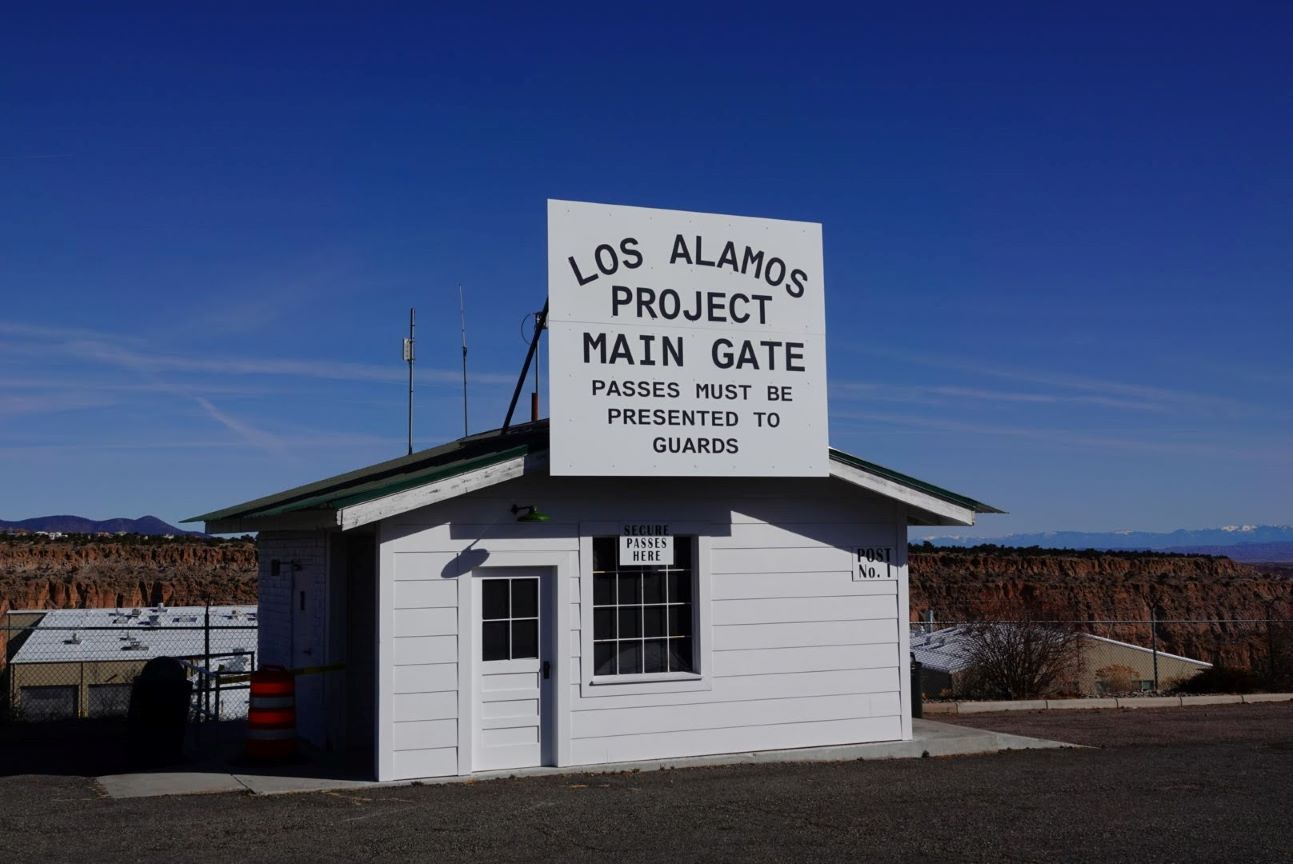
I’m sure the resurgence in interest will continue to drive traffic to Los Alamos, New Mexico, home of the real-life, secret laboratory of the United States government’s Manhattan Project, which successfully developed the world’s first atomic weapons.
A few years ago I visited the Hiroshima Peace Memorial Museum in Japan and spoke with school children there about the longstanding effects of the atomic bombs used during WWII. It was a somber experience, and those memories are never far from mind. They were especially close at hand during our day in Los Alamos, reading the stories of J. Robert Oppenheimer and the other scientists who worked on the atomic bombs and then spent the rest of their lives regretting, defending, and/or trying to move on from what they had helped manifest.
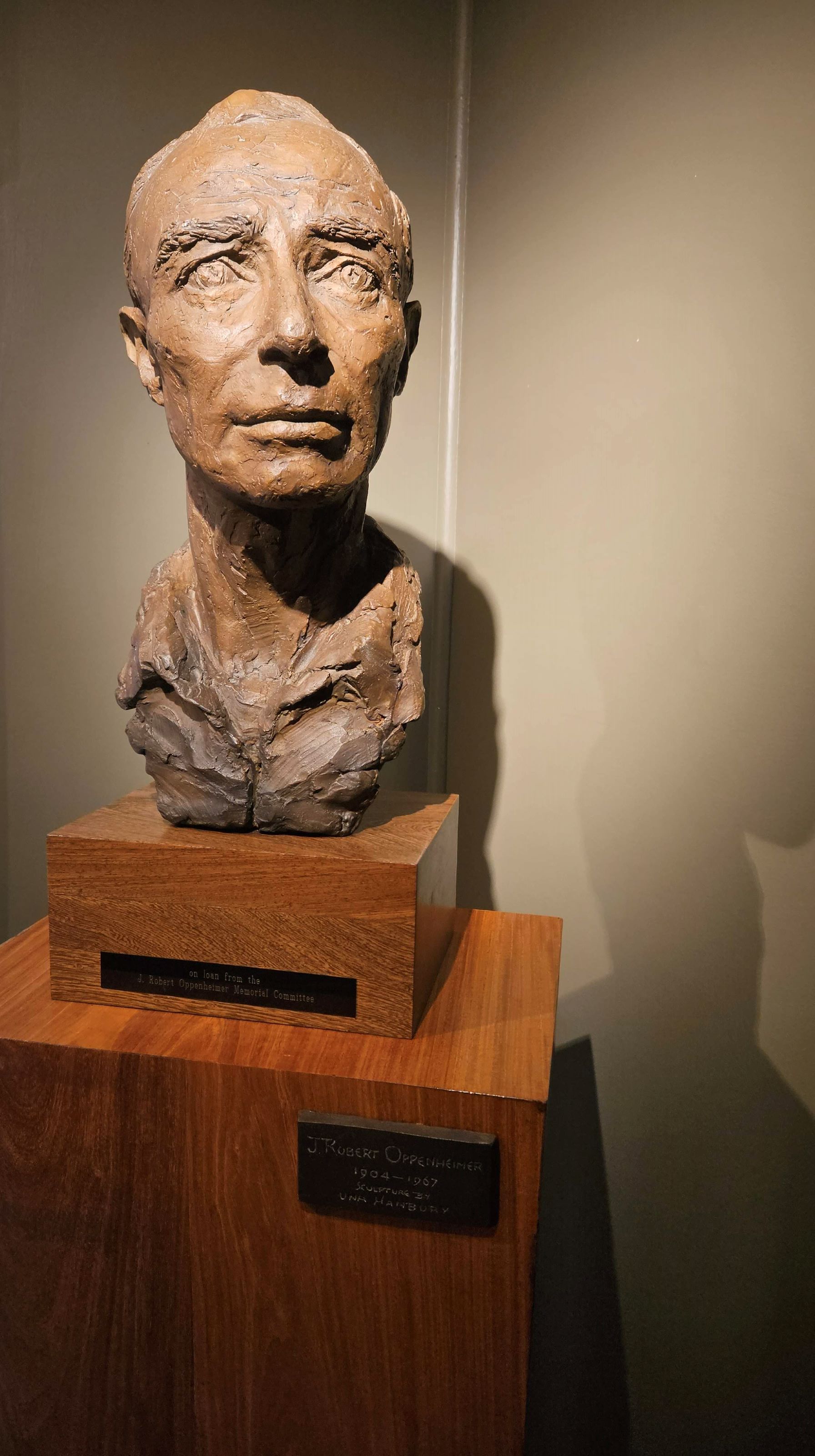
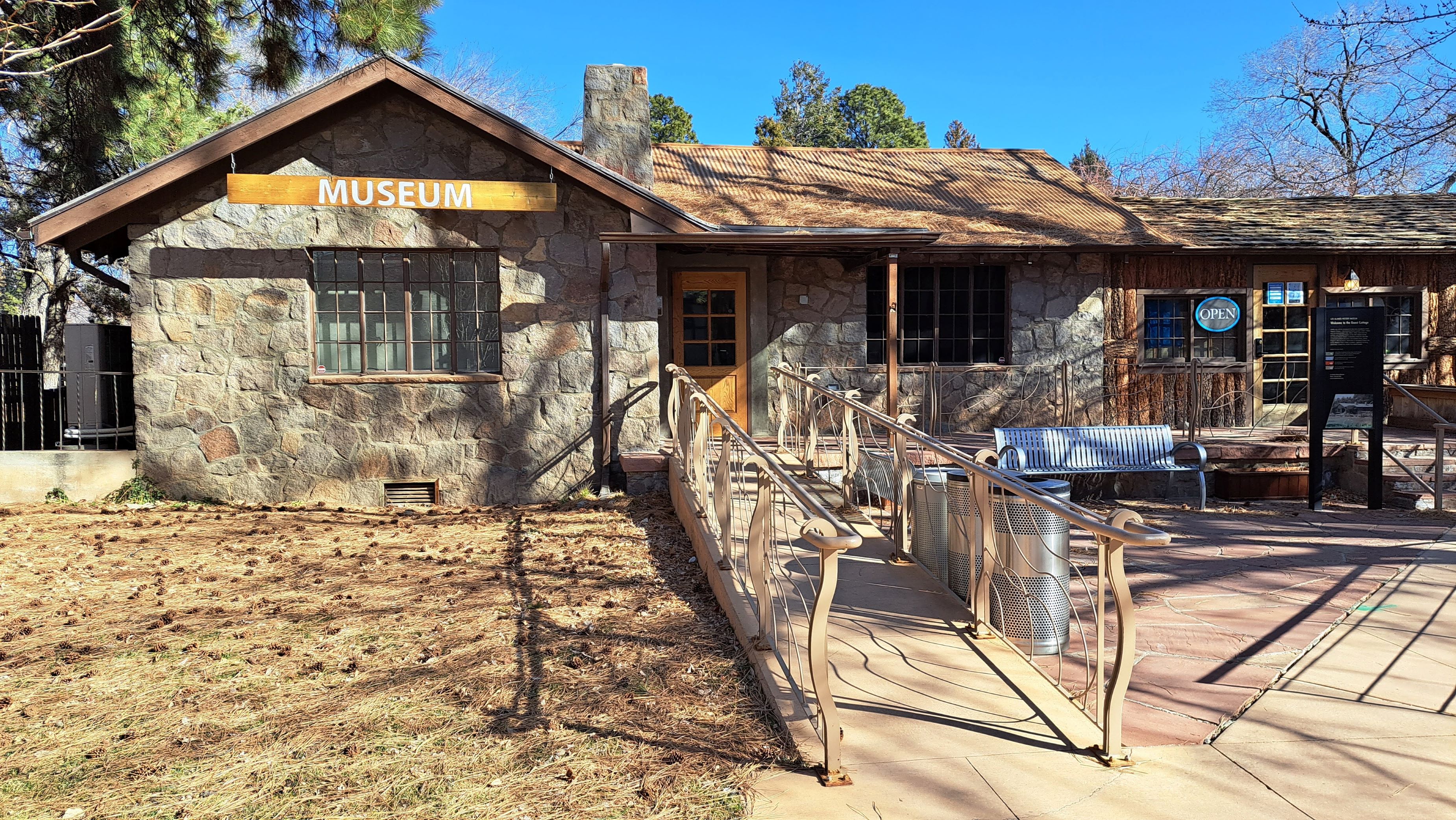
We began our visit at the Fuller Lodge and History Museum where we purchased admission and the materials for a self-guided walking tour of more than 15 historical sites around town that are still accessible to the public today.
The museum covered the history of the area with a special emphasis on the Los Alamos Ranch School for Boys that operated in the early 1900s as an academic and outdoors school for wealthy young men from the east coast. The U.S. government took over the school and all its buildings, as well as the entire Pajarito Plateau, sealing it off for the exclusive use of the Manhattan Project from 1943-1947.
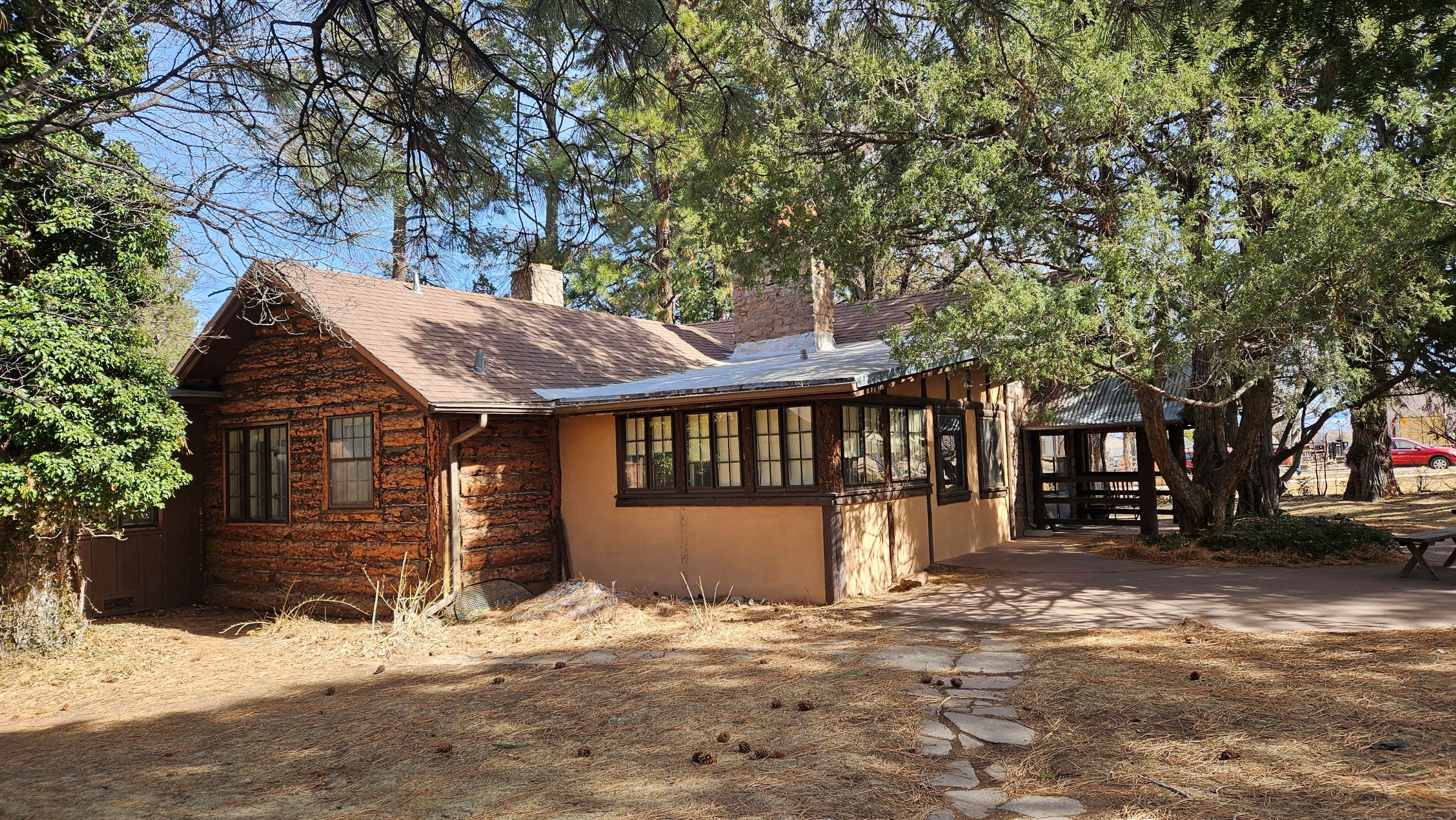
The house in the bottom center of this group of photos is J. Robert Oppenheimer’s house, a key stop on the walking tour but currently undergoing updates so it can be opened to the public.
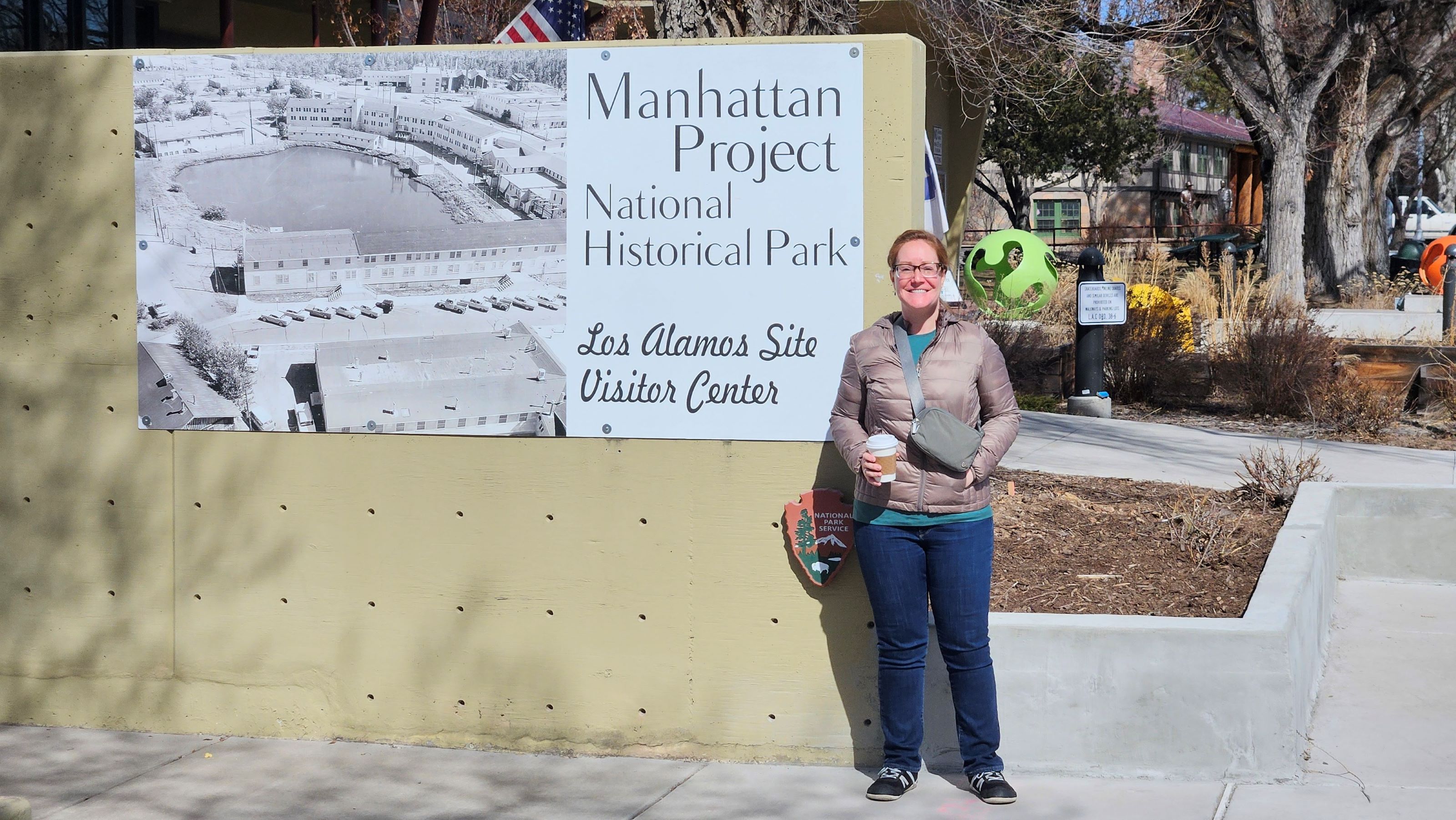
One of the main stops on our walk was the Manhattan Project National Historical Park. It’s one of three sites the National Park Service operates that cover the stories of the men and women who worked on different aspects of the Manhattan Project.
One of the other sites – known as Site W – is located in Hanover, Washington, which isn’t far from where we lived. We had hoped to tour that location but tours were paused during COVID and we couldn’t make it happen prior to our move to Wyoming. This tour gave me renewed interest in visiting that site as well as Site X, which is in Oak Ridge, Tennessee.
One interesting and more lighthearted story we learned is that the Manhattan Project residents had to list P.O. Box 1663 in Santa Fe, New Mexico as their address, with the government handling (and heavily redacting) messages between residents and the rest of the country. On one occasion, the P.O. Box received a complaint letter from Sears Roebuck about the number of catalogs being requested to that one address!
I appreciated all of the stories about how the people at the site worked together to create a community, especially given the primitive lodging and amenities and having no knowledge as to how long they would be stationed at this location and cut off from much of the world.

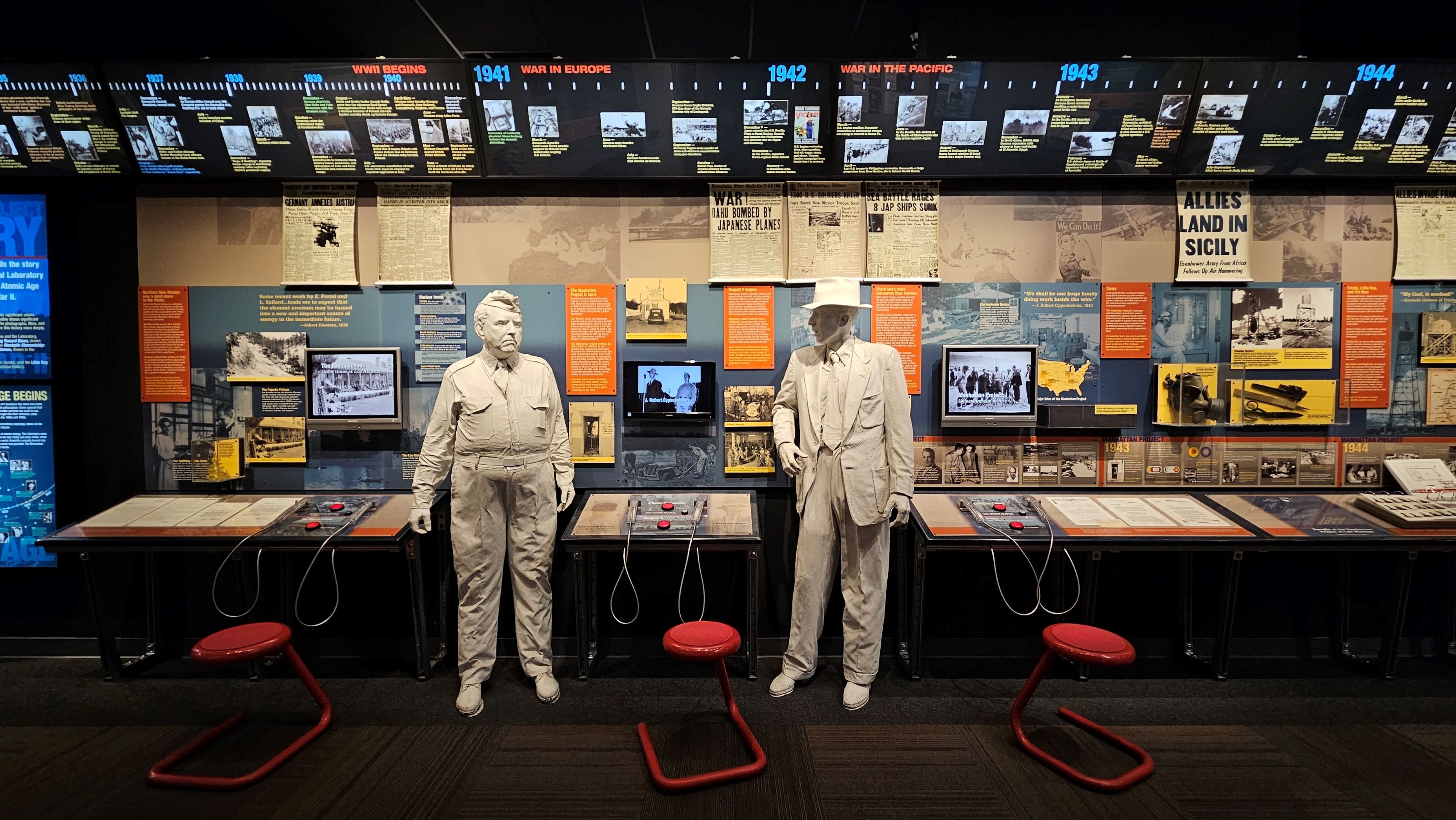
Another major stop on our tour was the Bradbury Science Museum. This museum is overwhelming – colorful information and models absolutely everywhere without much organization as well as more than 60 interactive exhibits. Its purpose is to highlight the work of the National Laboratory, which still has a significant presence in Los Alamos today.
Happily there was a film at the beginning of our visit that spoke to much of the science that was covered in Oppenheimer, including the specifics of how the two atomic bombs were manufactured and some of the approaches that were considered and rejected along the way.
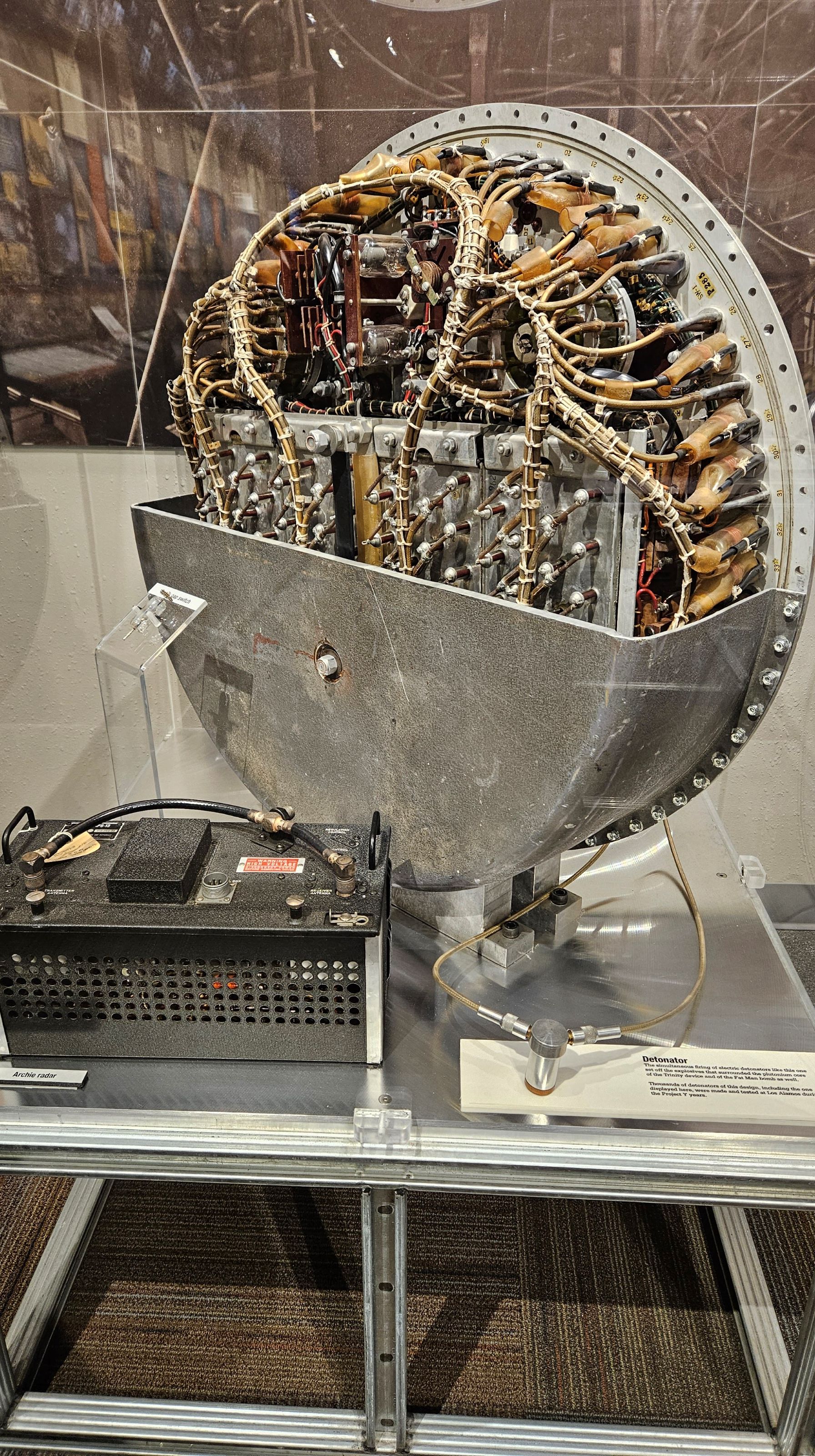
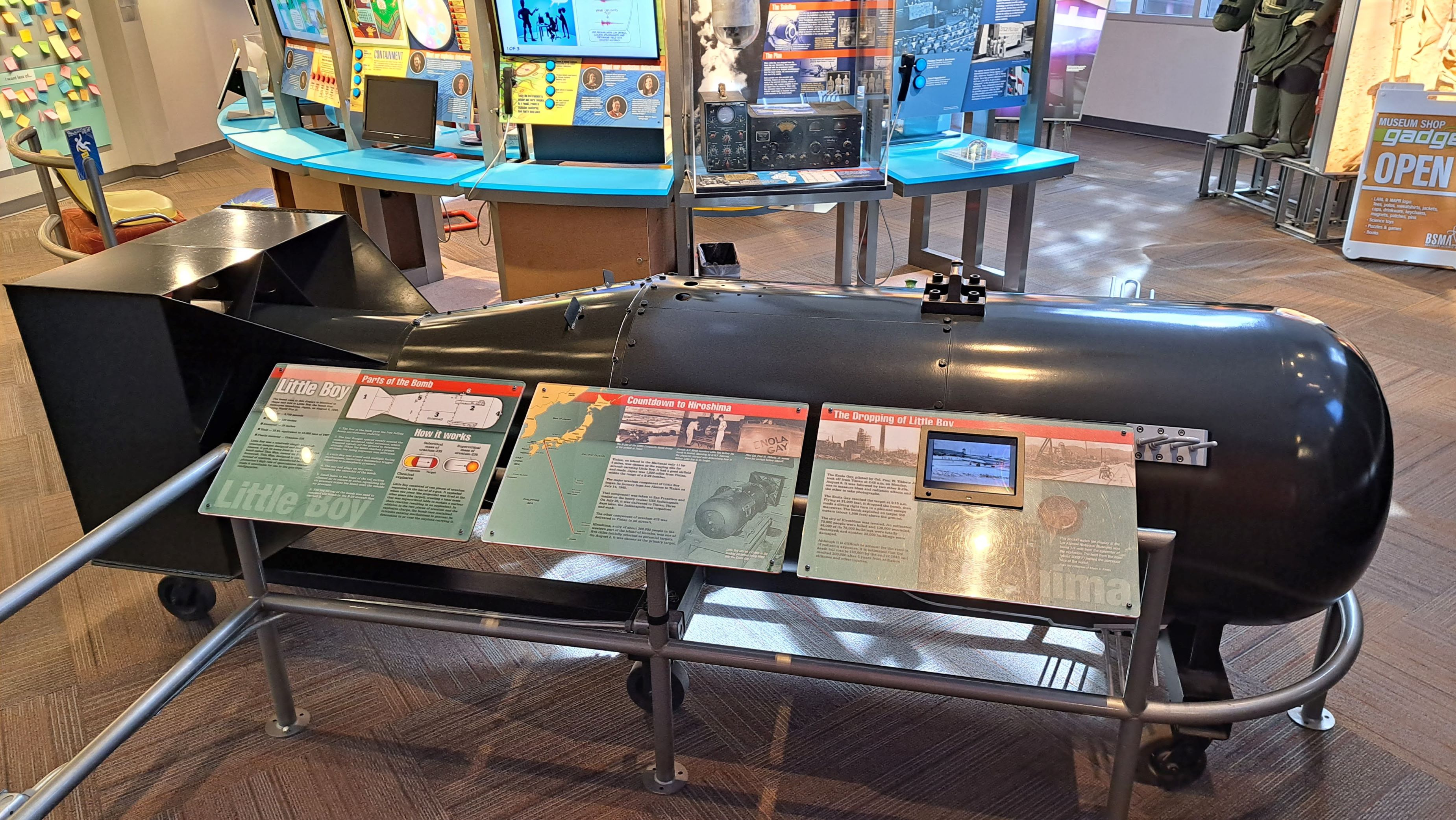
Of interest were the two life-size models of the atomic bombs used to end WWII: Little Boy, which used uranium from the Oak Ridge, Tennessee site and was dropped by the Enola Gay on Hiroshima, Japan, on August 6, 1945; and Fat Man, which used plutonium from the Hanford, Washington site and was dropped by the Bockscar on Nagasaki, Japan, on August 9, 1945. Those are featured at the bottom of the photo set below.


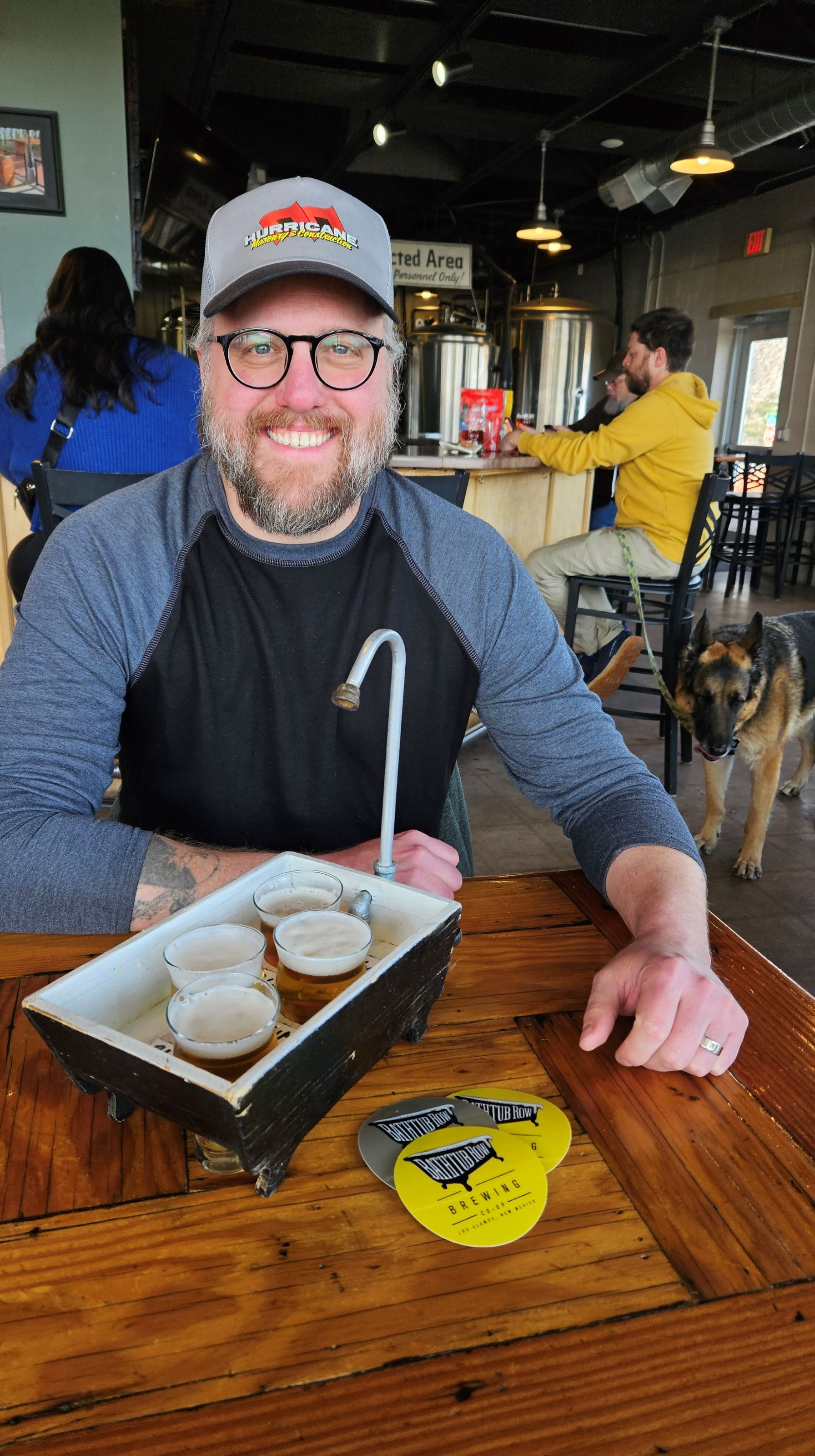
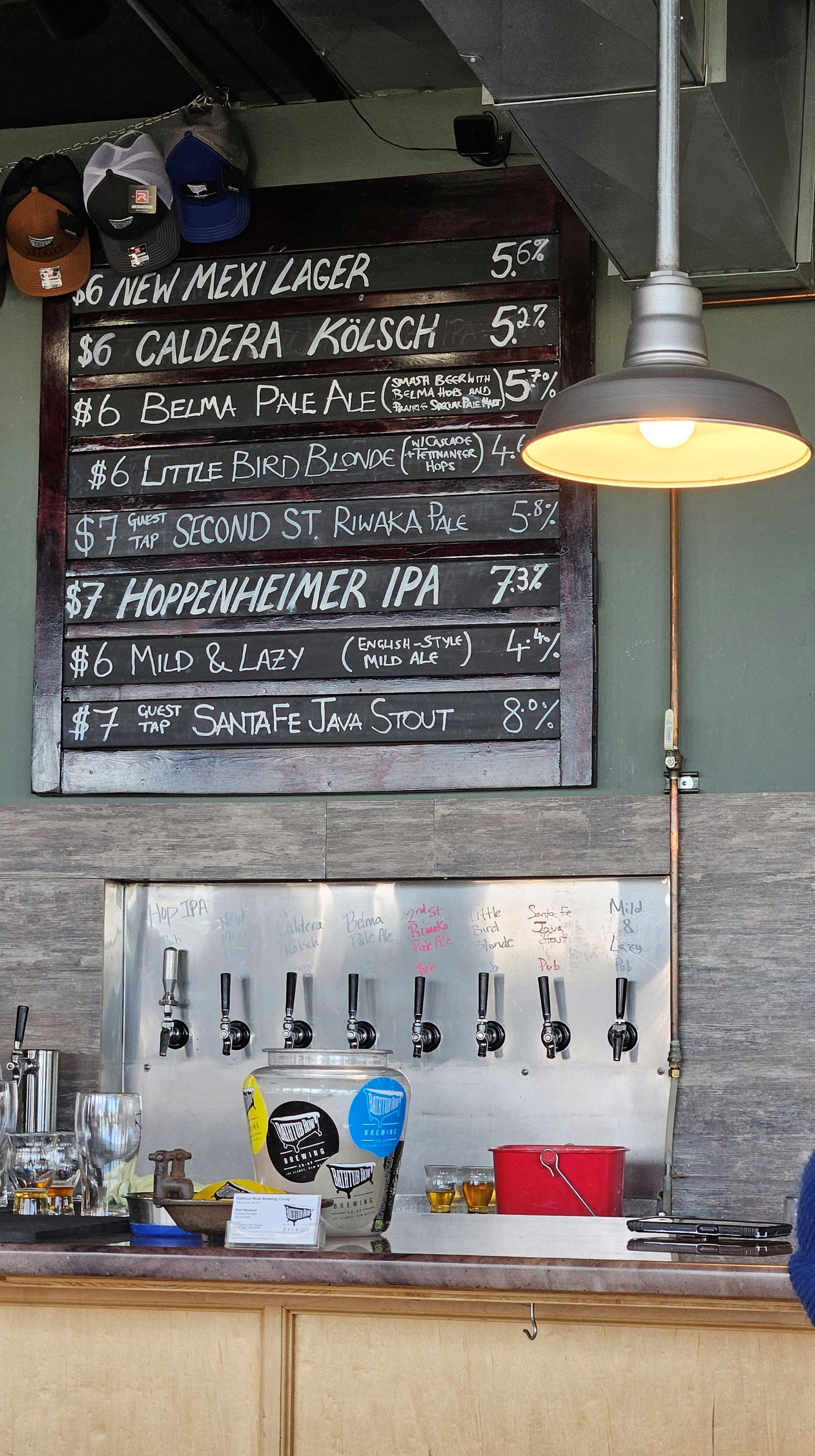
After walking through all of the sites in town we decided to reflect on everything we learned at Bathtub Row Brewing. The brewery’s name is a nod to the nearby street and walking tour stop, “Bathtub Row,” where J. Robert Oppenheimer and the other lead scientists lived. Manhattan Project workers called the street Bathtub Row as it was the only group of houses in town that had bathtubs.
They had a fun bathtub-themed sampler, and of course we elected to try the Hoppenheimer IPA (which was, in fact, very good).
While the content was heady, it was an informative and interesting day continuing to learn more about WWII history and the complicated nature of the development and deployment of the atomic bombs.
If you visit, I’d suggest leaving a full day for this stop – they are continuing to open new sites, and we needed breaks for coffee and lunch and time to reflect throughout the course of our visit.
 Heather's Compass
Pingback: Things to Do: Cheyenne, Wyoming – Heather's Compass
Pingback: Highlights of Santa Fe, New Mexico – Heather's Compass
Pingback: Visiting Valles Caldera National Preserve and White Rock Overlook – Heather's Compass