When we needed to reroute our planned road trip through New Mexico, Arizona, and Utah to commence in Ohio instead of Colorado, we spent a whirlwind afternoon plotting out our new route and a few brief stops along the way.
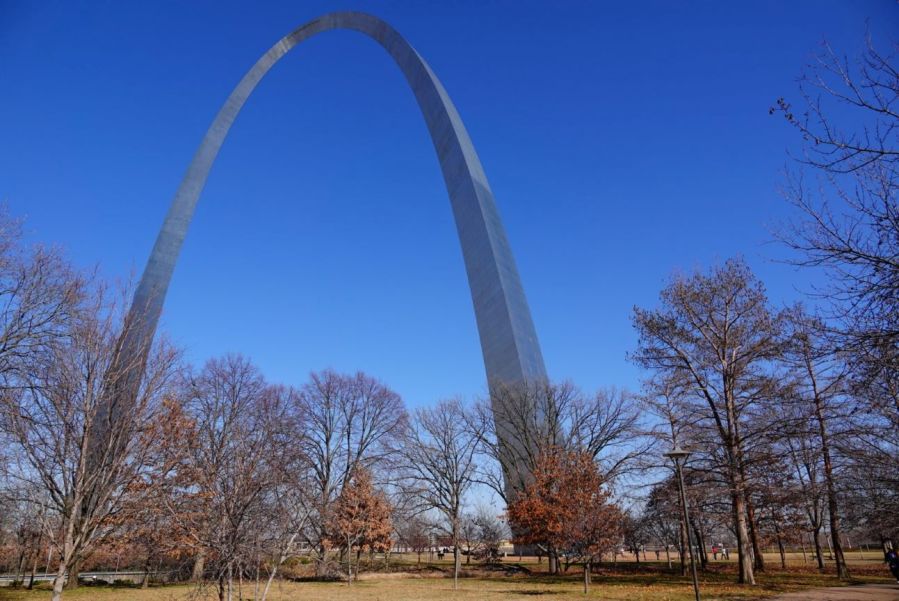
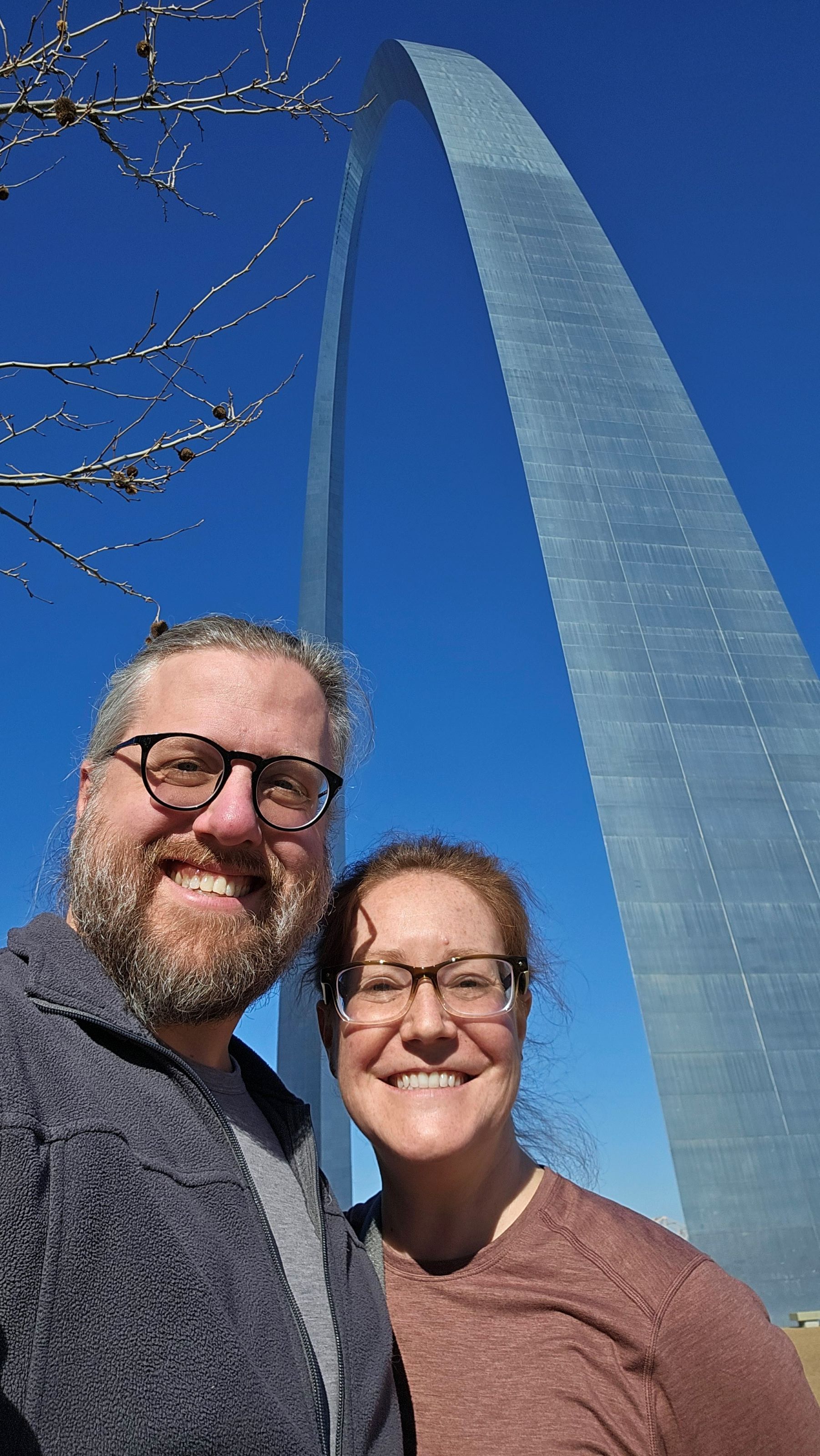
In the process, we decided to stay overnight in Missouri and Kansas on our drive from Ohio back to Colorado. I hadn’t been to Missouri since I was young, and I had never been to Kansas before. We decided to make a brief stop on our first travel day at the St. Louis Arch, which as of 2018 is now designated Gateway Arch National Park. Although we had each visited separately many years ago, this was our first time exploring together and our first visit since it became a national park.
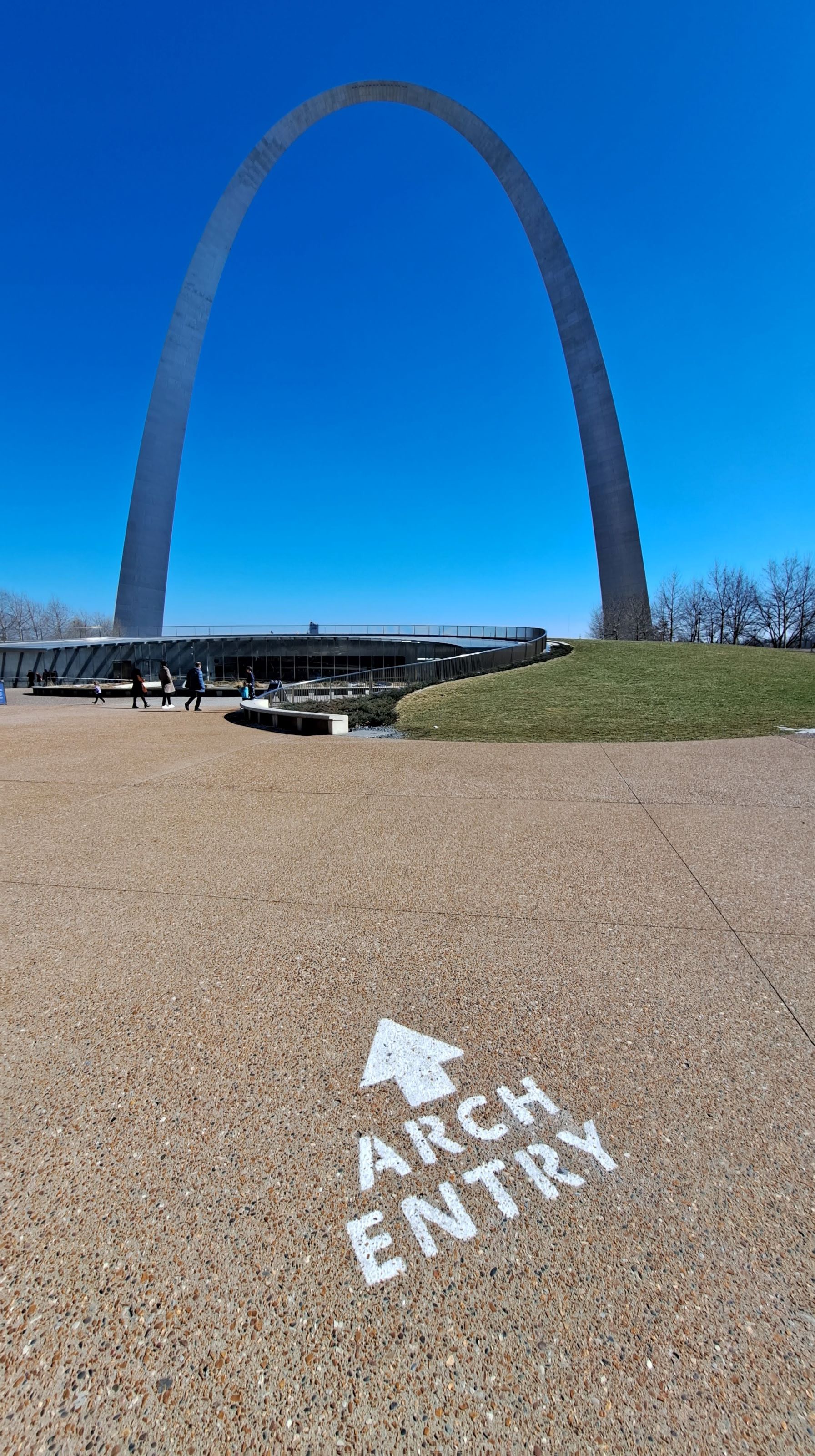
While anyone is welcome to wander around the greenspace under and around the arch, you enter the national park experience through an underground visitor center where you can purchase tickets to access a museum, cafe, souvenir shop, and the tram rides to the top.
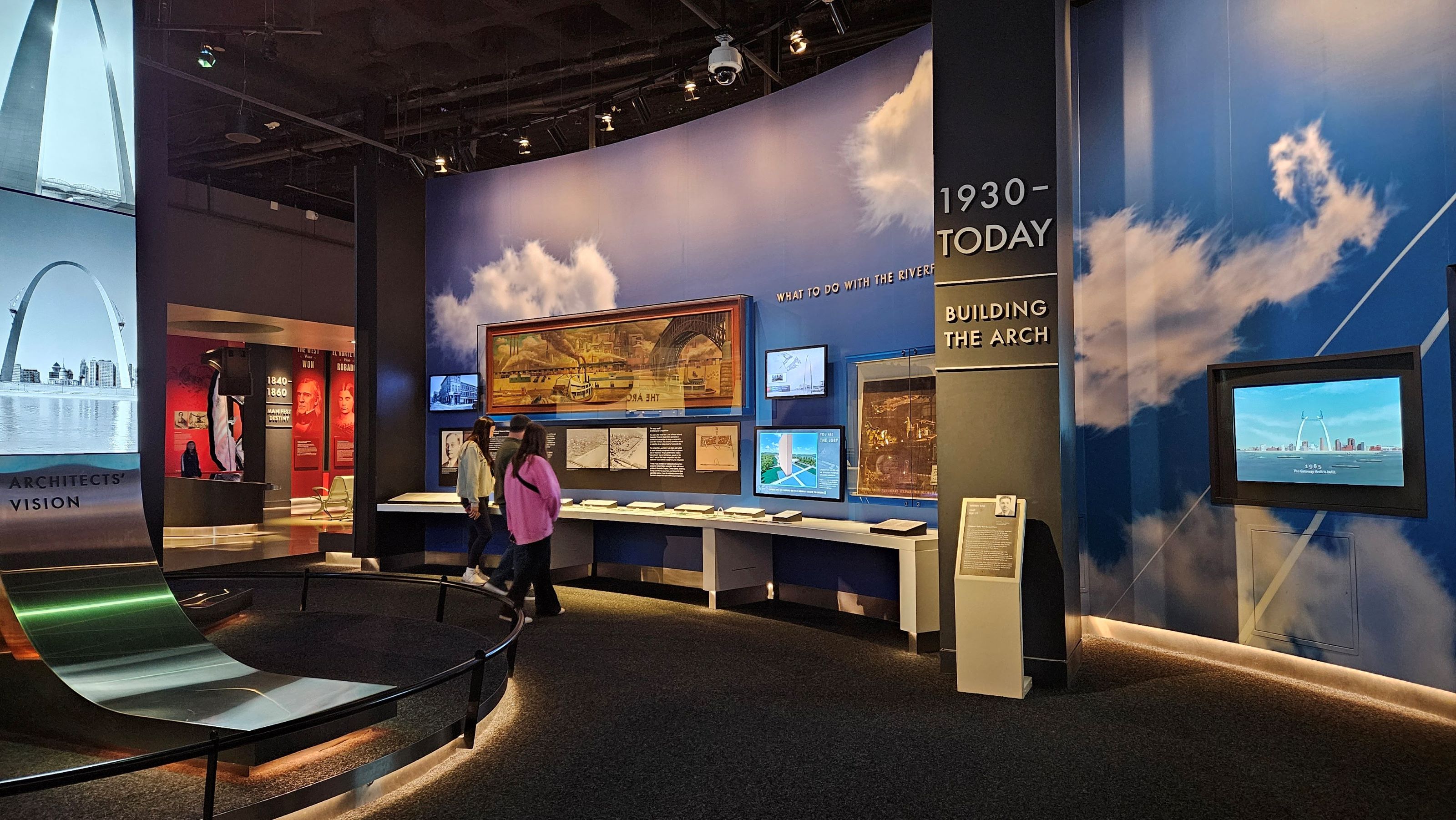
The Museum at the Gateway Arch opened in 2018 and offers tons of background about not only the arch’s construction in the 1960s, but the role St. Louis played – given its ideal location on the confluence of the Missouri and Mississippi rivers – in the United State’s expansion west during the 1800s.
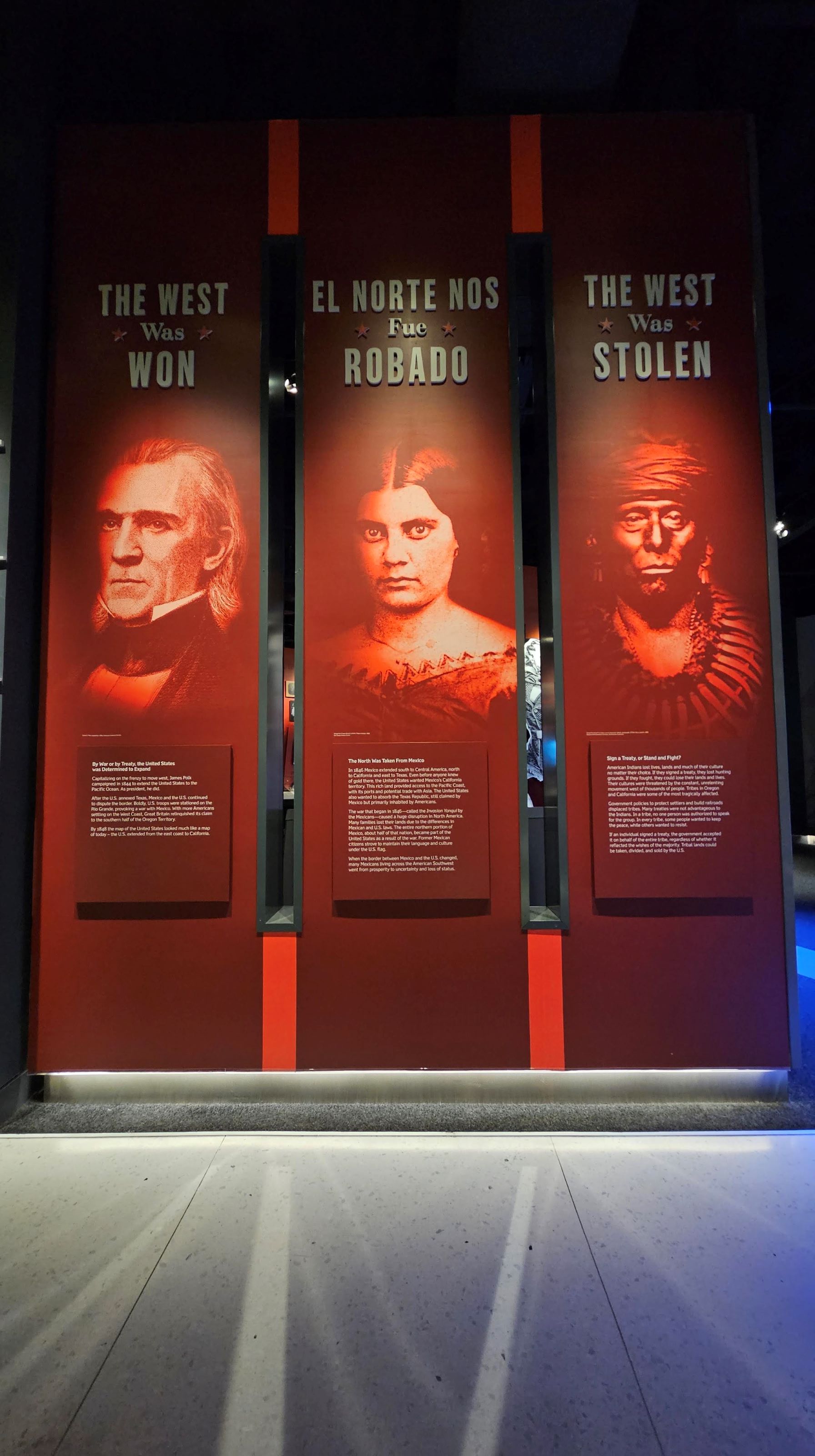
We didn’t have much time to explore the museum, which is impressively large. I did, however, notice that they were intentional in telling the stories not only from the perspective of the Anglo-Saxton colonizer (e.g. how the west was won) but from the perspective of indigenous people (e.g. how the west was stolen) and Mexicans (e.g. how the north was stolen), the latter of whom occupied and lived in territories later claimed by the U.S.
On a future visit, I would forgo the trip to the top, which I’ve now completed a couple of times, and instead focus my time in the museum.

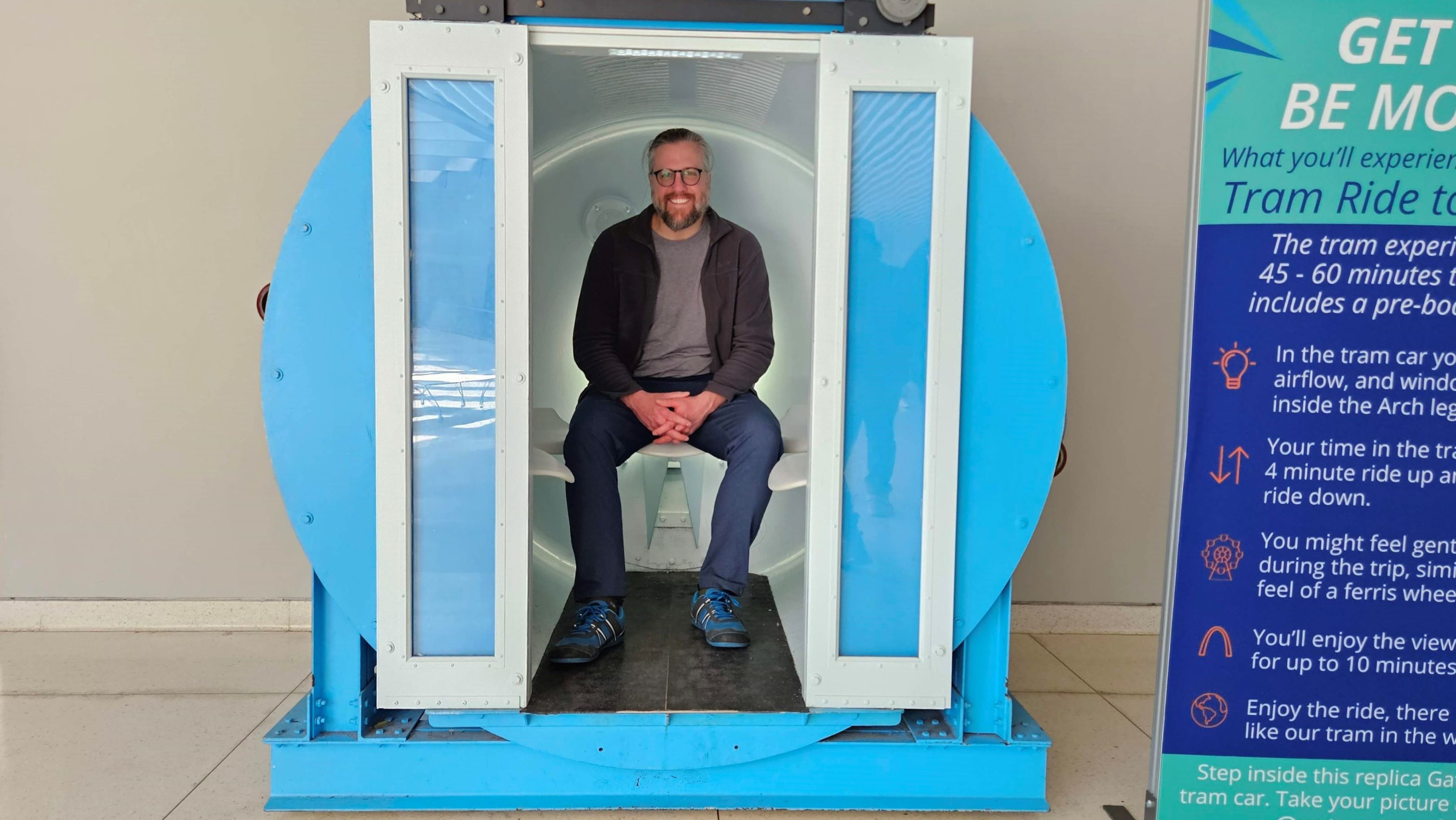
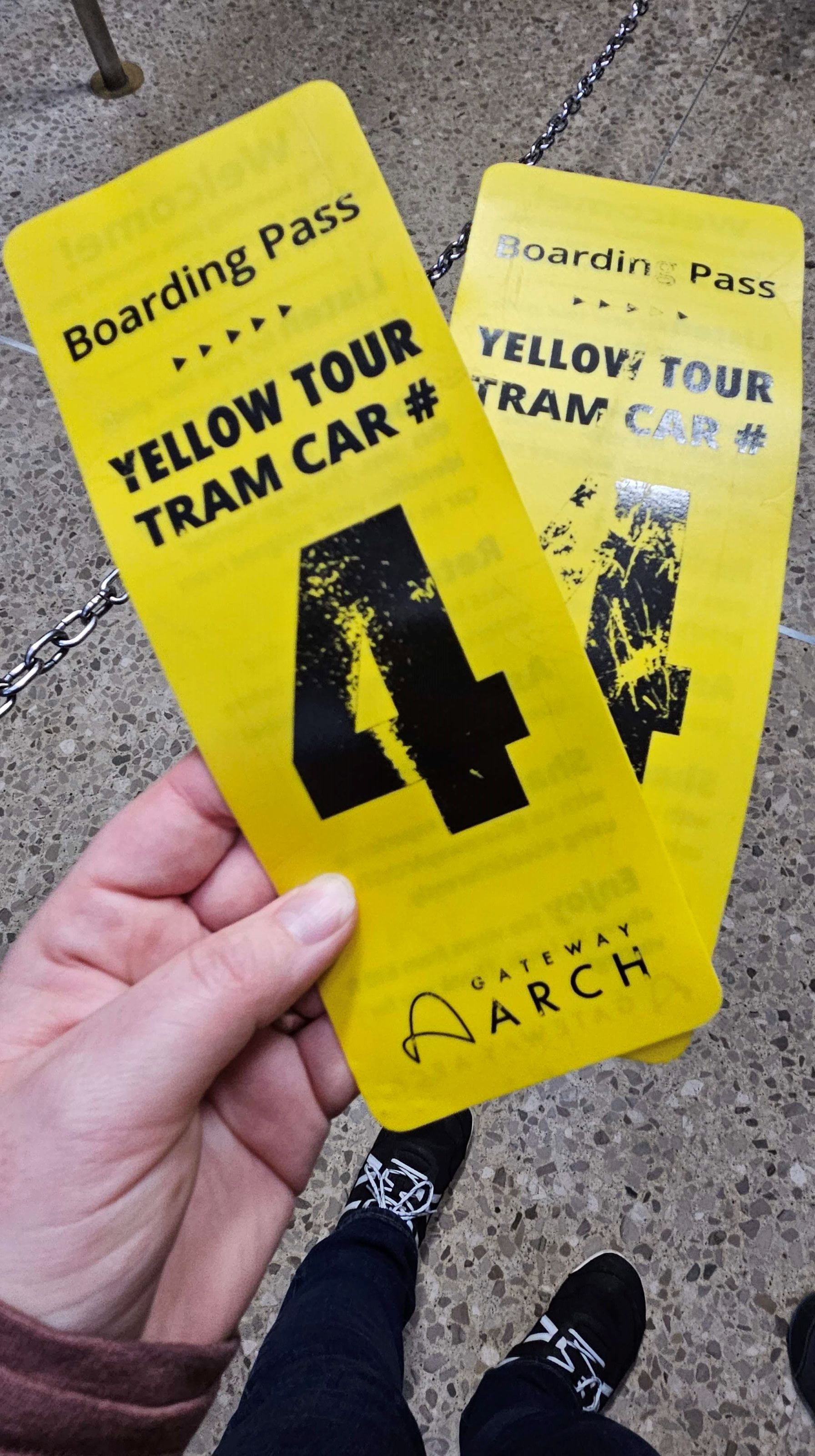
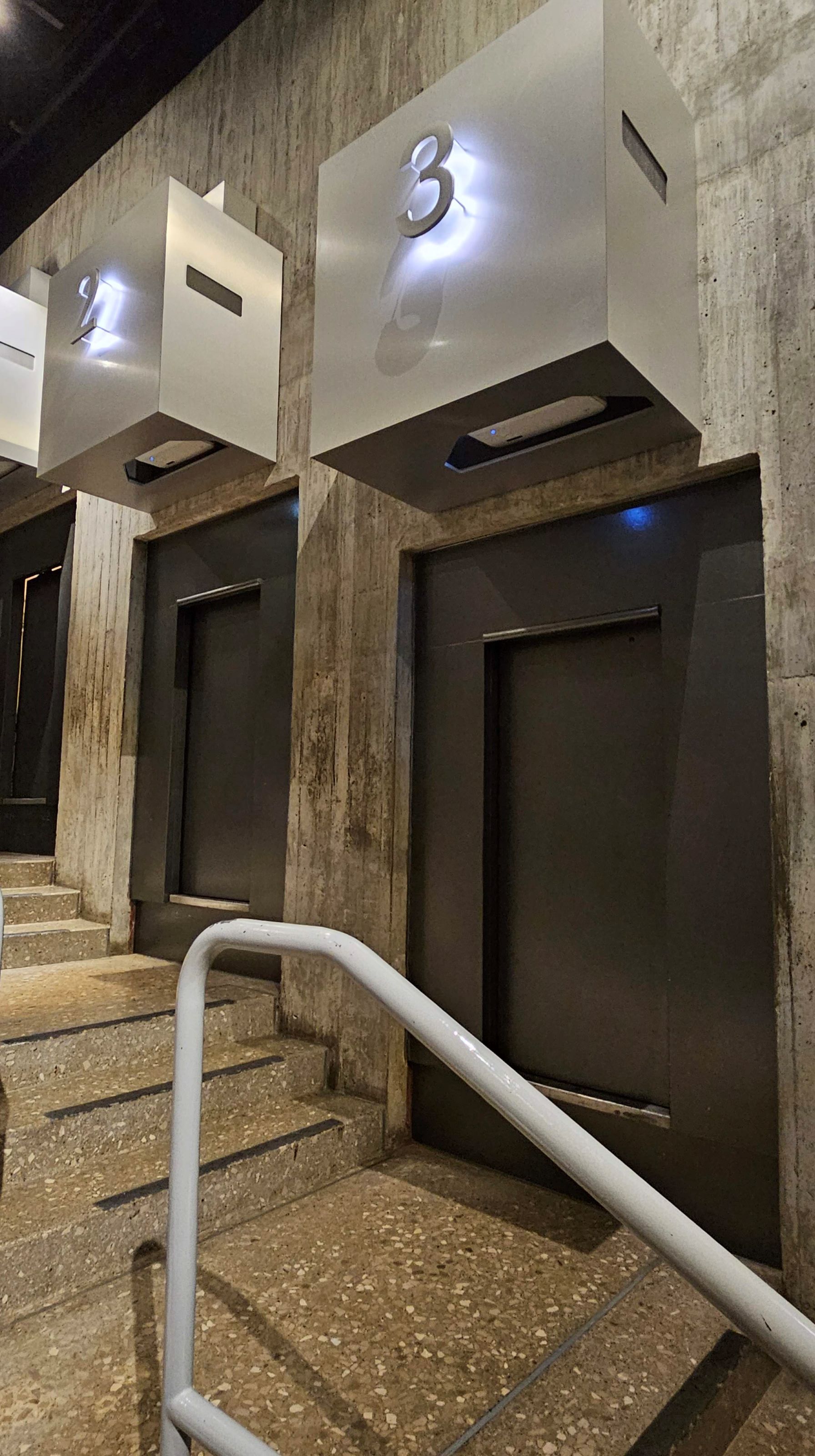
We made our way to the queue for our timed entry to the top. Each group has a park ranger assigned to it who covers some of the arch’s history as you move through several stations leading up to the trams. Along the way were information plaques as well as a short video we watched prior to boarding our 5-person tram car.
The ride up takes 4 minutes and the ride down takes 3 minutes. We shared our car with two men, one of whom said he worked in steel and was pleased to see we could look out the small window in our tram and take in the behind-the-scenes views of the arch’s interior design as we made our way to the top.
It was a pretty clear day so we had good views to the east of the Mississippi River and to the west of downtown St. Louis and the nearby Old Courthouse, which has a museum I would love to explore during our next visit. The courthouse was build in the mid-1800s and was the setting for the infamous Dred Scott case:
In its 1857 decision that stunned the nation, the United States Supreme Court upheld slavery in United States territories, denied the legality of black citizenship in America, and declared the Missouri Compromise to be unconstitutional.
https://www.sos.mo.gov/archives/resources/africanamerican/scott/scott.asp#:~:text=Missouri’s%20Dred%20Scott%20Case%2C%201846,Missouri%20Compromise%20to%20be%20unconstitutional.
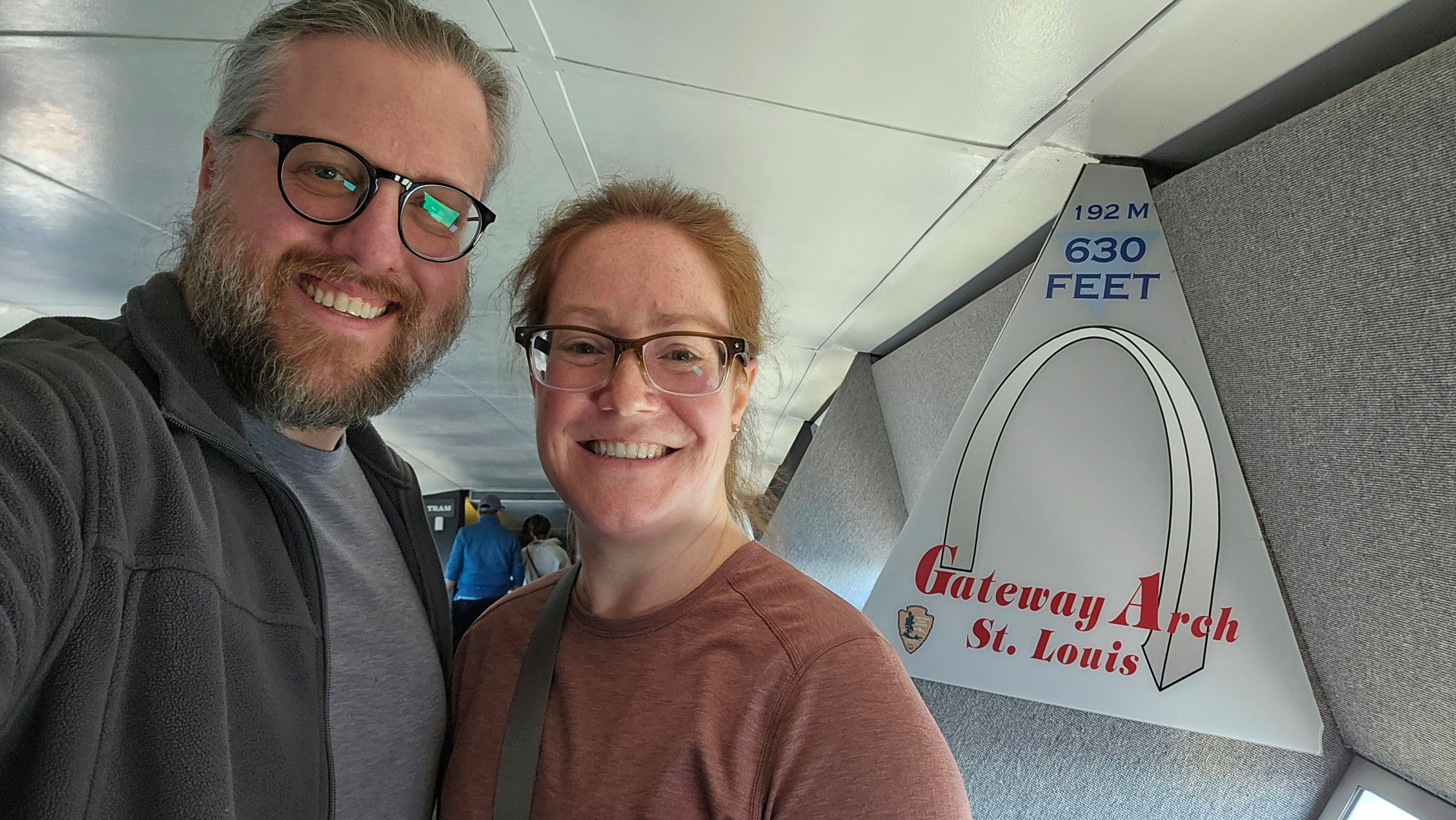
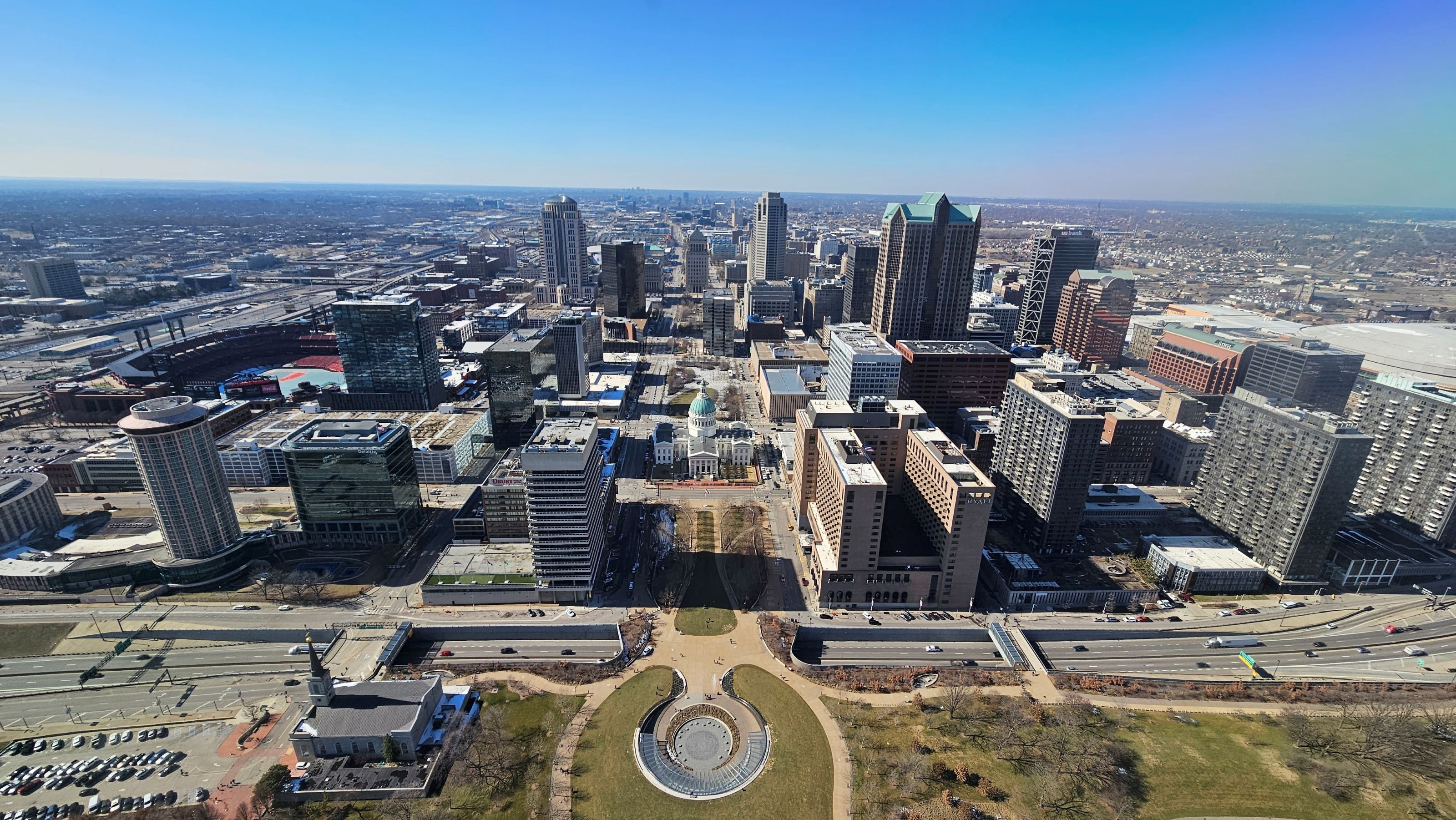
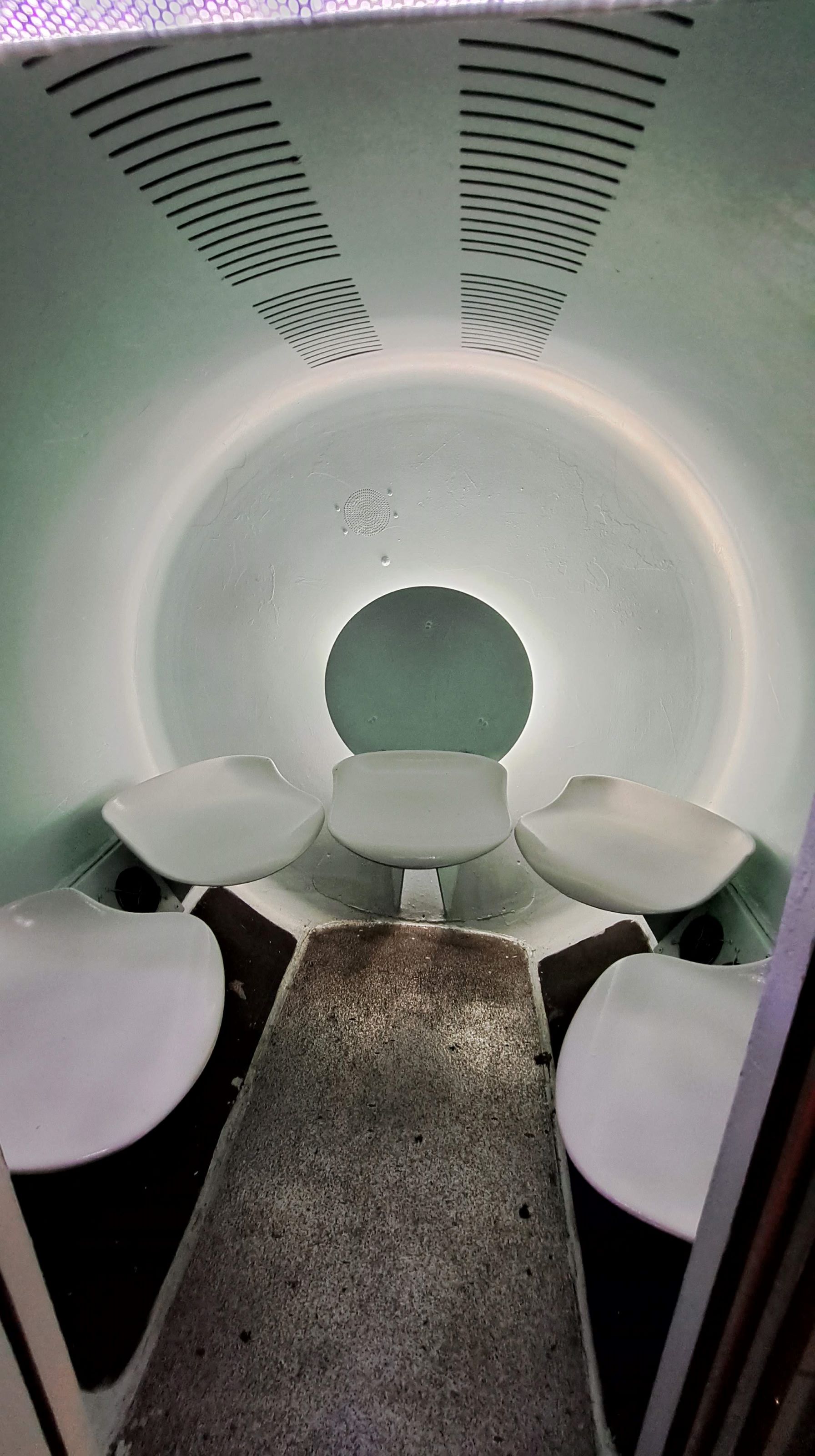
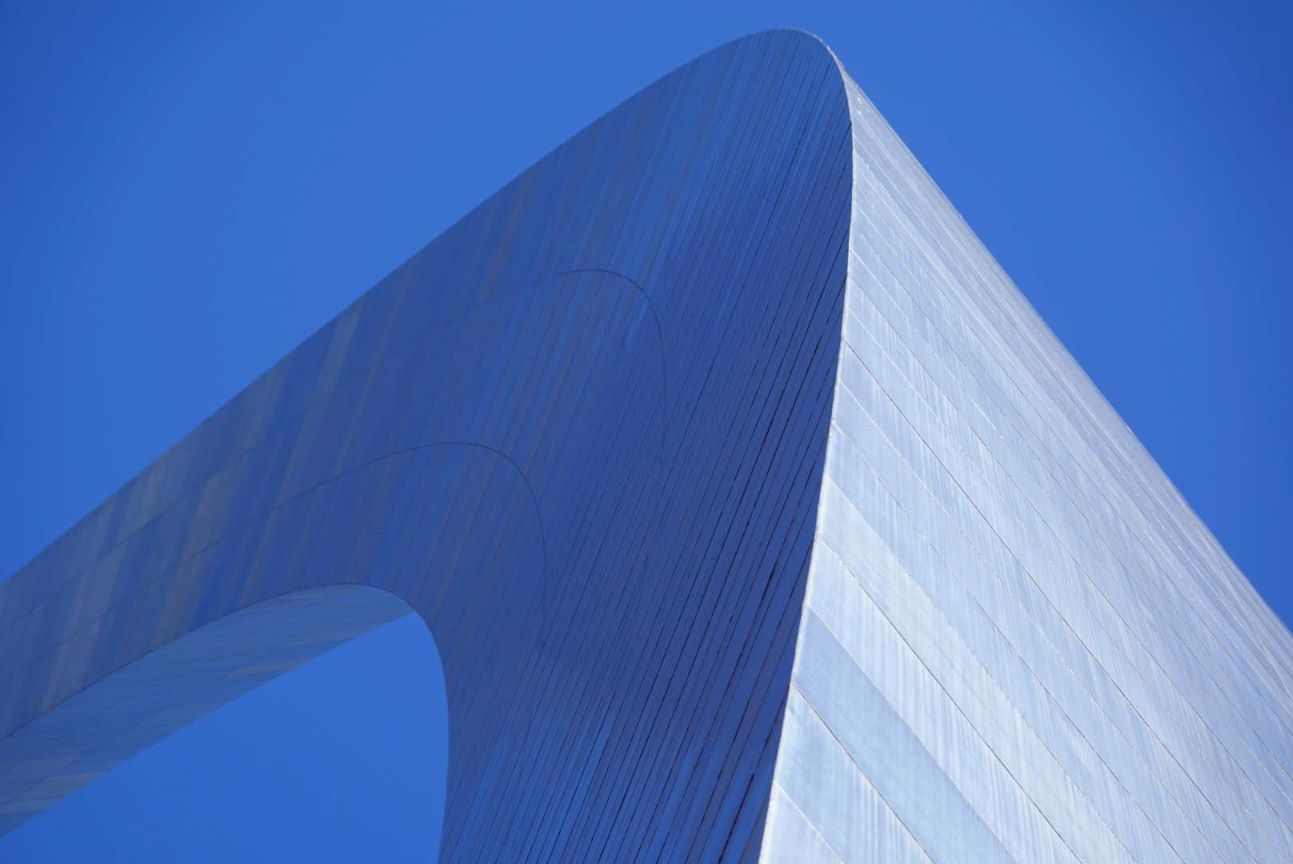
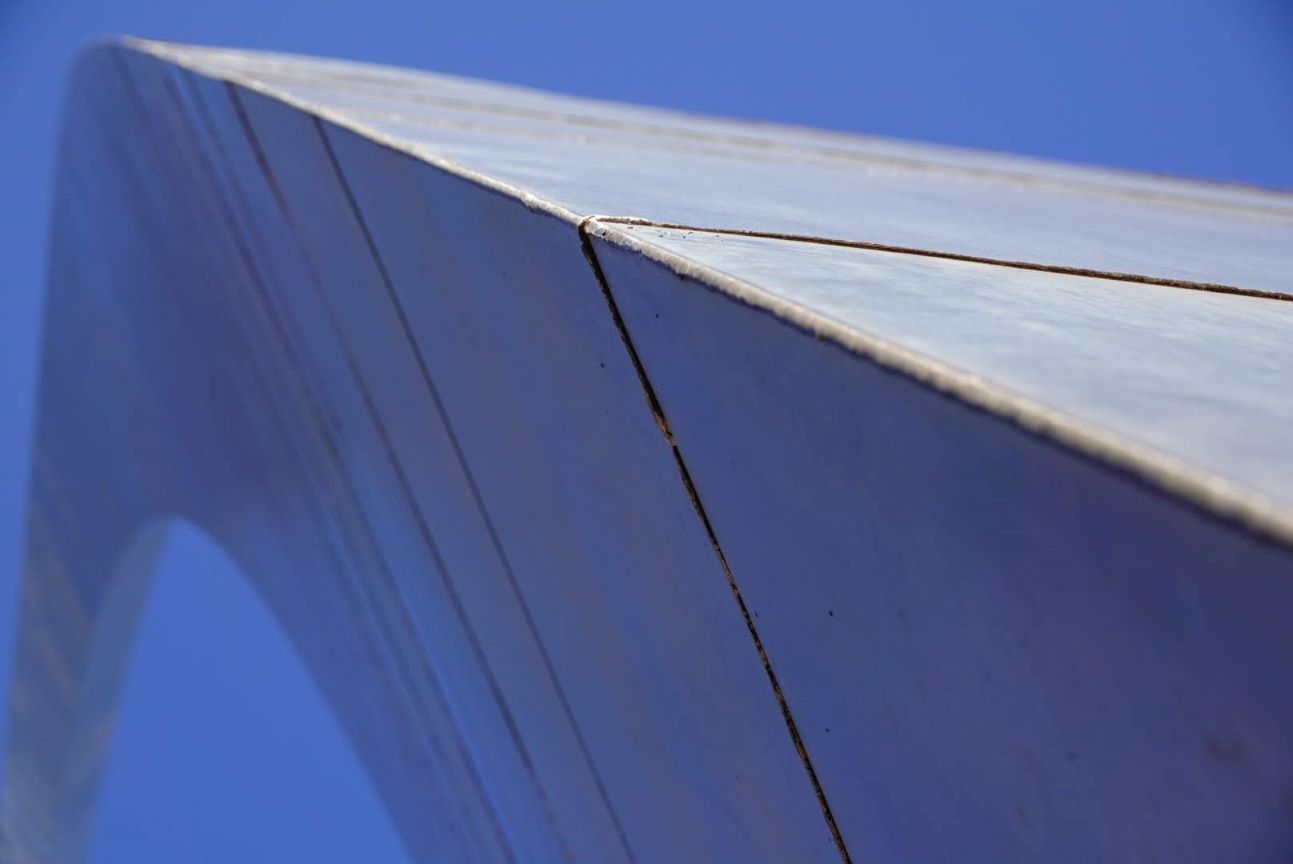
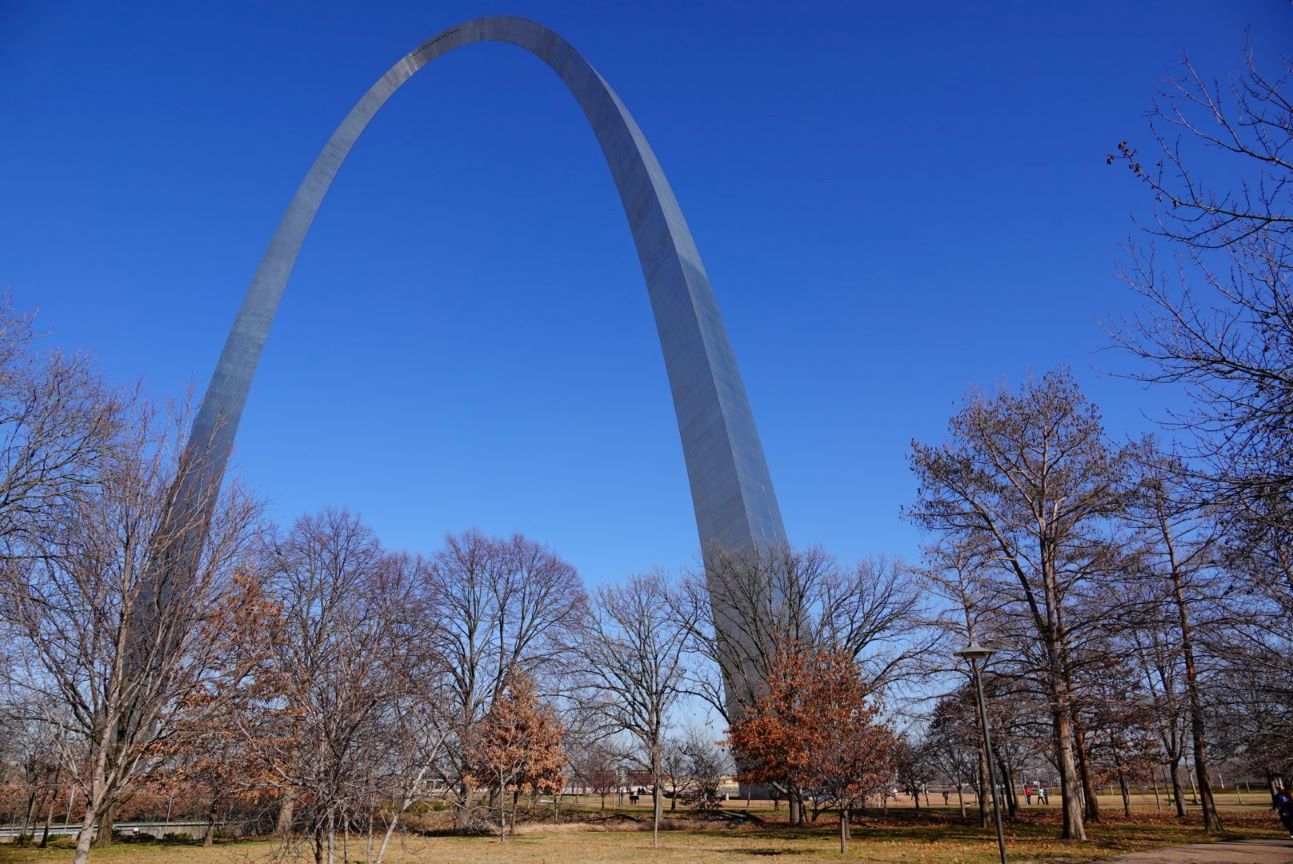
After our tram ride we spent a few moments wandering around the green space under and around the arch. The arch’s design offers quite the optical illusion, morphing in shape and size depending on the perspective of where you’re standing. It’s wild to me that its height and base width are the same – 630 feet.
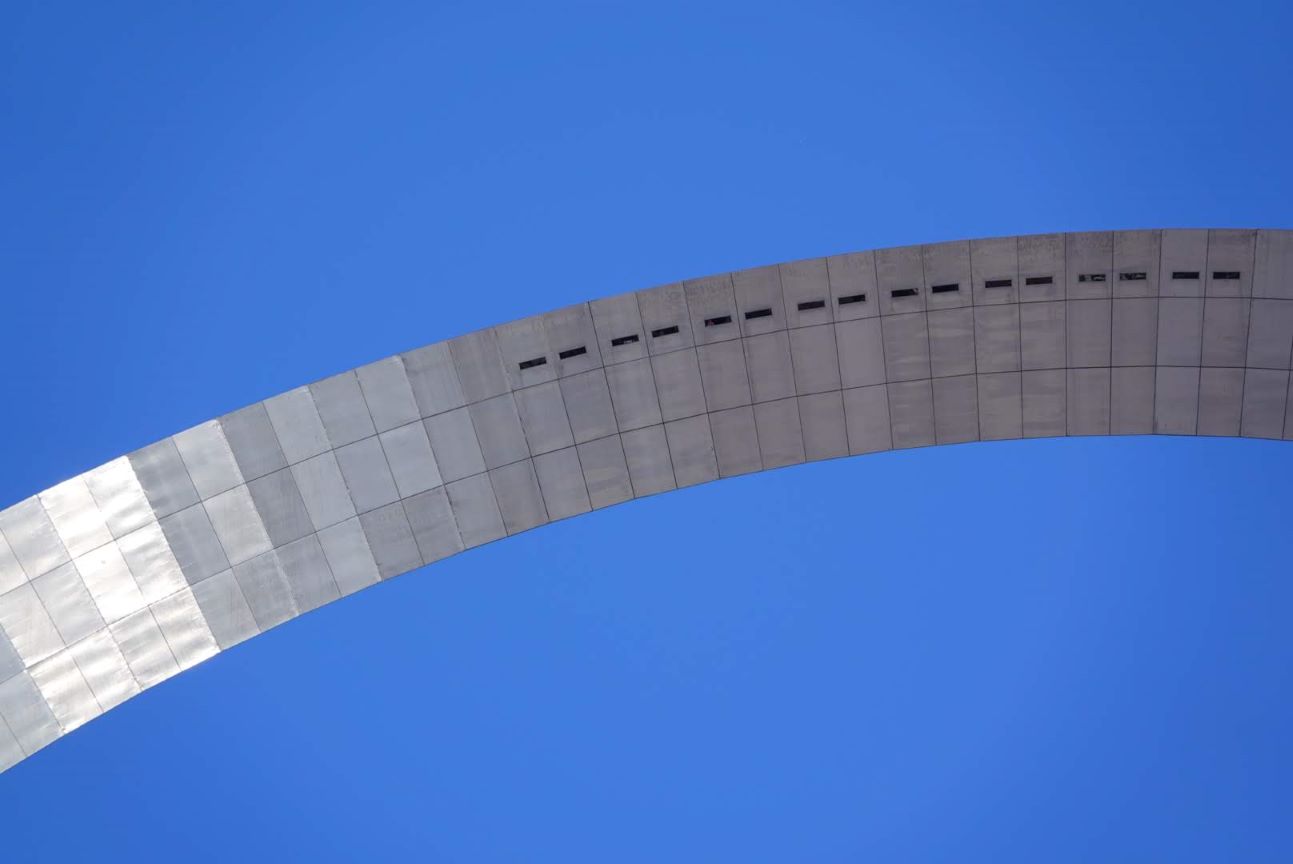
Brian took some interesting photos as we walked around, including one showing the tiny windows we peered out of at the top. The top of the arch has a total of 32 windows and can hold 160 people at a time.

It was a short but informative visit and definitely inspired me to want to return to St. Louis at some point. I’d like to continue revisiting a few things we’ve seen before as well as check out new museums and sites that we’d be experiencing for the first time.
 Heather's Compass