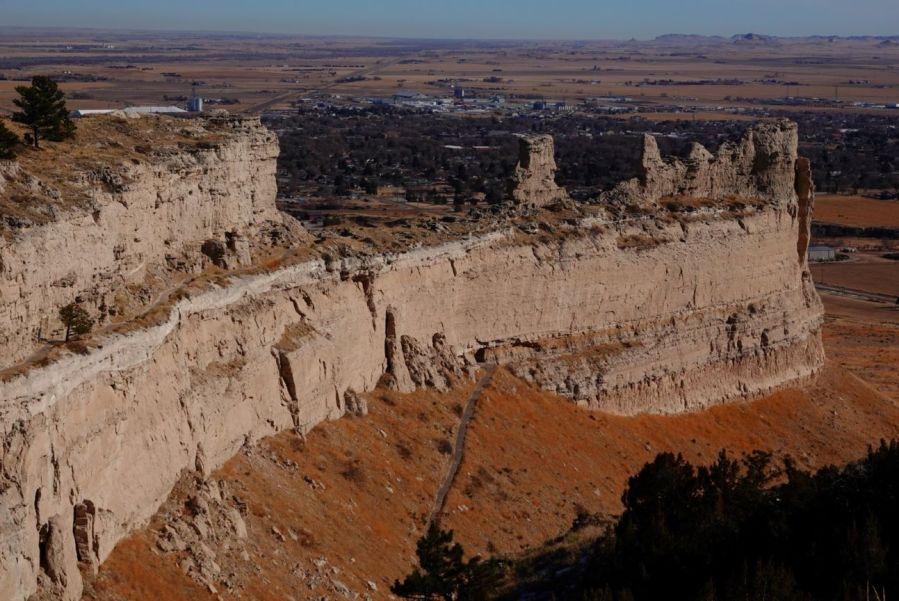
We had an unusually warm day last week, and Brian wanted to sneak in a motorcycle ride before the snow set back in. We’ve been meaning to spend more time in nearby Nebraska so taking a day trip on Brian’s new bike was the perfect opportunity to enjoy the warm weather and cross a local adventure off our list.
After a bit of research, Brian organized our outing to Scotts Bluff National Monument in Gering, Nebraska. Established in 1919, Scotts Bluff has served as an important landmark to indigenous people for more than 10,000 years and a critical trading post for the non-native people traveling along the Oregon, California, and Mormon trails in the 1800s. It remains an important geological, cultural, and historical landscape feature today.
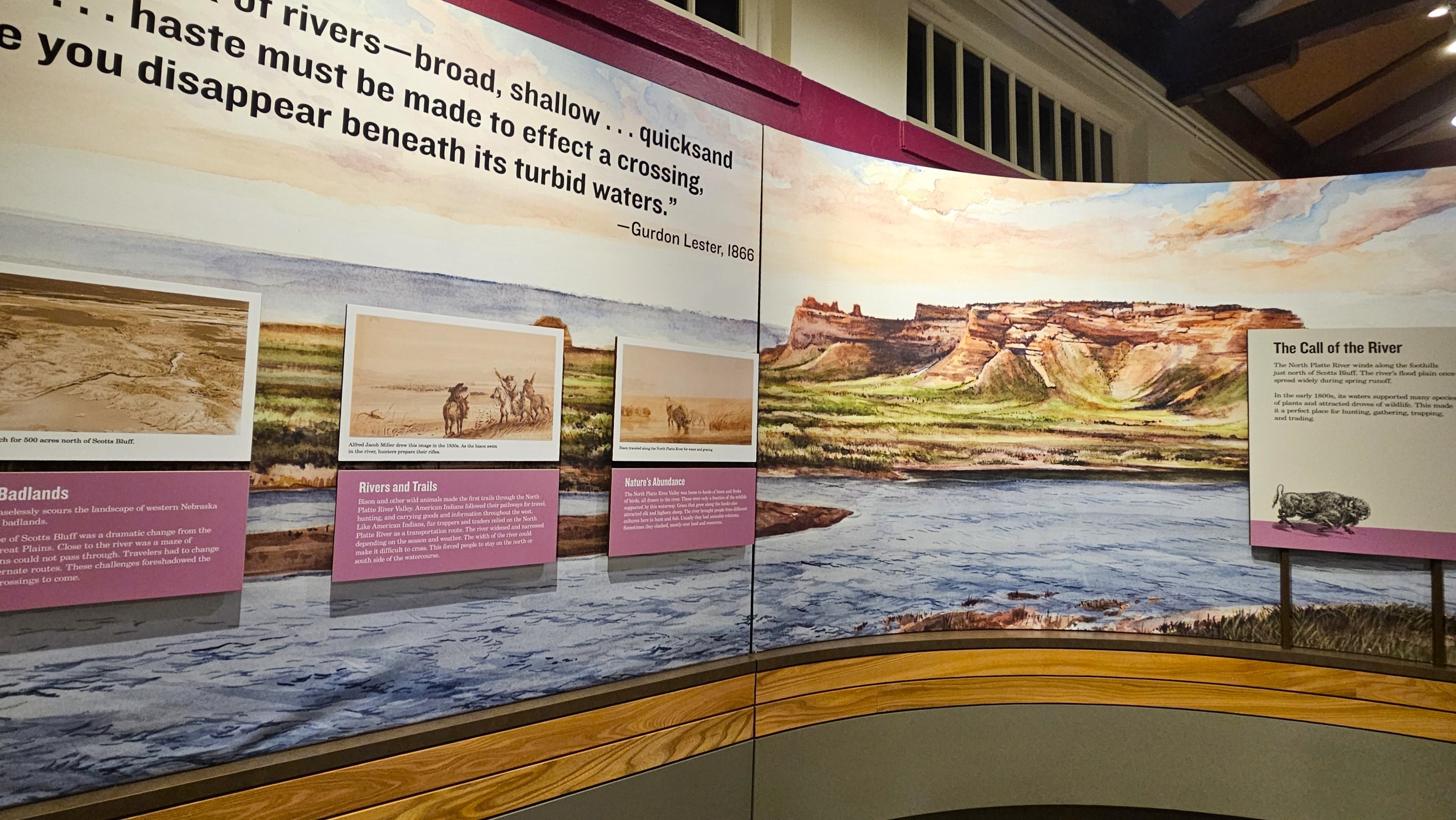
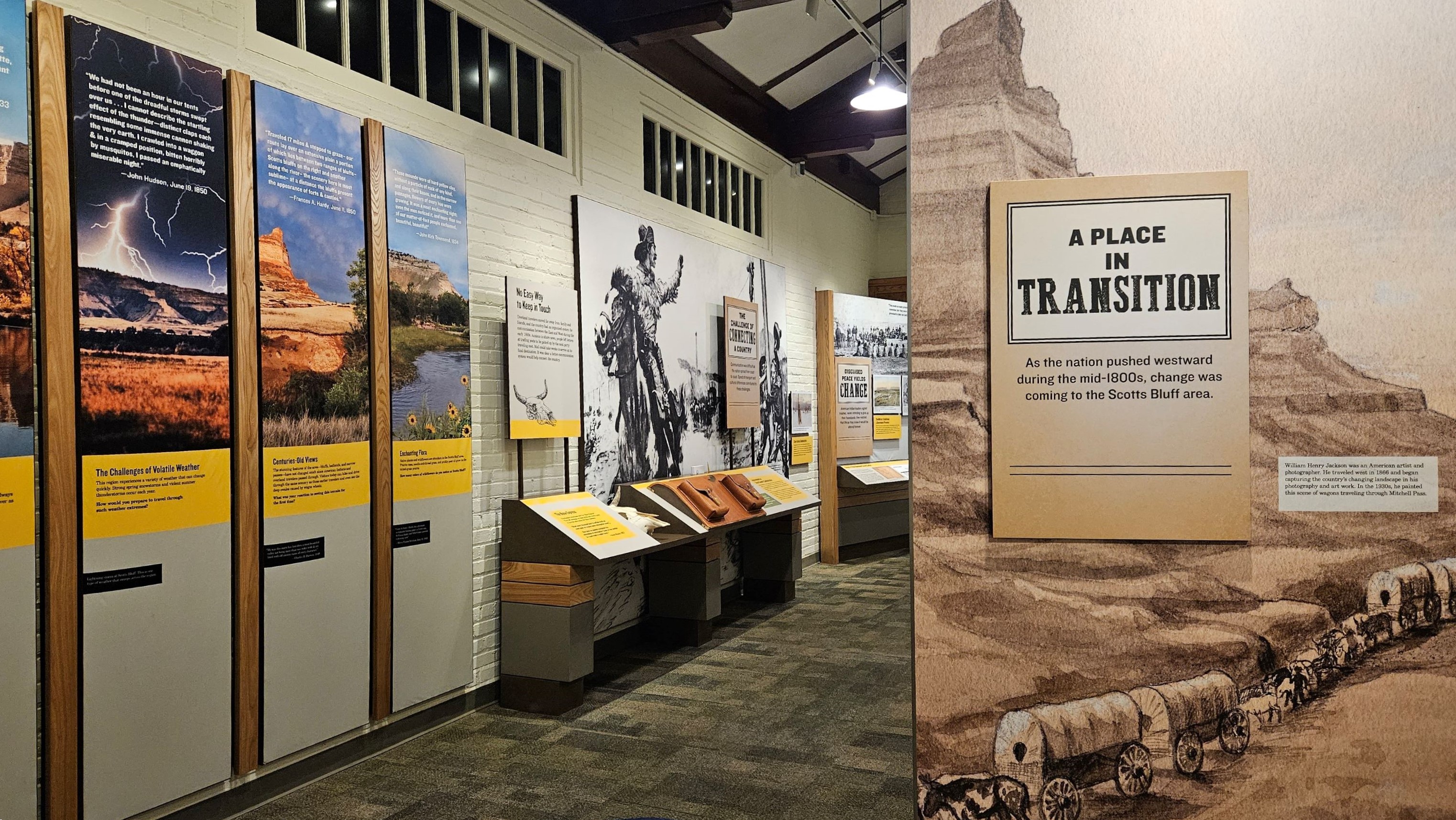
The 3,000 acres of Scotts Bluff National Monument sit in western Nebraska, with Scotts Bluff rising 800 feet above the North Platte River. Named after the enigmatic fur trader Hiram Scott, Scotts Bluff captured the interest of former artist William Henry Jackson, who documented the history of this area in an important collection of paintings on display at the visitor center today.
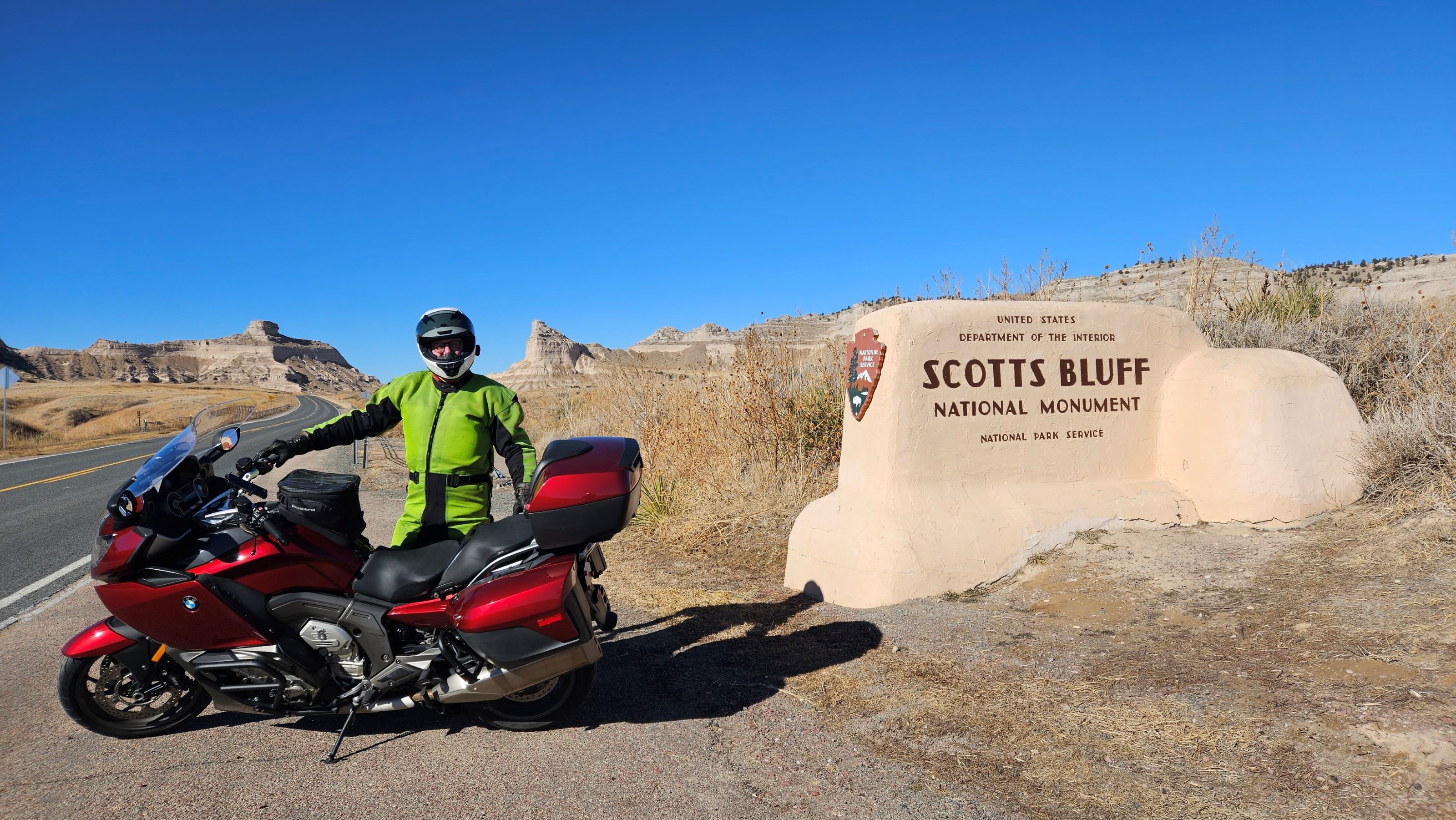

After an hour-and-a-half ride from Cheyenne to Gering, we began our visit at the visitor center. I had my national park pass ready, but the ranger let us know the site is fee-free year-round.
We began with a 15-minute video detailing the history of this area with a particular emphasis on the geographical features and paleontological significance still being researched today.
In addition to walking through the Jackson paintings, we spent time in several exhibit areas dedicated to the different people who spent time in this area, and resulting changes in the wildlife that inhabit the high plains. While elk, bison, bighorn sheep, pronghorn, and grizzly bear used to migrate through and call this area home, humans and farming have pushed them out, leaving behind white-tail and mule deer, prairie dogs, and prairie rattlesnakes.
Although we didn’t encounter any wildlife during our winter trip, there were enough warnings – especially about rattlesnakes – to suggest it’s a different experience visiting during warmer months.
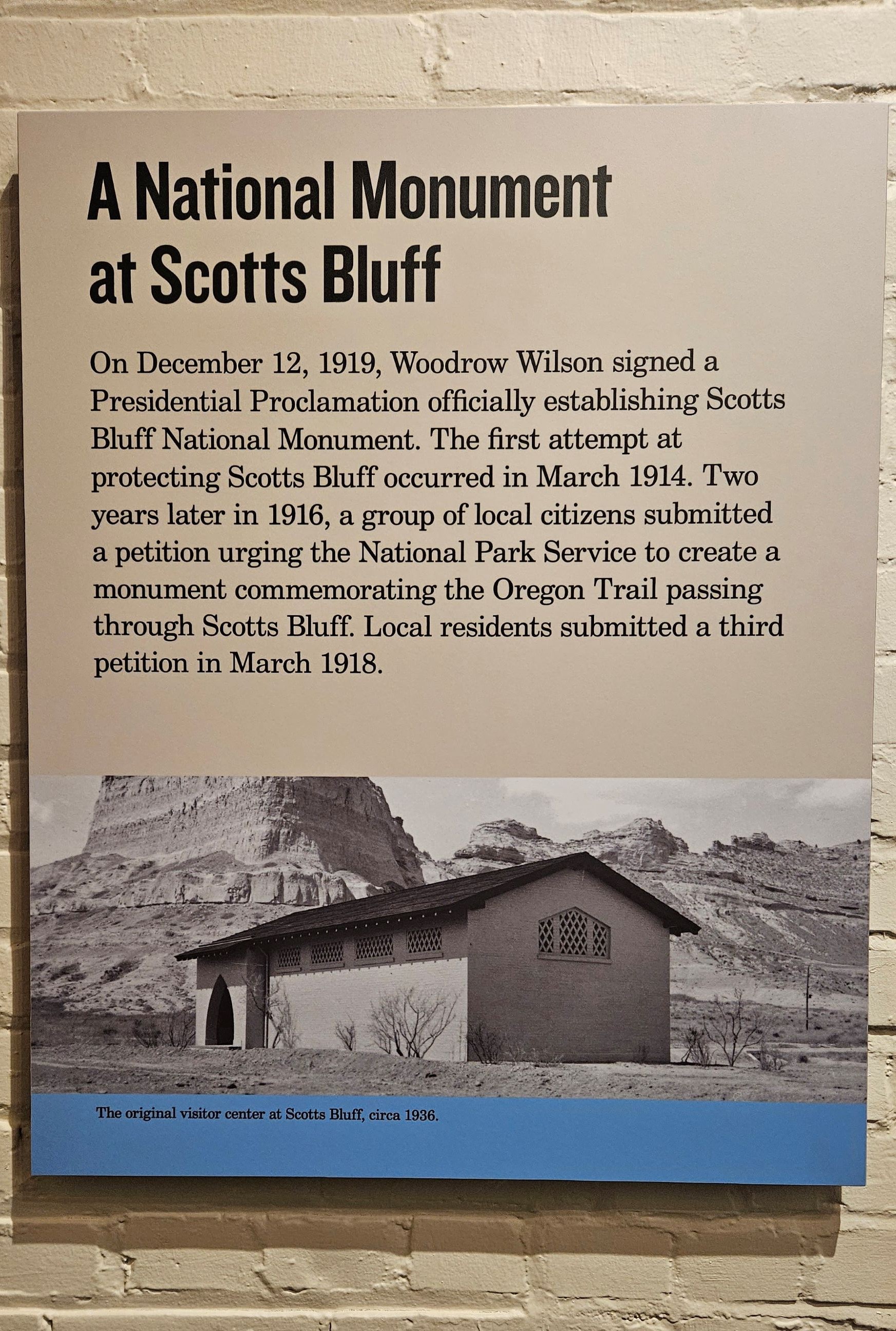
There are a number of trails leading up to the top of Scotts Bluff but given our motorcycling gear and the weather we opted to drive the 1.6-mile Summit Road to the top.
It was a clear and cool day so we had excellent views of the surrounding area, including Chimney Rock and other important geological markers in the distance. After a brief walk around the summit, we wound our way back to the visitor center so we could start our ride home before dark.


Although I remember learning stories about the Oregon Trail, I don’t remember hearing about Scotts Bluff until we moved to Wyoming. Part of our reason for moving here was to learn more about this part of the country, and our visit to Scotts Bluff was certainly educational and new information to me.
The visitor center details a number of other nearby sites, some relevant to the Oregon Trail and others significant to indigenous people and/or the ongoing quest of white people to ‘civilize’ the west. I look forward to checking those out this year as we continue to learn the history of our new home.
 Heather's Compass
Pingback: Things to Do: Cheyenne, Wyoming – Heather's Compass