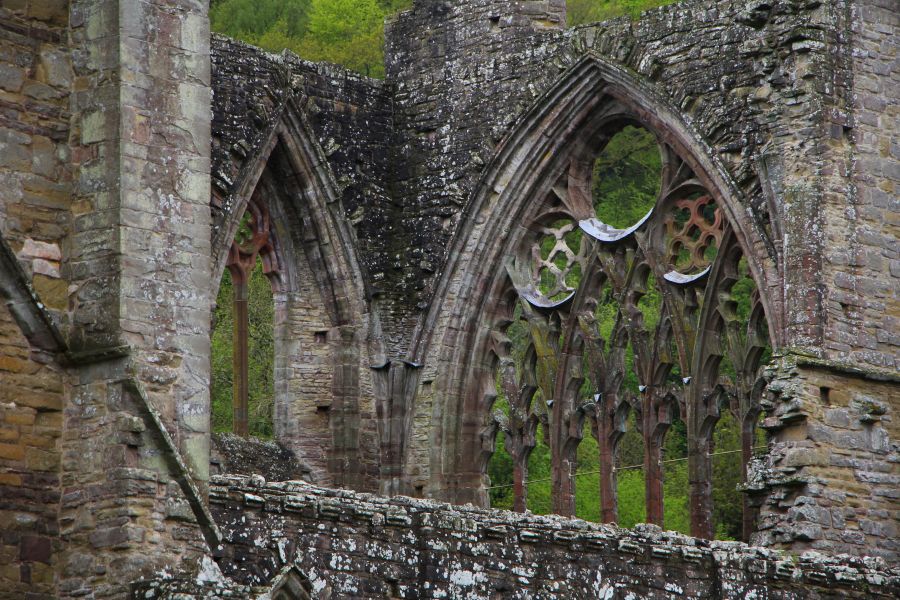
As I was planning our recent trip to Europe, I found that one of the top recommended sites to visit near Cardiff, Wales, is Tintern Abbey.
As it happened, I had heard about the abbey before from a public relations acquaintance. His wife studied abroad in England and fell in love with the abbey during one of her visits – so much so that she wanted to get married there.
Unfortunately the wedding wasn’t allowed, but they were granted permission to enter with a local priestess who gave them a blessing prior to a professional photography session of them floating around the ruins in their wedding attire.
That was as much of an endorsement as I needed to add it to our list!
We arrived just as the visitor center opened and were literally the first visitors of the day. The center was more of a gift shop than an informational stop, but we were handed a paper guide and directed to a wall of informational plaques describing some of the abbey’s history.
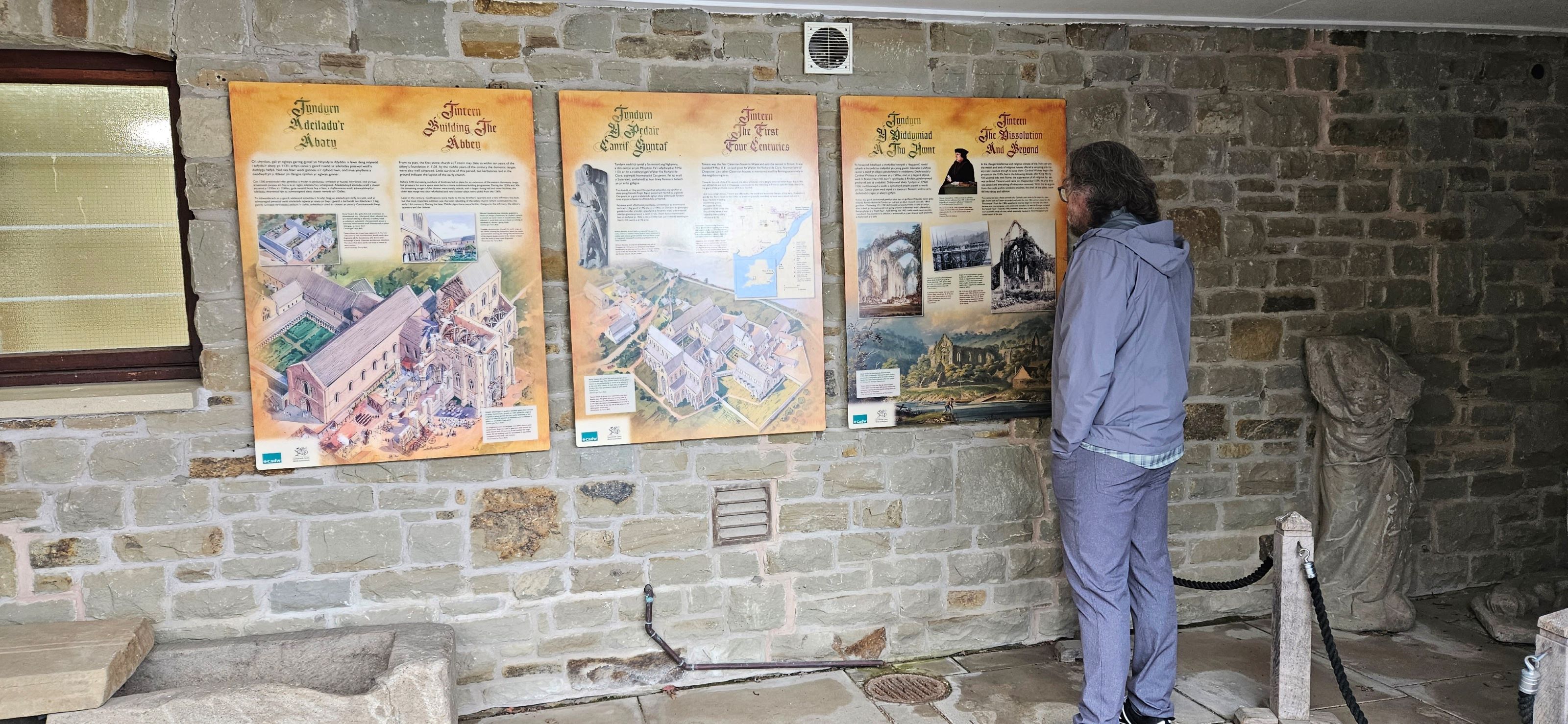
Tintern Abbey is a national icon — still standing in roofless splendour on the banks of the River Wye nearly 500 years since its tragic fall from grace. It was founded in 1131 by Cistercian monks, who were happy to make do with timber buildings at first. Abbot Henry, a reformed robber, was better known for his habit of crying at the altar than for his architectural ambitions.
A simple stone church and cloisters came later. But then, thanks to the patronage of wealthy Marcher lords, the white-robed monks began to think bigger. In 1269 they began to build a new abbey church and didn’t stop until they’d created one of the masterpieces of British Gothic architecture. The great west front with its seven-lancet window and the soaring arches of the nave still take the breath away.
So grateful were the monks to their powerful patron Roger Bigod that they were still handing out alms on his behalf in 1535. But by then King Henry VIII’s English Reformation was well underway. Only a year later Tintern surrendered in the first round of the dissolution of the monasteries — and the great abbey began slowly to turn into a majestic ruin.
https://cadw.gov.wales/visit/places-to-visit/tintern-abbey
The weather was not cooperating the morning of our visit, but we were able to dodge the raindrops for the most part and enjoy the moody atmosphere of the dark and stormy skies.
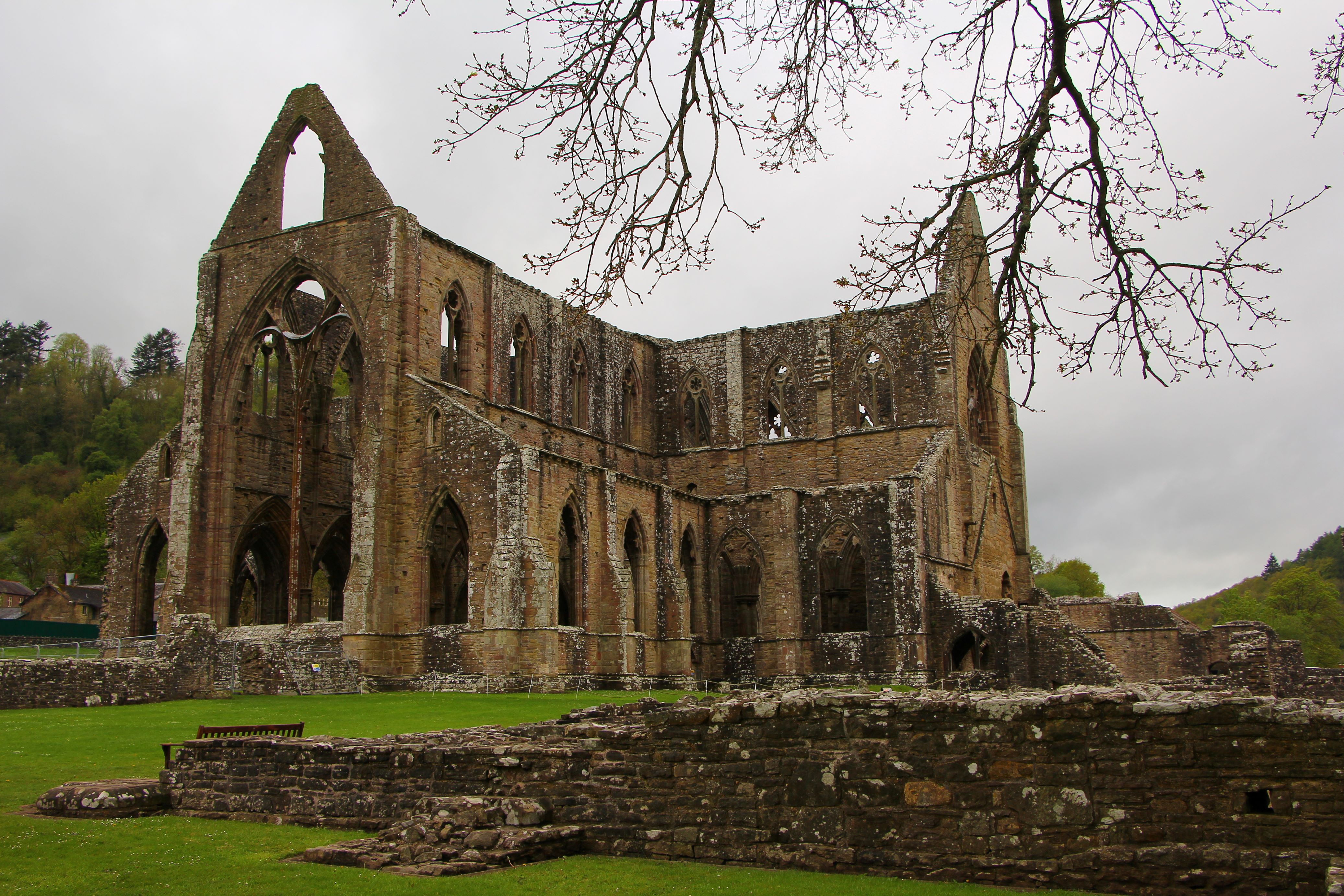
The abbey is currently undergoing extensive conservation work so we weren’t able to access all of the spaces that are usually available to the public. That said, we were able to wander around several areas inside the church before making our way around the ruins of all the other rooms that made up the overall footprint of the abbey.
Some of the side rooms had small plaques indicating their former use (eg kitchen, infirmary, etc.) but aside from those brief references and the small paper guide we were given, we were mostly left wondering – along with historians – what all happened within these walls.
The church is certainly the highlight given how much of it remains intact. Although its disrepair began in the 16th century, we learned that much of the damage occurred during the Victorian era as ivy and other greenery climbed the stone walls, creating an idyllic, hidden church that people would drive for miles to see. Despite looking lovely, the ivy was actually making its way into the mortar, causing significant structural damage.
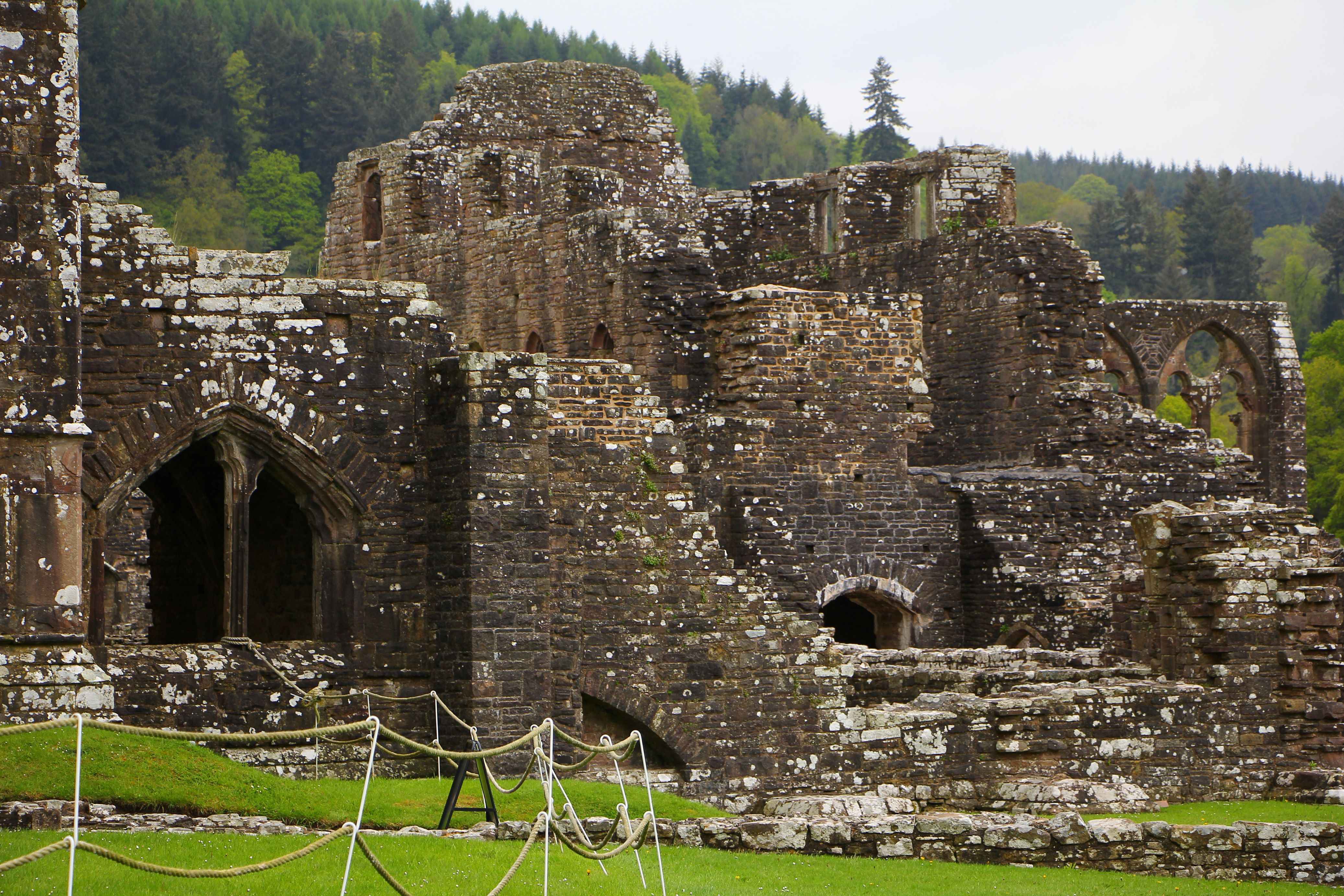

The abbey was purchased by the Crown in 1901 and designated a national historical site. In 1914 the ivy was removed and structural repairs began, followed by partial reconstruction in certain areas.
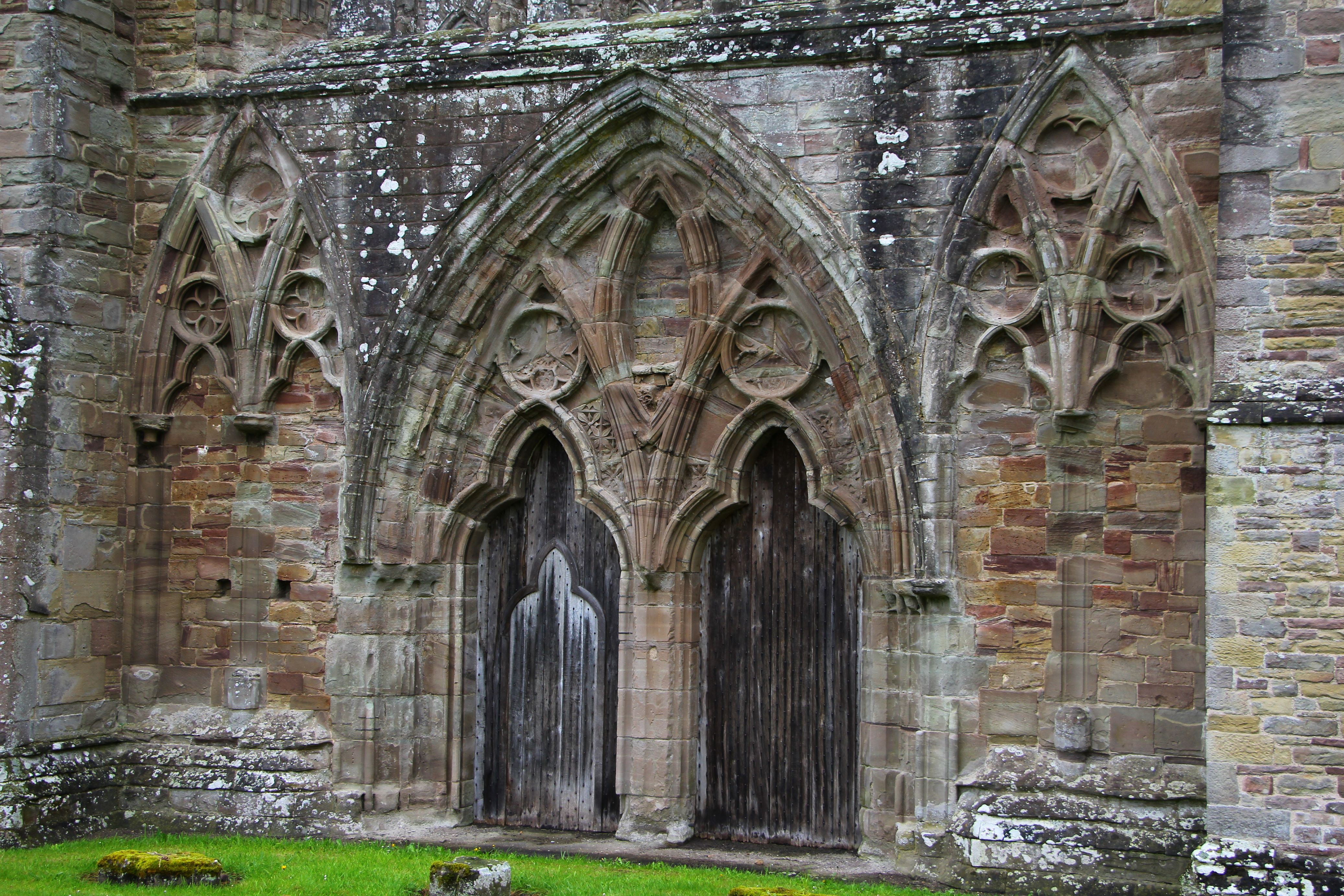
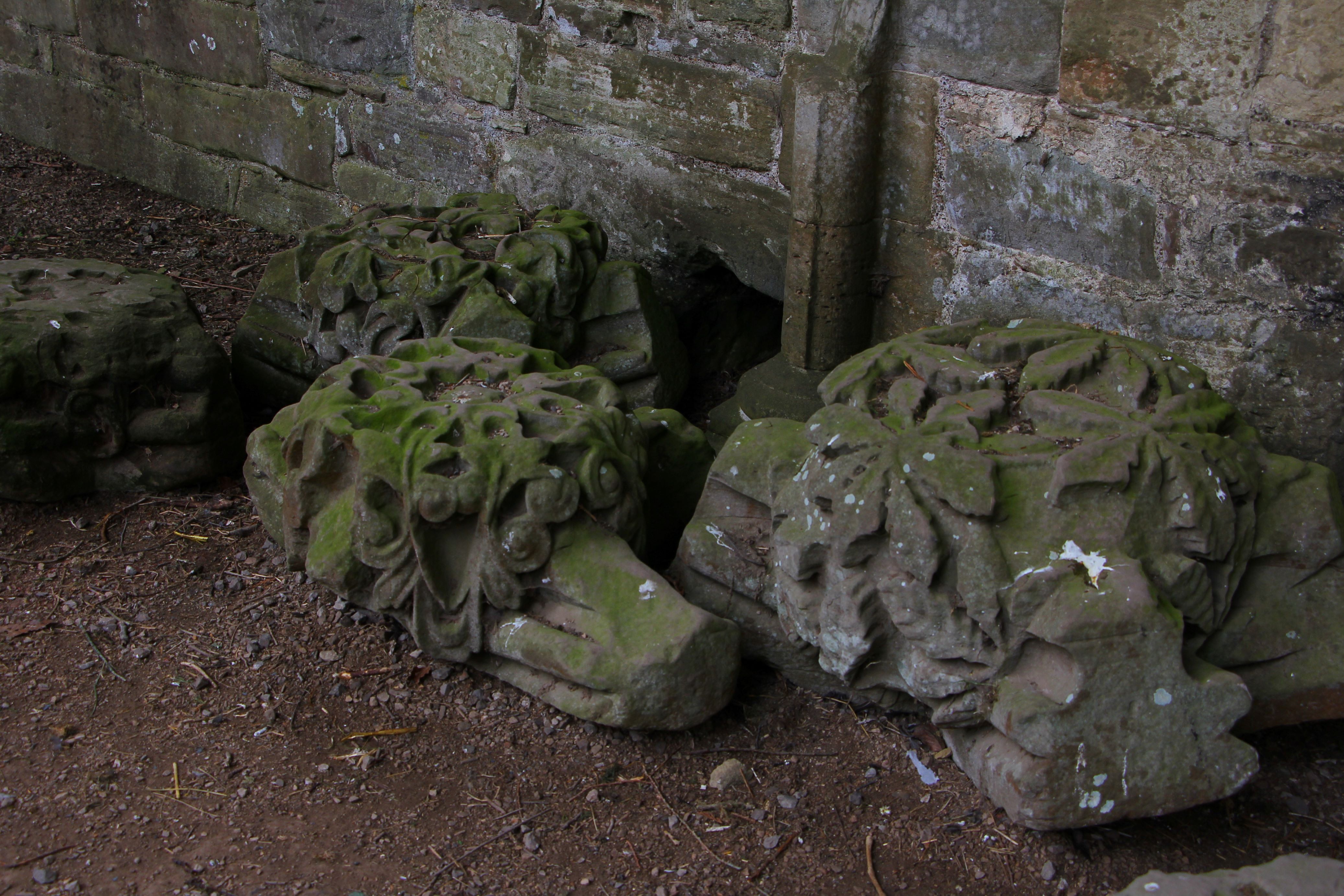
In addition to the foundational stone found throughout the abbey footprint, there were tons of decorative stones strewn about that were in relatively good condition despite having fallen to the ground when the structures beneath them collapsed. Workers have laid them out in various places around the property, attempting to reconstruct what the buildings might have looked like. The decorative stone within the church, featured above, was still in very good condition.
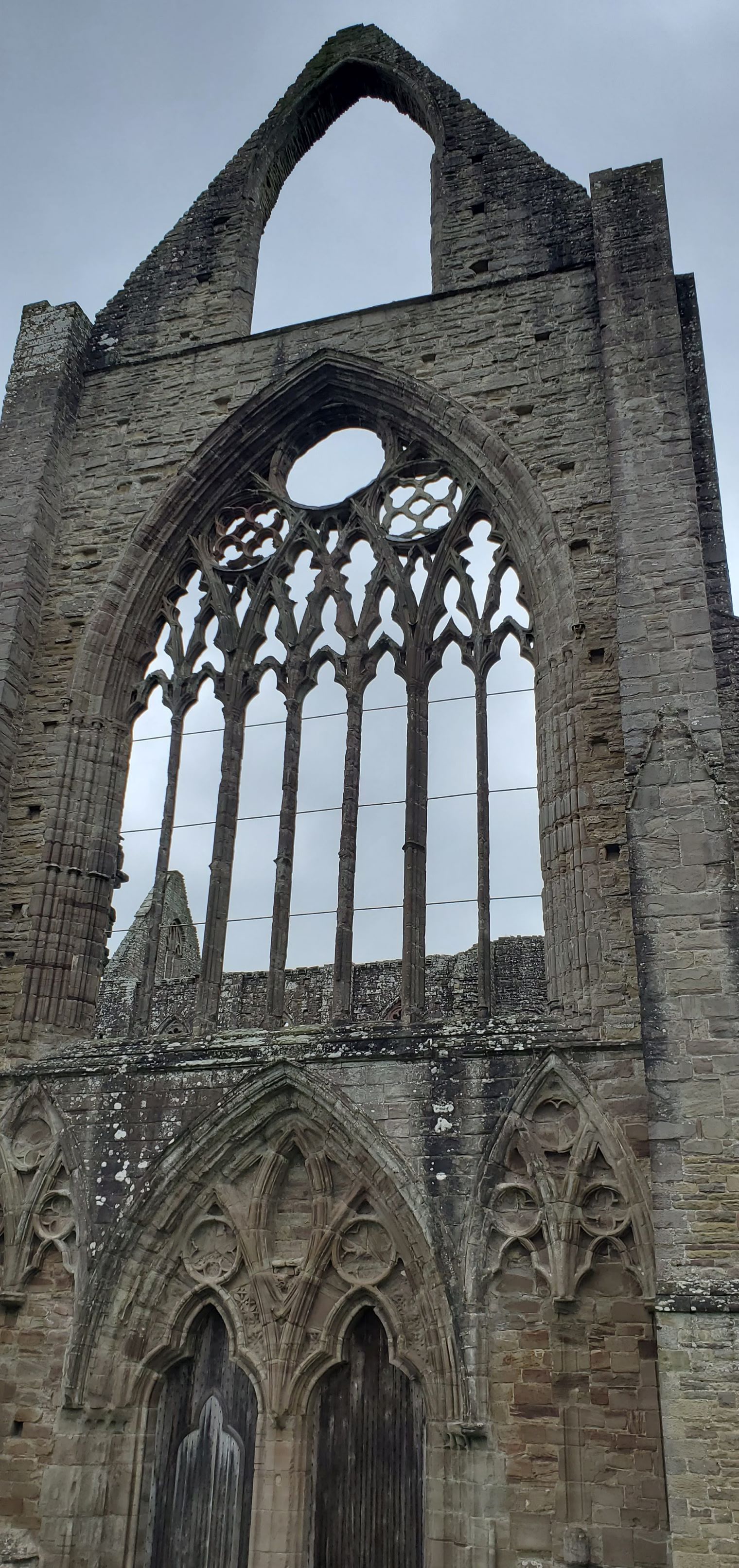
A highlight of the abbey is the great west window of the church, which was completed around 1300. It has been restored by local master stonemasons, and you can see the details in the photo above and the image on the left below.
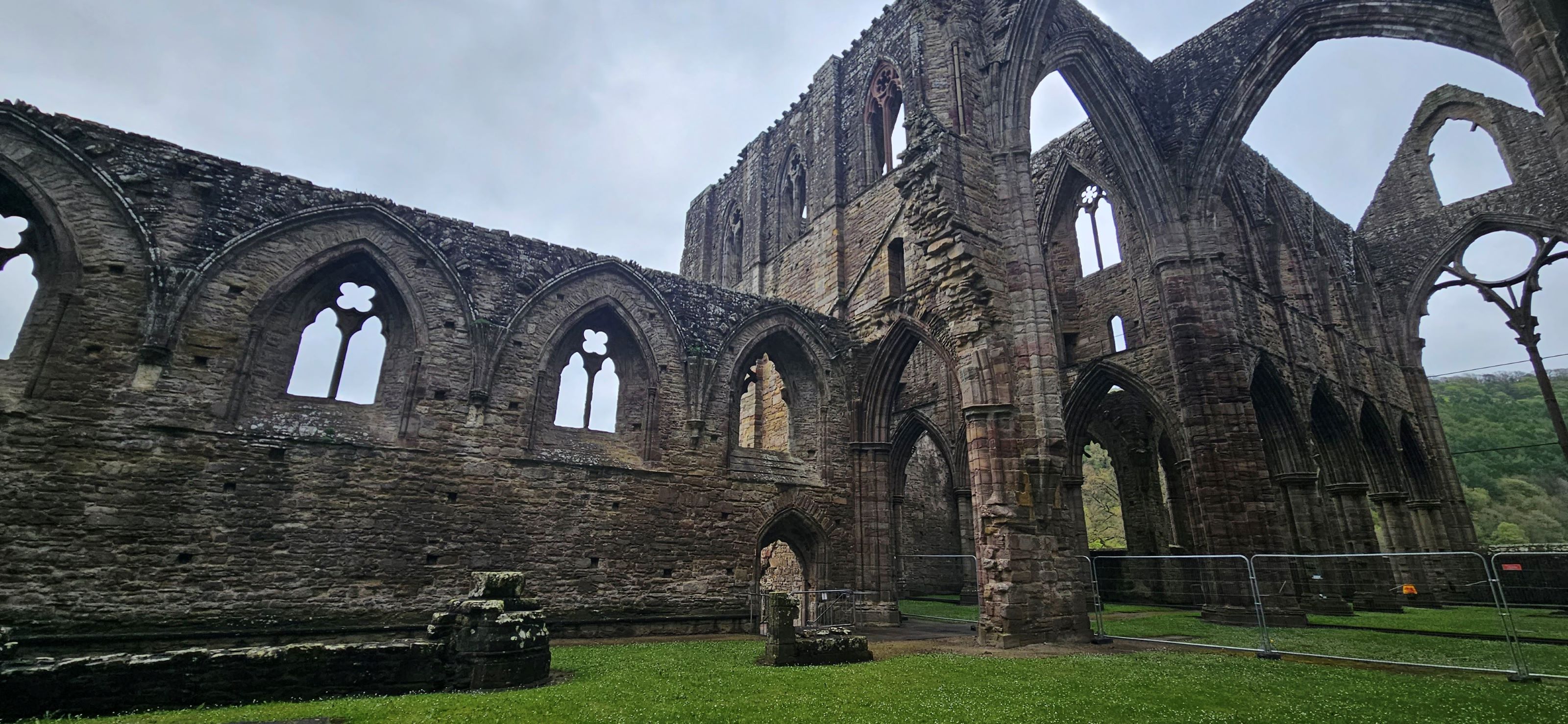
The eastern window, just visible in the far right side of the photo on the right below, retains its central column but all of the stonework patterns formerly within the two tall openings have fallen away.
In addition to restoration efforts, teams are now taking part in archaeological investigations into the lives of the monks who lived here in the 14th century. I’ll be interested to see how their work progresses and what they continue to learn about Tintern Abbey.
 Heather's Compass
Pingback: An Afternoon in the Cotswolds – Heather's Compass
Pingback: Itinerary: One Week in Wales – Heather's Compass